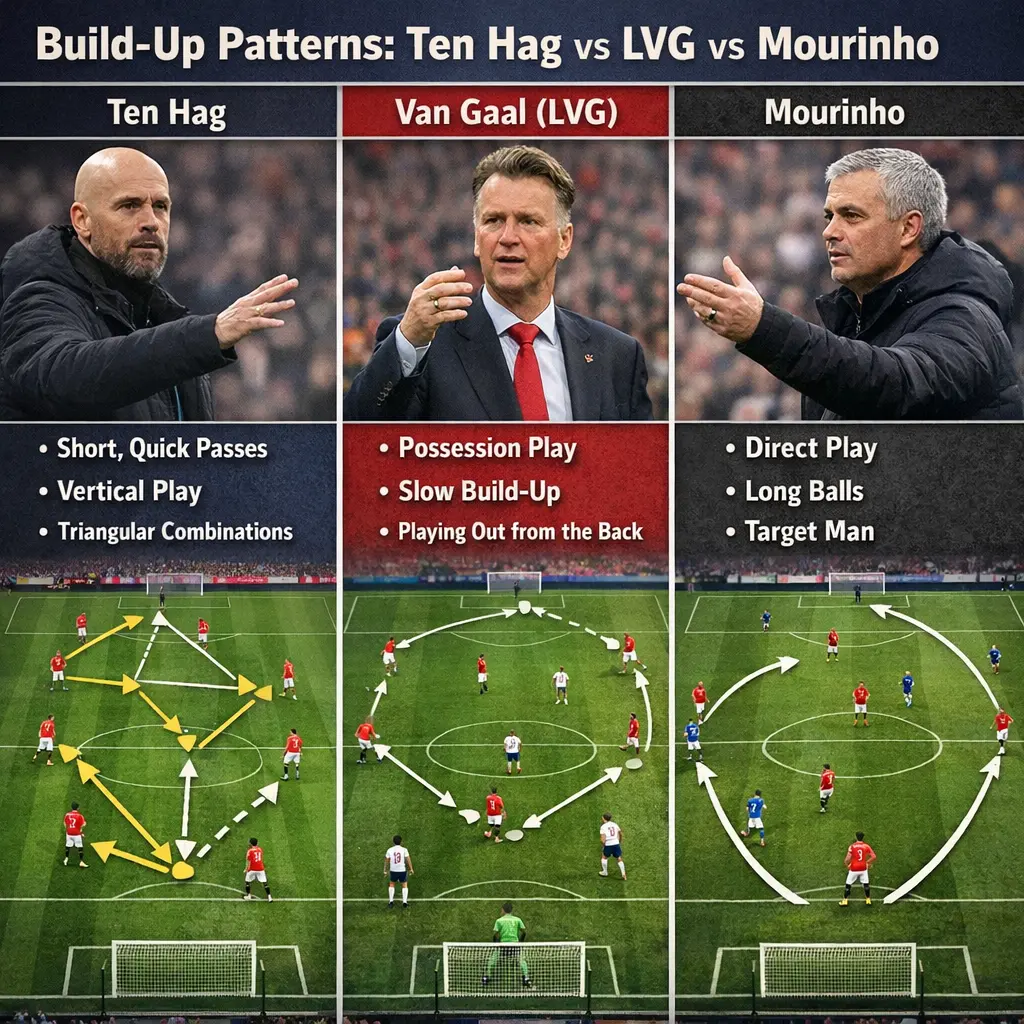
Positional profiles in Ten Hag’s system at Manchester United F.C. refer to the specific roles, responsibilities, and skill sets required from players in each position within his tactical setup. Ten Hag emphasizes fluidity, technical ability, and positional discipline, often deploying a 4-2-3-1 or 4-3-3 formation. Each player is expected to contribute to both attacking build-up and defensive organization, with full-backs advancing, midfielders interchanging, and forwards pressing high to maintain team structure and intensity.
Positional Profiles in Ten Hag’s System
Positional profiles in Ten Hag’s system at Manchester United F.C. refer to the specific roles, responsibilities, and skill sets required from players in each position within his tactical setup. Ten Hag emphasizes fluidity, technical ability, and positional discipline, often deploying a 4-2-3-1 or 4-3-3 formation. Each player is expected to contribute to both attacking build-up and defensive organization, with full-backs advancing, midfielders interchanging, and forwards pressing high to maintain team structure and intensity.
💡 Key Takeaways
- Understand how Ten Hag's system defines positional profiles to shape build-up, pressing, and transitions.
- Identify the roles of key positions in his 4-3-3 (e.g., holding midfielder, two eights, inverted fullbacks) and how they interact.
- Learn how spacing, angles, and triangles are used to maintain balance and enable progressive passing.
- See how off-the-ball movement and positional discipline drive pressing triggers and quick recoveries.
❓ Frequently Asked Questions
What are positional profiles in football tactics?
Positional profiles describe the typical roles, responsibilities, and movement patterns for each position within a team's system, including starting positions, how players move, pressing triggers, and how they connect with teammates.
How do positional profiles apply in Ten Hag’s system?
They define tasks for each role to keep the team structured—building from the back, controlling the midfield, and creating attacking overloads—while players occupy specific spaces and adapt to different phases of play.
What is a pivot in Ten Hag’s system?
A pivot is a defensive or holding midfielder who sits in front of the back line, helps recycle possession, and links the defense to the attack.
What is a ball-playing defender and why is it important?
A ball-playing defender is a center-back comfortable with passing out from the back, helping to start attacks and maintain possession, supporting Ten Hag’s build-up approach.