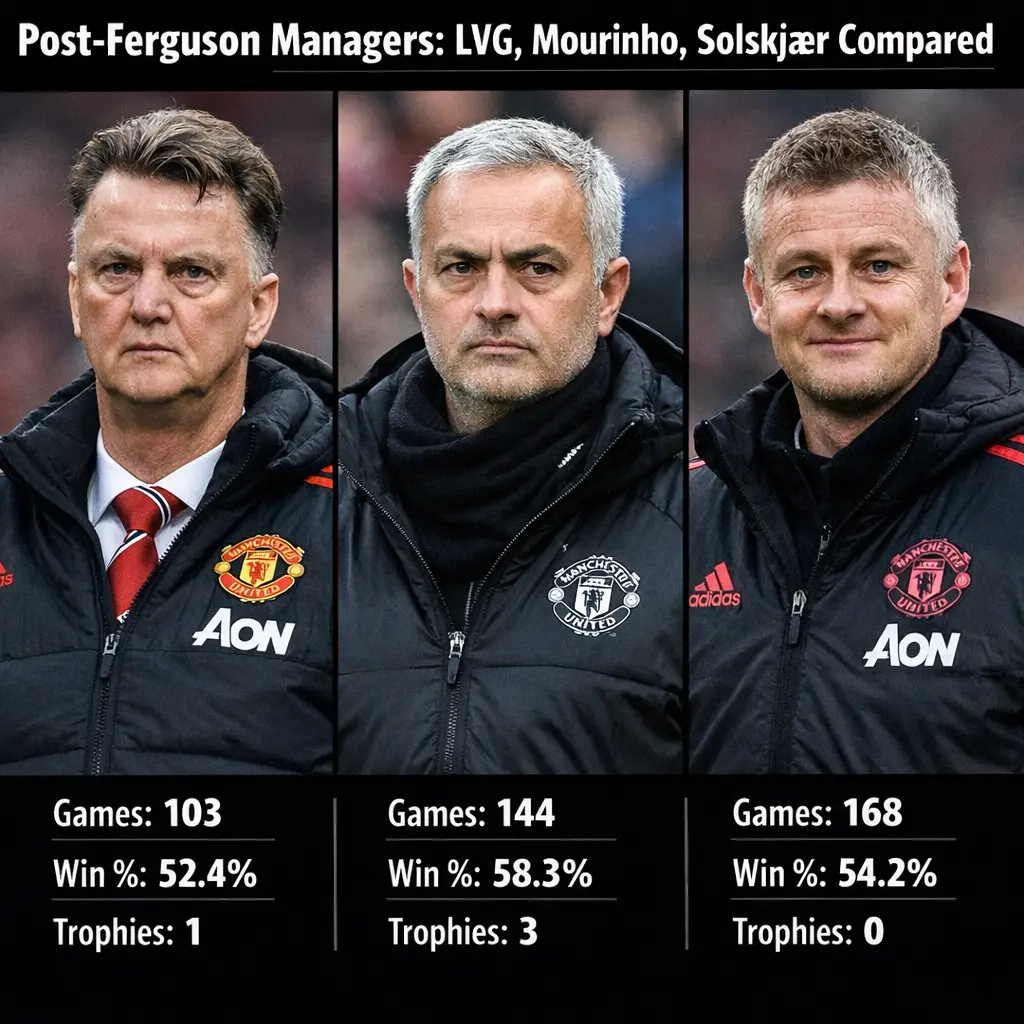
The phrase refers to the managers who led Manchester United after Sir Alex Ferguson’s retirement in 2013: Louis van Gaal (LVG), José Mourinho, and Ole Gunnar Solskjær. It invites a comparison of their tenures, focusing on their managerial styles, achievements, and impact on the club’s performance. Each manager faced unique challenges, implemented different tactics, and had varying degrees of success in restoring Manchester United’s former glory.
Post-Ferguson Managers: LVG, Mourinho, Solskjær Compared
The phrase refers to the managers who led Manchester United after Sir Alex Ferguson’s retirement in 2013: Louis van Gaal (LVG), José Mourinho, and Ole Gunnar Solskjær. It invites a comparison of their tenures, focusing on their managerial styles, achievements, and impact on the club’s performance. Each manager faced unique challenges, implemented different tactics, and had varying degrees of success in restoring Manchester United’s former glory.
💡 Key Takeaways
- Compare each post-Ferguson manager's tactical philosophy and how they attempted to redefine Manchester United's style.
- Analyze transfer strategies and squad rebuilding under LVG, Mourinho, and Solskjær and how they aligned with long-term plans vs. short-term results.
- Evaluate performance outcomes across league, cup, and European competitions under each manager.
- Discuss leadership challenges, media scrutiny, and relationships with players and fans during their tenures.
- Identify lessons about club culture, identity, and sustainability in the post-Ferguson era.
❓ Frequently Asked Questions
What does 'Post-Ferguson Managers' refer to?
Manchester United managers who led after Sir Alex Ferguson retired in 2013: Louis van Gaal, Jose Mourinho, and Ole Gunnar Solskjær.
How did LVG, Mourinho, and Solskjær differ in their tactical approaches?
LVG emphasized structured possession and build-up (4-3-3/3-5-2); Mourinho favored compact defense and quick counter-attacks; Solskjær pursued attacking football with a focus on integrating younger players.
What are their notable achievements and challenges at United?
LVG delivered a 2015 FA Cup win and began a rebuild but faced tactical inconsistencies; Mourinho won the 2017 EFL Cup and 2017 Europa League but had a controversial tenure; Solskjær stabilised the team with attacking intent but did not win major trophies.
How did each tenure end and why?
LVG was sacked in 2016 after a dip in league form; Mourinho was dismissed in 2018 amid inconsistent results and management tensions; Solskjær was sacked in 2021 following a poor run of results.