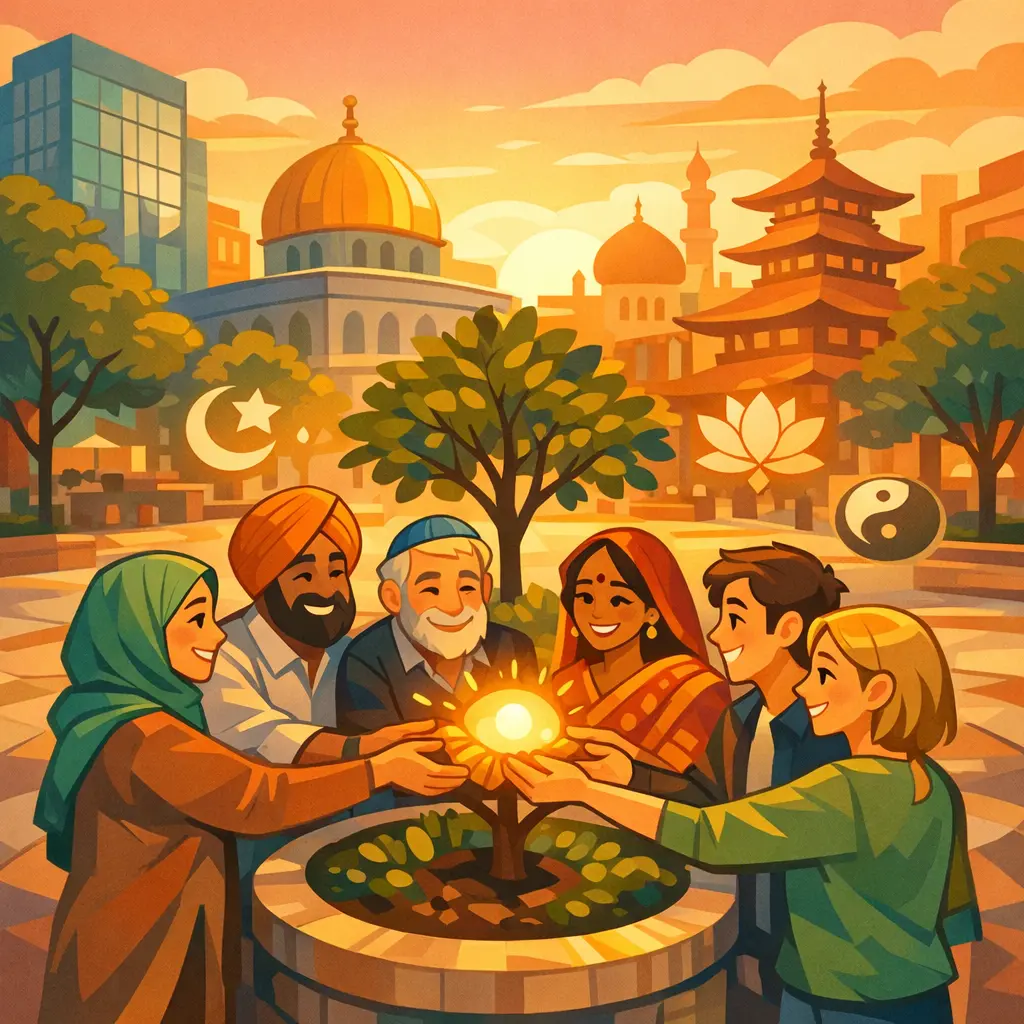
Post-secular societies refer to communities where religion regains public significance after a period of secularization. In such contexts, religious pluralism becomes prominent, as multiple faiths coexist and interact within a diverse cultural landscape. This interplay influences societal norms, politics, and public discourse, leading to new forms of engagement and negotiation between religious and secular worldviews, ultimately shaping how culture, religion, and society relate and evolve together.
Post-secular Societies & Religious Pluralism
Post-secular societies refer to communities where religion regains public significance after a period of secularization. In such contexts, religious pluralism becomes prominent, as multiple faiths coexist and interact within a diverse cultural landscape. This interplay influences societal norms, politics, and public discourse, leading to new forms of engagement and negotiation between religious and secular worldviews, ultimately shaping how culture, religion, and society relate and evolve together.
💡 Key Takeaways
- Understand what a post-secular society means and how religion continues to shape public life, politics, and culture.
- Learn different approaches to religious pluralism in governance, such as state neutrality, accommodation, and anti-discrimination frameworks.
- Identify common challenges and opportunities of religious diversity, including social cohesion, interfaith dialogue, and policy fairness.
- Explore real-world examples of pluralism in institutions, education, and public policy, and their implications for individuals and communities.
❓ Frequently Asked Questions
What does 'post-secular' mean?
Post-secular societies see religion as a visible and influential force in public life, policy, and civic debate, not confined to private space.
What is religious pluralism?
Religious pluralism is the coexistence of multiple religious communities within a society and a commitment to equal rights and freedom of belief for all.
How do post-secular societies handle religion in government and law?
They balance religious freedom with equal protection for all citizens, often through inclusive policies, dialogue among groups, and carefully delineated church-state rules.
What are common challenges in religious pluralism?
Conflicts over public symbols or rituals, debates about faith-based institutions, ensuring minority voices are heard, and maintaining secular public norms while respecting religious diversity.