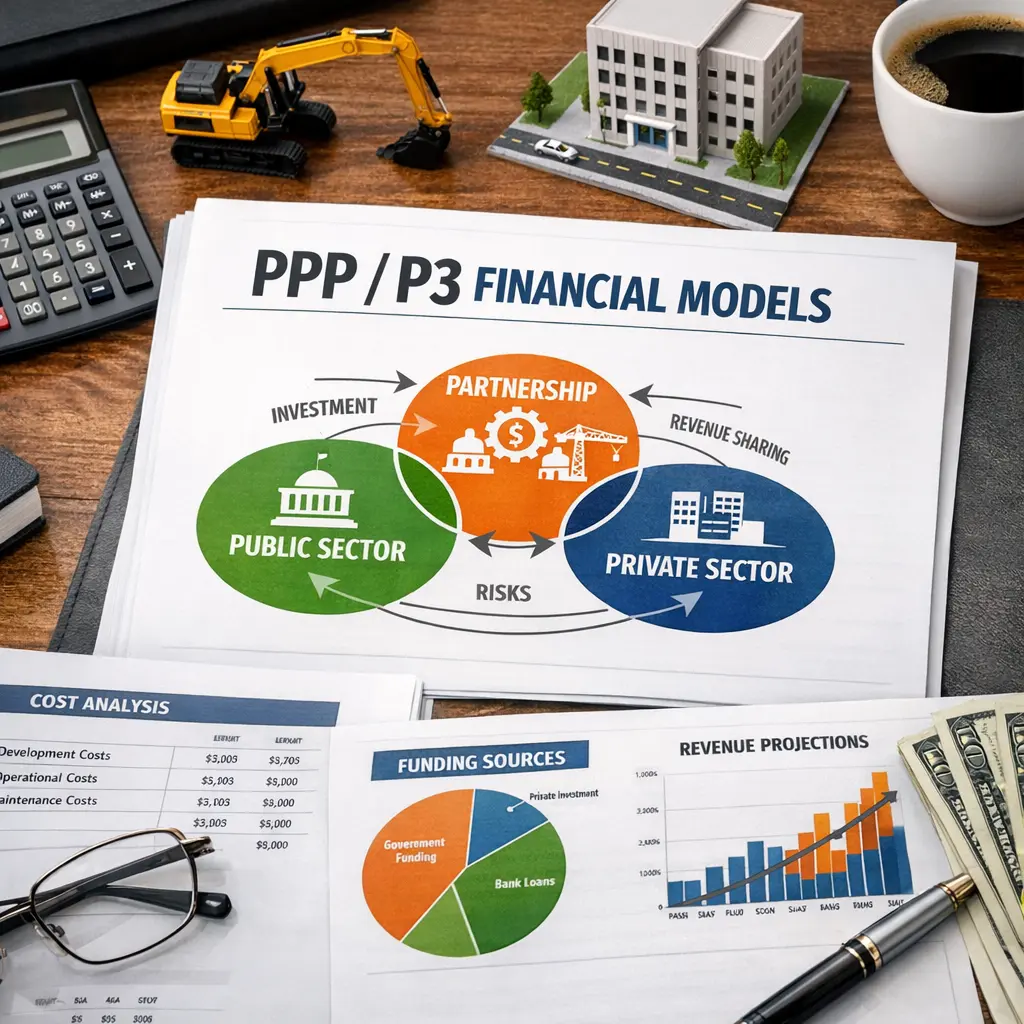
PPP/P3 financial models are analytical tools used to assess the financial viability and structure of Public-Private Partnership projects. These models forecast cash flows, allocate risks, and evaluate project returns for both public and private stakeholders. They help determine funding requirements, project affordability, and value for money, guiding decision-making in infrastructure and service delivery projects. Effective PPP financial management ensures balanced risk-sharing, transparency, and sustainability throughout the project lifecycle.
PPP/P3 Financial Models
PPP/P3 financial models are analytical tools used to assess the financial viability and structure of Public-Private Partnership projects. These models forecast cash flows, allocate risks, and evaluate project returns for both public and private stakeholders. They help determine funding requirements, project affordability, and value for money, guiding decision-making in infrastructure and service delivery projects. Effective PPP financial management ensures balanced risk-sharing, transparency, and sustainability throughout the project lifecycle.
💡 Key Takeaways
- Understand PPP/P3 project structures and the roles of public and private partners.
- Learn how revenue streams, risk transfer, and payment mechanisms affect project viability (e.g., availability payments vs. user fees).
- Learn to build and read cash flow models: capital costs, operating expenses, debt service, reserves, and end-of-contract risks.
- Assess financial performance using key metrics: NPV, IRR, debt-service coverage ratio, and sensitivity analysis.
❓ Frequently Asked Questions
What is a PPP/P3 financial model?
A model that projects a PPP/P3 project’s cash flows, costs, funding, and risks to assess viability, affordability, and debt service under different scenarios.
What are typical revenue streams in PPP/P3 projects?
Common sources include user fees (tolls or charges) and government payments (availability payments or subsidies); some deals also include guarantees or bonuses.
What is an SPV in PPPs and why is it used?
A Special Purpose Vehicle is a separate project entity that owns assets, signs contracts, and isolates project risks from sponsors.
What is an availability payment?
A government payment to the SPV based on asset readiness and performance, not on actual usage, used to support debt service.
What does DSCR mean in PPP models?
Debt Service Coverage Ratio = cash available for debt service divided by required debt payments; lenders typically require DSCR > 1.0 for loanability.