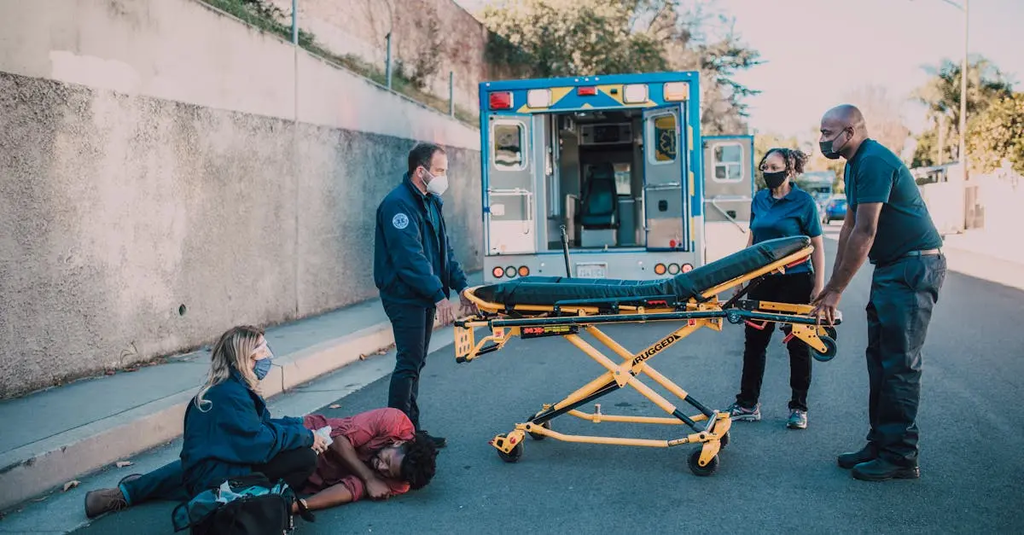
Prehospital critical care refers to advanced medical treatment provided to critically ill or injured patients before they reach the hospital. Delivered by specially trained healthcare professionals, such as paramedics or physicians, this care includes advanced airway management, medication administration, cardiac monitoring, and trauma interventions. The goal is to stabilize patients, prevent further deterioration, and improve outcomes by initiating life-saving procedures and expert care at the scene or during transport to a medical facility.
Prehospital Critical Care
Prehospital critical care refers to advanced medical treatment provided to critically ill or injured patients before they reach the hospital. Delivered by specially trained healthcare professionals, such as paramedics or physicians, this care includes advanced airway management, medication administration, cardiac monitoring, and trauma interventions. The goal is to stabilize patients, prevent further deterioration, and improve outcomes by initiating life-saving procedures and expert care at the scene or during transport to a medical facility.

💡 Key Takeaways
- Define prehospital critical care and its role in the emergency care continuum.
- Identify who delivers it (paramedics, physicians) and summarize their training and scope of practice.
- Outline core prehospital interventions, including advanced airway management, medication administration, analgesia, and hemorrhage control.
- Explain field decision-making processes: triage, airway/ventilation optimization, circulation support, and rapid transport decisions.
- Discuss challenges, limitations, and system-level considerations in prehospital critical care.
❓ Frequently Asked Questions
What is prehospital critical care?
Advanced medical care for critically ill or injured patients delivered before hospital arrival by trained EMS professionals to stabilize the patient and prepare for definitive care.
Who provides prehospital critical care?
Specialized EMS personnel such as paramedics, critical care paramedics, flight nurses, or physicians who work as a team to deliver urgent care in the field.
What are common prehospital critical care interventions?
Airway management (oxygen, suction, bag-valve-mask, supraglottic or endotracheal intubation when needed), ventilation support, fluid therapy, analgesia or sedation within protocols, bleeding control, monitoring, and rapid transport.
How does prehospital care differ from in-hospital care?
It emphasizes rapid stabilization and safe transport, operates under field protocols with limited equipment, and focuses on swift handoff to hospital teams.
Why is hospital coordination important in prehospital care?
Pre-arrival notifications and early communication help the receiving team prepare, direct transport to the appropriate facility, and ensure continuity of care during handoff.