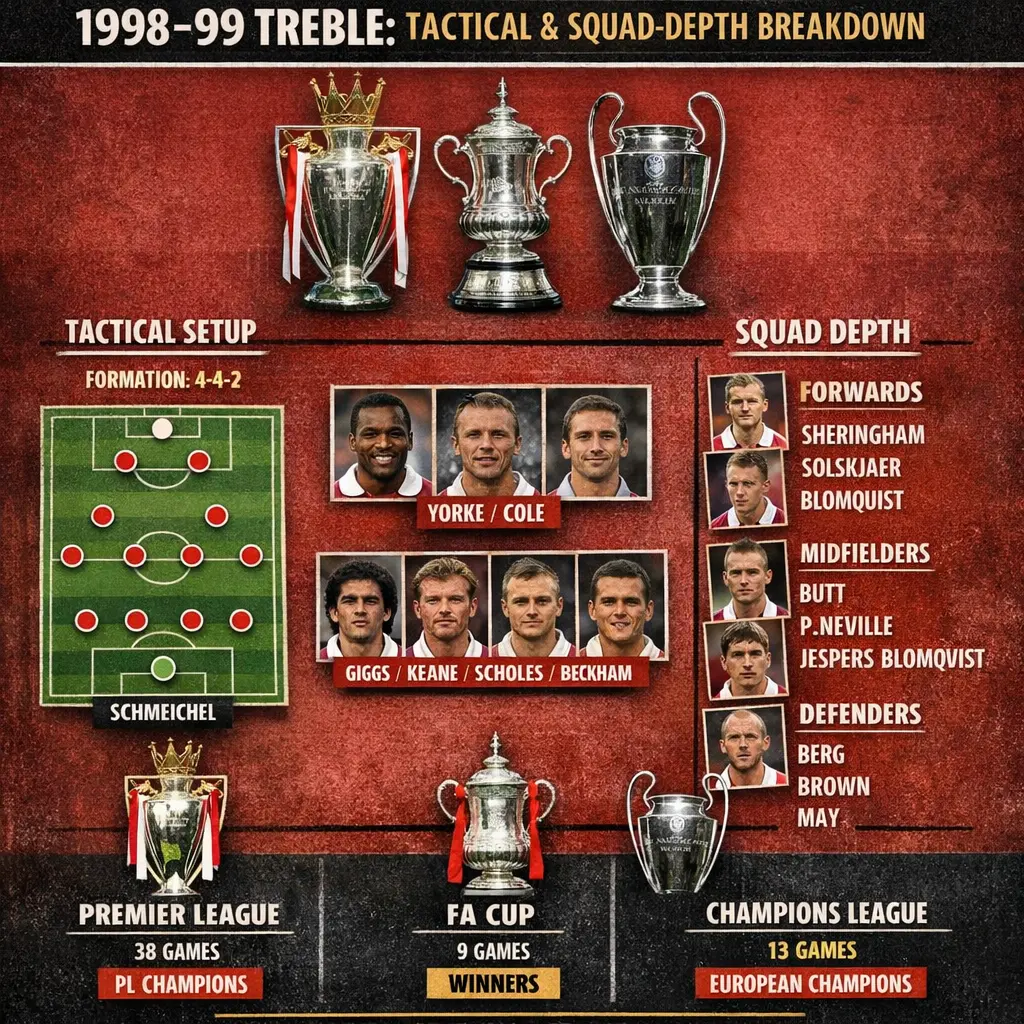
The Premier League’s formation in 1992 marked a new era for English football, and Manchester United quickly established dominance under Sir Alex Ferguson. With a blend of youth and experience, United won their first league title in 26 years in 1993, followed by further triumphs in 1994 and 1996. Key players like Eric Cantona, Ryan Giggs, and Paul Scholes were instrumental, setting the foundation for United’s modern success.
Premier League Birth and Early Dominance (1992–1996)
The Premier League’s formation in 1992 marked a new era for English football, and Manchester United quickly established dominance under Sir Alex Ferguson. With a blend of youth and experience, United won their first league title in 26 years in 1993, followed by further triumphs in 1994 and 1996. Key players like Eric Cantona, Ryan Giggs, and Paul Scholes were instrumental, setting the foundation for United’s modern success.
💡 Key Takeaways
- Understand why the Premier League began in 1992 and how it differed from the old First Division.
- Identify the early dominant clubs—Manchester United and Blackburn Rovers—and the titles they won between 1992 and 1996.
- Explain the impact of the Class of '92 and Sir Alex Ferguson's management on Manchester United's rise during this period.
- Explore how growing global TV rights and commercial deals in these birth years helped establish the Premier League as a global product.
❓ Frequently Asked Questions
When did the Premier League start and what changed from the old league?
The Premier League began in 1992 as the top tier of English football, breaking away from the Football League First Division to secure new TV deals and greater commercial revenue.
Which clubs dominated the early Premier League years (1992–1996)?
Manchester United established the era's dominance, while Blackburn Rovers interrupted with a title win in 1994–95, signaling strong competition among the early top clubs.
Who were the standout players of the early Premier League era?
Eric Cantona’s influence at Manchester United and Alan Shearer’s goals for Blackburn were two defining features, supported by solid squads and key goalkeepers like Peter Schmeichel.
What was the league format like in those early seasons?
Initially, 22 teams played 42 matches per season; from 1995–96 the league reduced to 20 teams (38 games per season). Teams also used the standard three points for a win.