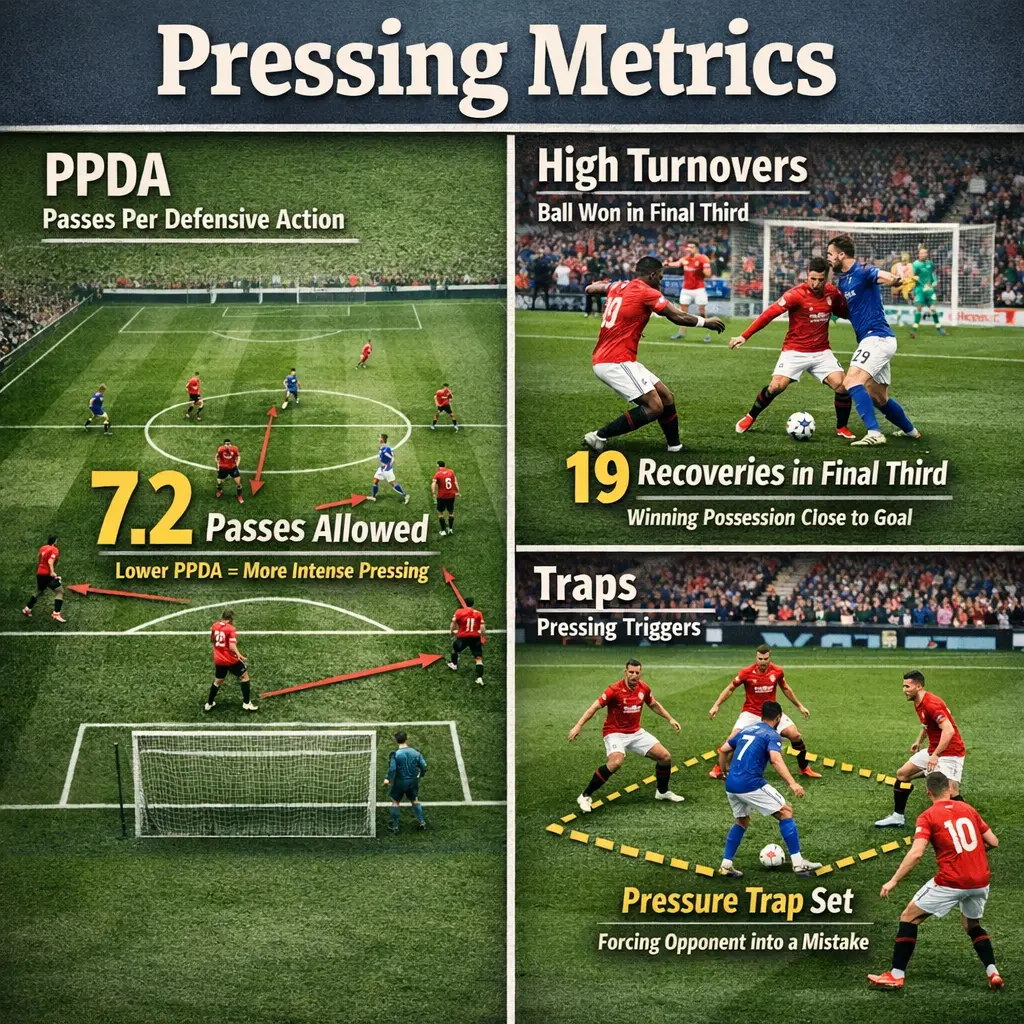
Pressing metrics, such as PPDA (Passes Per Defensive Action), high turnovers, and traps, assess Tottenham Hotspur F.C.’s defensive intensity and effectiveness. PPDA measures how aggressively the team presses by counting allowed passes before a defensive action. High turnovers indicate frequent ball recoveries in advanced areas, disrupting opponents’ build-up. Traps refer to coordinated pressing schemes forcing opponents into mistakes. These metrics highlight Tottenham’s proactive, high-energy defensive strategy under their current tactical setup.
Pressing Metrics: PPDA, High Turnovers & Traps
Pressing metrics, such as PPDA (Passes Per Defensive Action), high turnovers, and traps, assess Tottenham Hotspur F.C.’s defensive intensity and effectiveness. PPDA measures how aggressively the team presses by counting allowed passes before a defensive action. High turnovers indicate frequent ball recoveries in advanced areas, disrupting opponents’ build-up. Traps refer to coordinated pressing schemes forcing opponents into mistakes. These metrics highlight Tottenham’s proactive, high-energy defensive strategy under their current tactical setup.
💡 Key Takeaways
- Understand PPDA (passes allowed per defensive action) and what it reveals about pressing intensity.
- See how high turnover rates signal effective pressure and disrupt opposing build-up.
- Recognize common pressing traps (lines, angles, and delays) and how to spot them in games.
- Use PPDA and turnover data to optimize pressing plans, roles, and training drills.
❓ Frequently Asked Questions
What is PPDA and what does it measure?
PPDA stands for Presses Per Defensive Action. It quantifies pressing intensity by counting how many passes the opposition completes in its own half before the defense first applies pressure. Lower PPDA means tighter, more aggressive pressing; higher PPDA means looser pressing.
How should I interpret a low vs high PPDA?
A low PPDA indicates frequent, early pressure from the defense, reducing the opponent's time and space. A high PPDA means the defense allows more passes in its half before pressing, signaling a more passive or organized approach.
What are traps in defensive pressing?
A trap is a planned defensive tactic where defenders steer attackers toward a space or line where they can win the ball or force a mistake, often by synchronized closing and cutting passing lanes.
What do high turnovers say about a team's pressing?
High turnovers usually indicate effective pressing and successful traps that disrupt the opponent. They reflect pressure and disruption, but teams must balance turnover risk with potential space behind the press.
Why are PPDA, turnovers and traps useful in a quiz about pressing?
They help describe a team's defensive style, energy level, and tradeoffs between aggressive press and maintaining defensive shape. They are common metrics used to analyze pressing strategies.