Preventing disordered eating involves adopting protective practices such as promoting balanced child nutrition and thoughtful night weaning. Encouraging healthy eating habits from an early age, providing a variety of nutritious foods, and fostering a positive mealtime environment help children develop a healthy relationship with food. Gradually reducing nighttime feedings supports self-regulation and reduces reliance on food for comfort, further minimizing risks of disordered eating patterns as children grow.
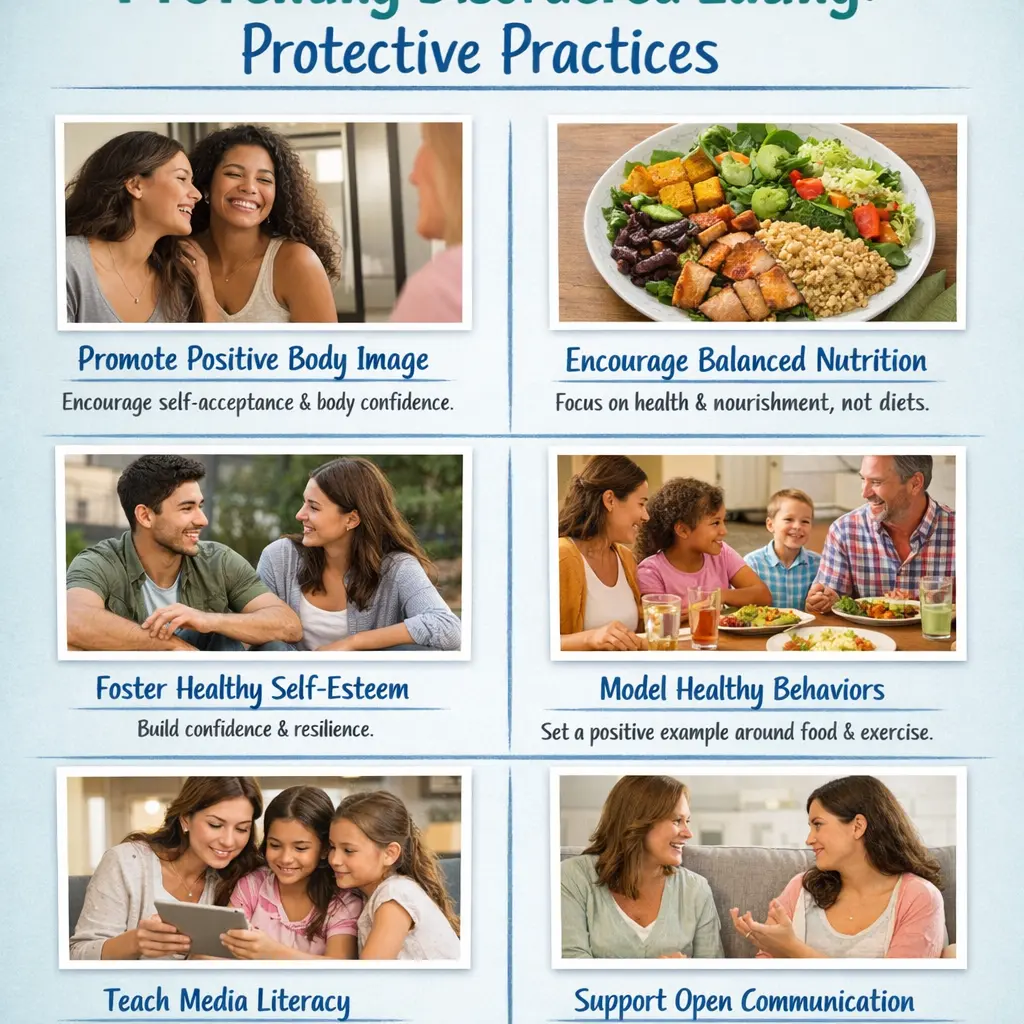
Preventing disordered eating: protective practices
Preventing disordered eating involves adopting protective practices such as promoting balanced child nutrition and thoughtful night weaning. Encouraging healthy eating habits from an early age, providing a variety of nutritious foods, and fostering a positive mealtime environment help children develop a healthy relationship with food. Gradually reducing nighttime feedings supports self-regulation and reduces reliance on food for comfort, further minimizing risks of disordered eating patterns as children grow.
💡 Key Takeaways
- Recognize protective factors that promote healthy eating patterns and positive body image.
- Spot early warning signs of disordered eating and know when to seek support.
- Understand how media and social environments influence eating behaviors and how to counter negative messages.
- Learn practical strategies for regular meals, mindful eating, and flexible dieting.
- Find trusted resources and professional help for concerns.
❓ Frequently Asked Questions
What is disordered eating and how does it differ from an eating disorder?
Disordered eating includes irregular eating patterns and thoughts that can be distressing, but it isn’t a diagnosed condition. Eating disorders are clinical diagnoses that often require professional treatment.
What are protective practices to reduce the risk of disordered eating?
Maintain regular meals, aim for balanced nutrition, avoid extreme dieting, limit exposure to harmful media messages, practice mindful or intuitive eating, and seek support from trusted people or professionals when concerns arise.
How can I create a supportive environment for someone at risk?
Offer non-judgmental conversations, avoid commenting on weight or appearance, model healthy behaviors, and help them find reliable information and professional help if needed.
When should I seek professional help for concerns about eating behaviors?
If distressing thoughts about food or body image persist, eating patterns change significantly, or daily functioning is affected, consult a clinician, counselor, or registered dietitian.