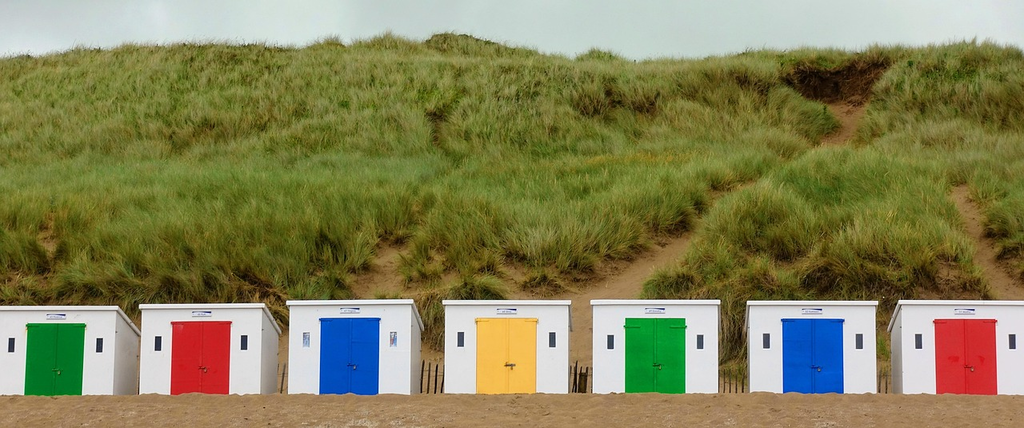
Primary colors refer to the three basic colors—red, blue, and yellow—that cannot be created by mixing other colors together. They are the foundation for creating all other colors through various combinations. In art and design, primary colors serve as the starting point for color theory and mixing, making them essential for understanding how colors interact and blend to form secondary and tertiary colors.
Primary Colors
Primary colors refer to the three basic colors—red, blue, and yellow—that cannot be created by mixing other colors together. They are the foundation for creating all other colors through various combinations. In art and design, primary colors serve as the starting point for color theory and mixing, making them essential for understanding how colors interact and blend to form secondary and tertiary colors.
💡 Key Takeaways
- Identify primary colors in additive (light) and subtractive (pigment) systems.
- Predict what colors result when you mix primary colors.
- Create harmonious color schemes using primary colors (e.g., complementary, analogous).
- Recognize primary colors in everyday design, art, and branding.
❓ Frequently Asked Questions
What are primary colors?
Primary colors are the basic hues that cannot be created by mixing other colors. In pigments (art), the common primaries are red, blue, and yellow. In light, the primaries are red, green, and blue (RGB).
How do primary colors mix in pigment to create other colors?
Mixing two primaries yields secondary colors: red+blue = purple, blue+yellow = green, yellow+red = orange. Mixing all three can produce brown or black depending on the pigments.
How do primary colors mix in light (additive color model)?
In light, red, green, and blue mix to create white. Pairs produce cyan (green+blue), magenta (red+blue), and yellow (red+green).
How can understanding primary colors help with design or art?
Knowing primaries helps you build effective color palettes, mix hues accurately, create contrast, and avoid muddy results, leading to clearer and more cohesive designs.