Procedural Content Generation refers to the automatic creation of data, such as levels, maps, textures, or entire worlds, using algorithms rather than manual design. Commonly used in video games and simulations, this approach enables diverse, scalable, and often unpredictable content, enhancing replayability and reducing development effort. By leveraging rules and randomness, PCG can produce unique experiences for each user, making it a valuable tool in digital content creation.
Procedural Content Generation
Procedural Content Generation refers to the automatic creation of data, such as levels, maps, textures, or entire worlds, using algorithms rather than manual design. Commonly used in video games and simulations, this approach enables diverse, scalable, and often unpredictable content, enhancing replayability and reducing development effort. By leveraging rules and randomness, PCG can produce unique experiences for each user, making it a valuable tool in digital content creation.
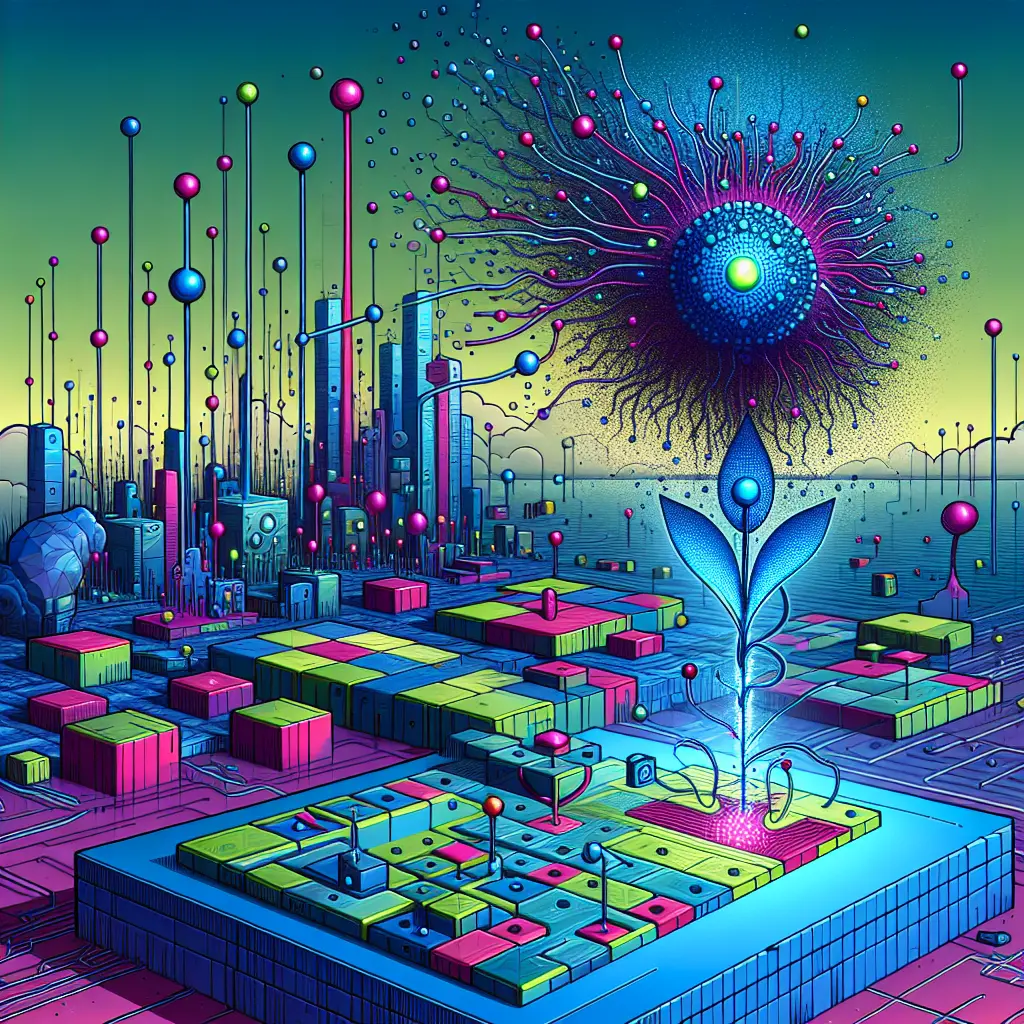
💡 Key Takeaways
- What Procedural Content Generation (PCG) means and why it matters in games and simulations.
- The types of content PCG can create: levels, maps, textures, and entire worlds.
- Benefits of PCG: greater variety, scalability, replayability, and unpredictability.
- Key concepts in PCG: algorithms, seed-based randomness, reproducibility, and common design challenges.
❓ Frequently Asked Questions
What is Procedural Content Generation (PCG)?
Procedural Content Generation is the automatic creation of game data—such as levels, maps, textures, or entire worlds—using algorithms rather than manual design.
Why is PCG used in gaming and simulations?
It provides diverse, scalable content and can boost replayability while saving development time by generating assets on demand.
What are common techniques used in PCG?
Techniques include noise functions (Perlin/Simplex), fractals, cellular automata, grammar-based systems, L-systems, and Voronoi diagrams, often with seeds for reproducibility.
What are the main challenges of PCG?
Balancing quality with variety, ensuring meaningful and playable layouts, maintaining reproducibility, and managing performance and debugging.