Procrastination science explores why individuals delay tasks, linking it to factors like fear of failure, impulsivity, and poor time management. Studies reveal that procrastination is not just laziness but often a coping mechanism for emotional discomfort. Remedies include breaking tasks into smaller steps, setting clear deadlines, practicing self-compassion, and using tools like reminders or accountability partners. Understanding the psychological roots helps develop effective strategies to overcome procrastination and improve productivity.
Procrastination Science & Remedies
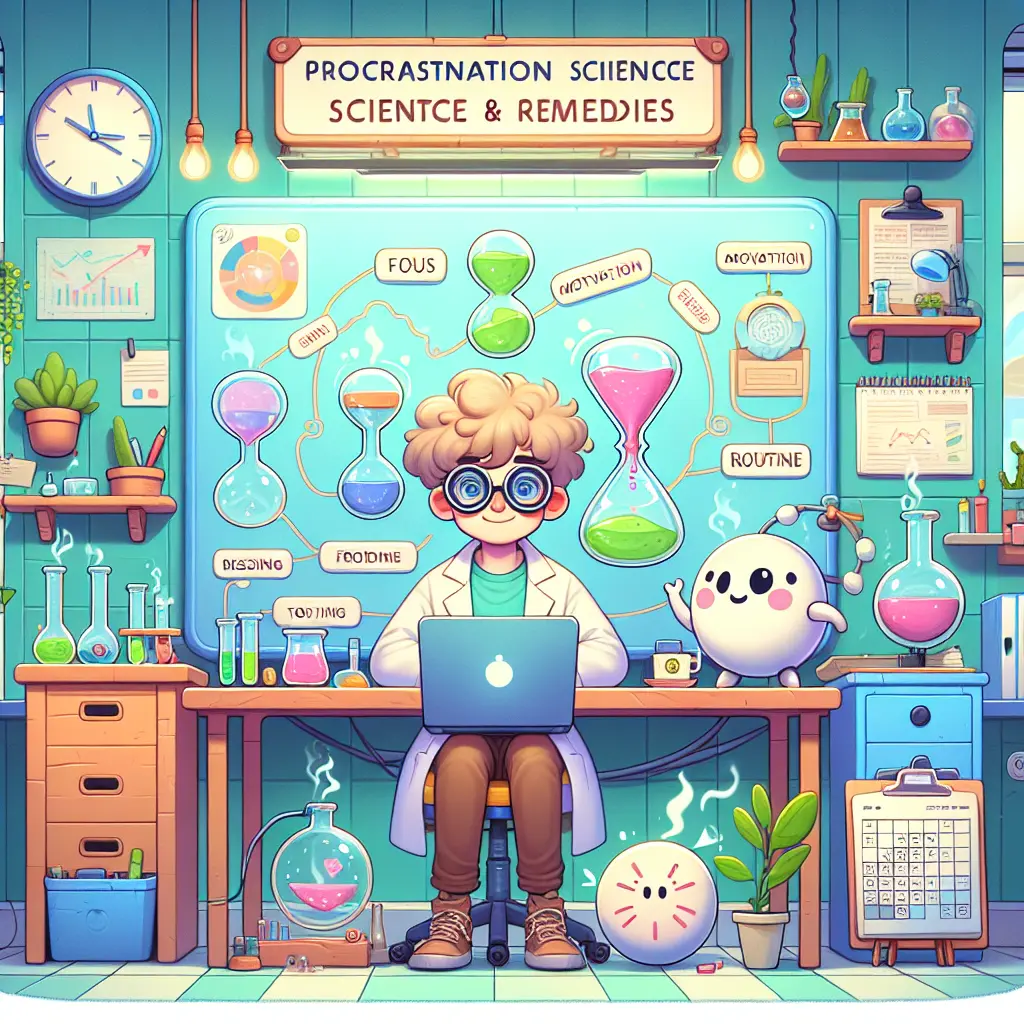
Procrastination science explores why individuals delay tasks, linking it to factors like fear of failure, impulsivity, and poor time management. Studies reveal that procrastination is not just laziness but often a coping mechanism for emotional discomfort. Remedies include breaking tasks into smaller steps, setting clear deadlines, practicing self-compassion, and using tools like reminders or accountability partners. Understanding the psychological roots helps develop effective strategies to overcome procrastination and improve productivity.
💡 Key Takeaways
- Procrastination is often a coping mechanism for emotional discomfort, not laziness.
- Key drivers include fear of failure, impulsivity, and poor time management.
- Breaking tasks into smaller steps reduces overwhelm and helps you start and sustain progress.
- Practical remedies such as setting micro-goals and establishing a simple routine can boost productivity.
❓ Frequently Asked Questions
What does procrastination mean in science and psychology?
Delaying tasks despite knowing it's better to act now; in psychology it's linked to emotions, motivation, and self-regulation, not just laziness.
What factors contribute to procrastination?
Fear of failure, perfectionism, impulsivity, poor time management, and emotional discomfort such as anxiety or boredom.
Is procrastination simply laziness?
No. It’s often a coping mechanism for negative feelings and a self-regulation challenge, not a lack of effort or capability.
What are effective remedies to overcome procrastination?
Break tasks into smaller steps, set specific goals and deadlines, use time blocking, design a distraction-reduced environment, and practice self-compassion; use if-then plans to cue action.
How does breaking tasks into smaller steps help productivity?
It reduces overwhelm, provides quick wins, and makes it easier to start and maintain momentum.