Procurement and Supply Chain Digitization (eProcurement) in construction involves using digital platforms and tools to automate and streamline purchasing, sourcing, and logistics processes. By leveraging digital applications, construction firms can efficiently manage information related to materials, suppliers, and project timelines. This enhances transparency, reduces manual errors, improves cost control, and enables real-time tracking of resources, ultimately resulting in more efficient project delivery and better collaboration among stakeholders.
Procurement and Supply Chain Digitization (eProcurement)
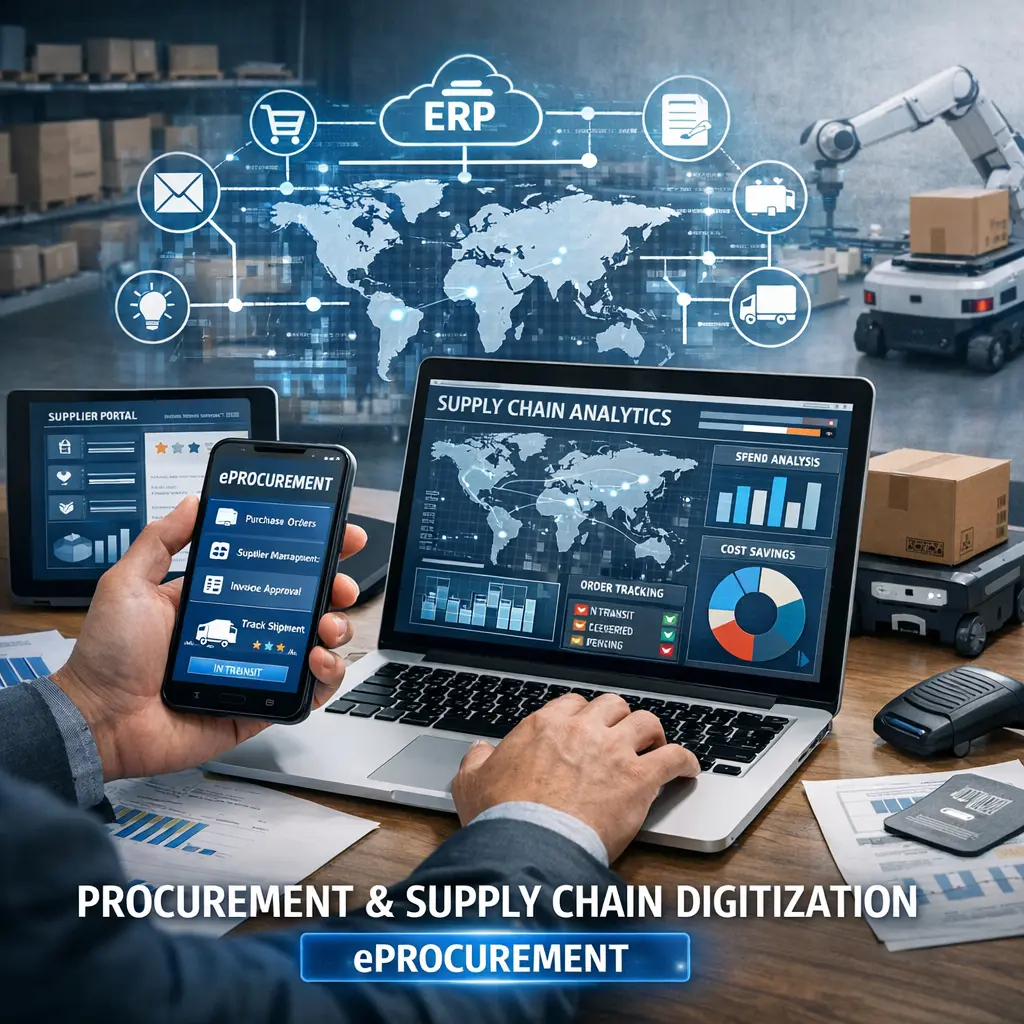
Procurement and Supply Chain Digitization (eProcurement) in construction involves using digital platforms and tools to automate and streamline purchasing, sourcing, and logistics processes. By leveraging digital applications, construction firms can efficiently manage information related to materials, suppliers, and project timelines. This enhances transparency, reduces manual errors, improves cost control, and enables real-time tracking of resources, ultimately resulting in more efficient project delivery and better collaboration among stakeholders.
💡 Key Takeaways
- Understand what eProcurement is and how it digitizes the procurement-to-pay process.
- Identify benefits of procurement digitization, including cost savings, transparency, and faster cycle times.
- Explore key eProcurement components: electronic catalogs, supplier onboarding, purchase orders, invoicing, and payments.
- Learn how digitization enables data analytics, supplier collaboration, and compliance.
- Recognize common implementation challenges and best practices for a successful rollout.
❓ Frequently Asked Questions
What is eProcurement?
A digital system that automates buying—requisition, approval, purchase orders, receipt, and payment—often integrated with other enterprise systems like ERP.
What are the key benefits of digitizing procurement and the supply chain?
Improved spend visibility, faster cycle times, better compliance, stronger supplier collaboration, and lower costs through automation.
What is Procure-to-Pay (P2P) in eProcurement?
An end-to-end digital process from identifying a need to payment, including requisition, approvals, PO issuance, receipt, and invoice matching.
What are common components of an eProcurement system?
Catalog management, supplier management, approval workflows, purchase orders, invoicing, contract management, analytics, and ERP integration.