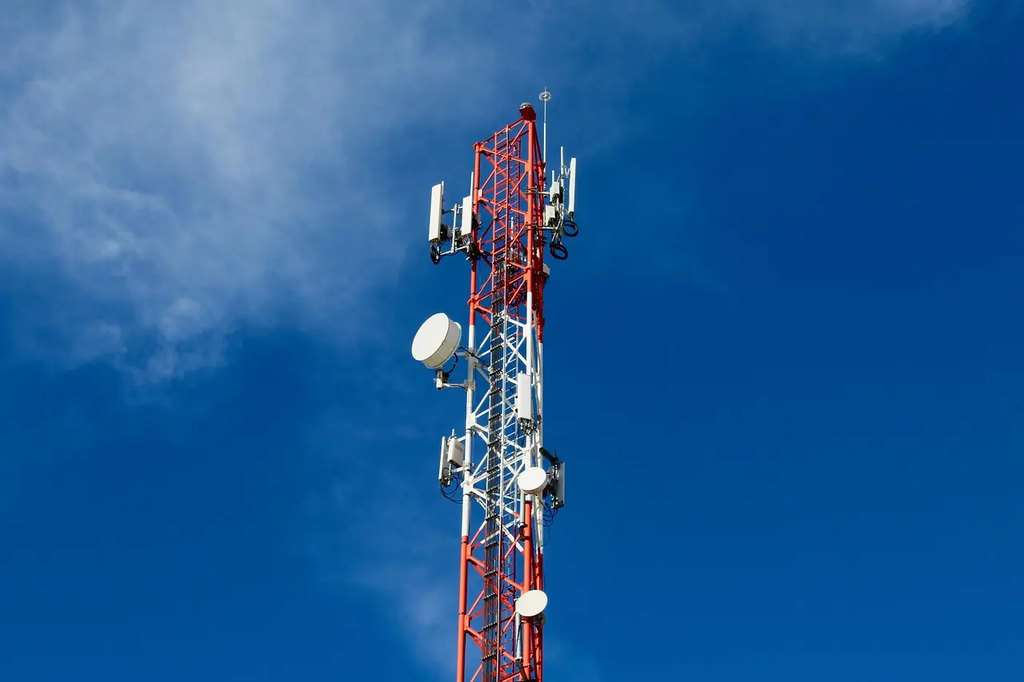
Propagation refers to how electromagnetic signals travel through space or media from a transmitter to a receiver. Fading describes the variation or weakening of signal strength over time or distance, often caused by interference, movement, or obstacles. Shadowing occurs when large objects, like buildings or hills, block or attenuate signals, creating areas with reduced reception. Together, these phenomena significantly affect signal quality, reliability, and power requirements in telecommunications systems.
Propagation, Fading, and Shadowing
Propagation refers to how electromagnetic signals travel through space or media from a transmitter to a receiver. Fading describes the variation or weakening of signal strength over time or distance, often caused by interference, movement, or obstacles. Shadowing occurs when large objects, like buildings or hills, block or attenuate signals, creating areas with reduced reception. Together, these phenomena significantly affect signal quality, reliability, and power requirements in telecommunications systems.

💡 Key Takeaways
- Understand propagation in wireless channels and how distance, path loss, and environmental factors shape signal strength
- Distinguish small-scale fading (multipath-induced rapid fluctuations) from large-scale fading (shadowing) and know common models (Rayleigh/Rician for fading, log-normal for shadowing)
- Describe how fading and shadowing affect link reliability, received power distributions, and outage probability in communication systems
- Identify common mitigation strategies (diversity, adaptive modulation and coding, power control, and beamforming) to combat fading and shadowing
❓ Frequently Asked Questions
What is propagation in wireless communications?
Propagation describes how radio waves travel from transmitter to receiver, including distance, frequency, and environmental effects such as reflections and diffraction that shape signal strength.
What is fading and what causes it?
Fading is the fluctuation of signal strength over time or space due to multipath interference, movement, and Doppler shift; common models include Rayleigh (no LOS) and Rician (with LOS).
What is shadowing (large-scale fading)?
Shadowing refers to slower variations in average signal strength caused by obstacles (buildings, terrain) blocking or attenuating the path, often modeled as log-normal fading.
How can fading and shadowing be mitigated in system design?
Use diversity (spatial, time, or frequency), MIMO, adaptive modulation and coding, power control, equalization, and careful antenna placement to reduce the impact.