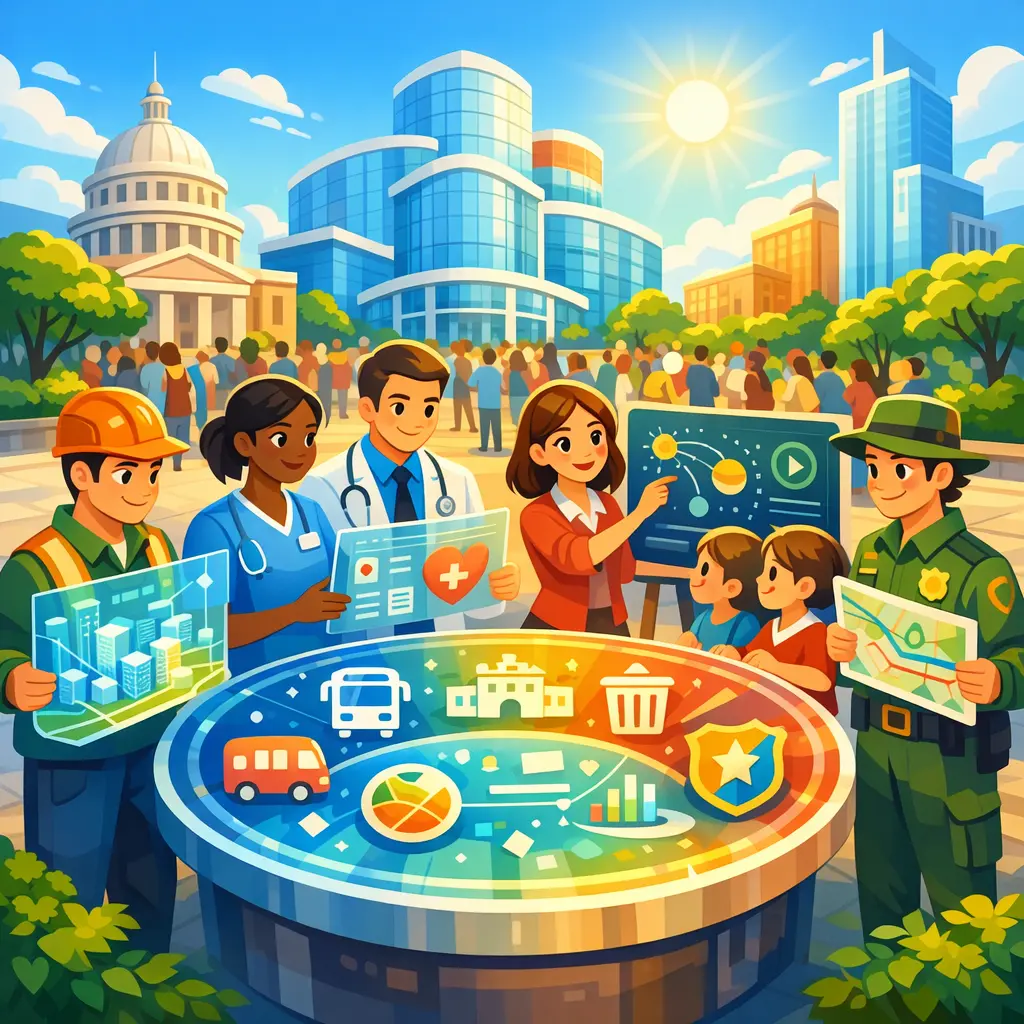
Public Sector Innovation & Civic Technology refers to the use of new ideas, digital tools, and technological solutions to improve government operations, legal frameworks, and public services. It emphasizes modernizing traditional practices, enhancing transparency, and increasing citizen engagement. By leveraging technology, public institutions can deliver services more efficiently, foster accountability, and address societal challenges, ultimately strengthening the relationship between government and the communities they serve.
Public Sector Innovation & Civic Technology
Public Sector Innovation & Civic Technology refers to the use of new ideas, digital tools, and technological solutions to improve government operations, legal frameworks, and public services. It emphasizes modernizing traditional practices, enhancing transparency, and increasing citizen engagement. By leveraging technology, public institutions can deliver services more efficiently, foster accountability, and address societal challenges, ultimately strengthening the relationship between government and the communities they serve.

💡 Key Takeaways
- Define public sector innovation and civic technology and how they improve government services.
- Identify real-world civic tech examples that boost transparency, participation, and service delivery.
- Explain how data openness and APIs enable citizen-facing apps and dashboards.
- Discuss design, privacy, and procurement challenges in delivering civic tech at scale.
❓ Frequently Asked Questions
What is public sector innovation?
Public sector innovation is improving government services, processes, or policies through new ideas, digital tools, and cross‑sector collaboration to deliver better outcomes for citizens.
What is civic technology?
Civic technology refers to apps, platforms, and data tools that help people interact with government, access public services, participate in decision-making, and stay informed about civic life.
How can data and analytics drive public sector innovation?
Data and analytics provide insights for better policymaking, performance measurement, and service optimization, while supporting transparency and accountability and protecting privacy.
Can you give examples of civic technology in action?
Examples include open data portals, 311 or service-request apps, citizen feedback platforms, participatory budgeting tools, and disaster-response apps.