Publication Art Direction & Production (Visual Arts & Design Skills) involves overseeing the visual style and layout of printed or digital materials, such as magazines, books, or online publications. This role combines creative vision with technical expertise, ensuring cohesive design, effective use of imagery, typography, and color schemes. It also includes managing production processes, collaborating with designers, photographers, and printers to deliver high-quality, visually appealing publications that communicate the intended message to the audience.
Publication Art Direction & Production
Publication Art Direction & Production (Visual Arts & Design Skills) involves overseeing the visual style and layout of printed or digital materials, such as magazines, books, or online publications. This role combines creative vision with technical expertise, ensuring cohesive design, effective use of imagery, typography, and color schemes. It also includes managing production processes, collaborating with designers, photographers, and printers to deliver high-quality, visually appealing publications that communicate the intended message to the audience.
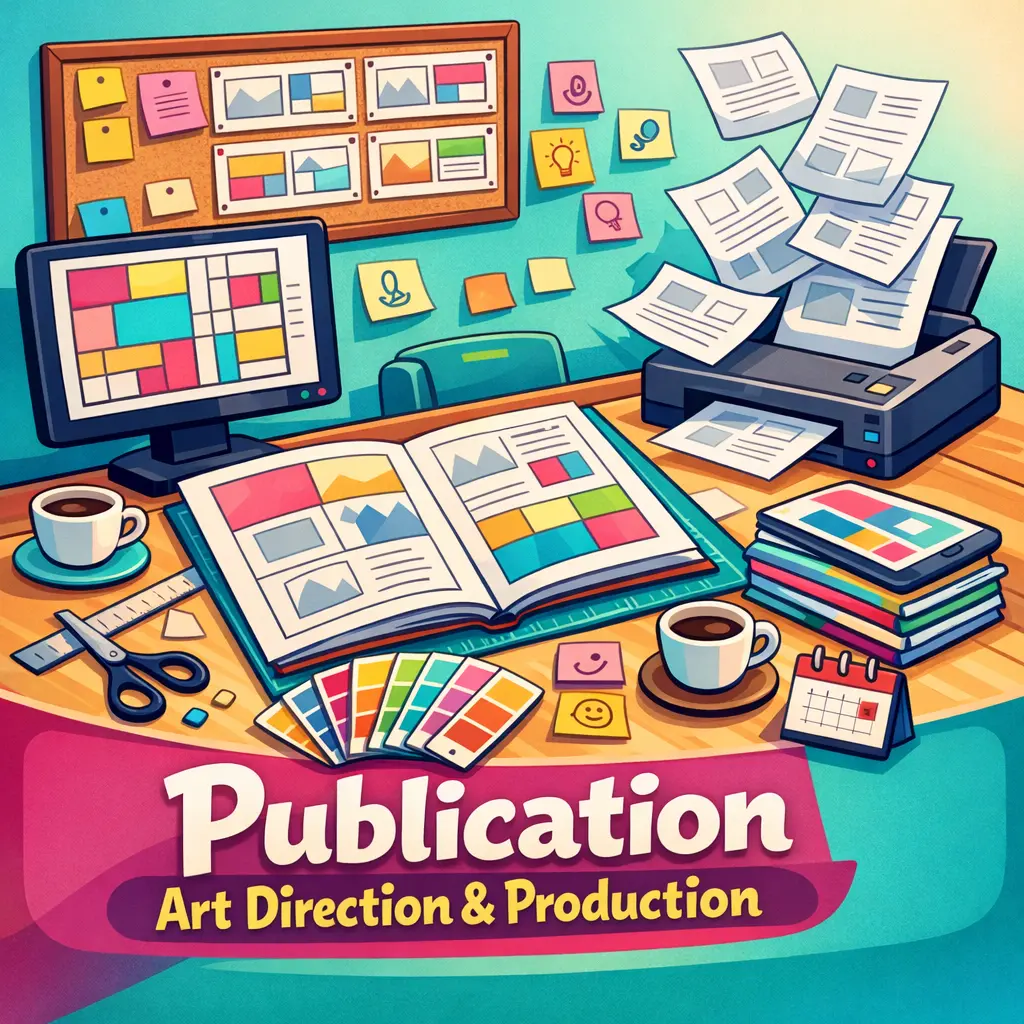
💡 Key Takeaways
- Define a publication's visual identity through layout, typography, imagery, and color.
- Navigate the end-to-end production workflow from concept and design to prepress, printing, and digital delivery.
- Apply grid systems and typography rules to create cohesive, readable page layouts.
- Understand print production basics (bleed, proofs, paper choices) and digital publishing considerations (resolution, formats, accessibility).
❓ Frequently Asked Questions
What is the role of the art director in a publication?
The art director defines the publication’s visual concept, sets the look and feel, oversees typography and imagery, manages the grid system, and ensures brand consistency across pages while coordinating with editors, designers, photographers, and printers.
What is a style guide and why is it important in publication design?
A style guide is a set of rules for typography, color, imagery, grids, and layout. It ensures visual consistency across all pages and issues and speeds up production.
What should you consider when planning print vs. digital production for a publication?
Print requires bleed, margins, color management (CMYK), paper stock, and binding; digital requires responsive layouts, screen-friendly typography, accessibility, and optimized image formats.
How should imagery and typography be selected to support the content?
Choose imagery that matches tone and supports the story, ensure proper licensing and crediting, maintain consistent image style, and pick readable, brand-aligned fonts that work with the grid.