Pulmonology & Respiratory Therapy are specialized healthcare fields focused on diagnosing, treating, and managing diseases of the lungs and respiratory system. Pulmonologists are medical doctors who address conditions like asthma, COPD, and pneumonia, while respiratory therapists provide therapeutic care, manage ventilators, and assist patients with breathing difficulties. Both careers play vital roles in improving lung health, supporting critical care, and enhancing quality of life for individuals with respiratory disorders.
Pulmonology & Respiratory Therapy
Pulmonology & Respiratory Therapy are specialized healthcare fields focused on diagnosing, treating, and managing diseases of the lungs and respiratory system. Pulmonologists are medical doctors who address conditions like asthma, COPD, and pneumonia, while respiratory therapists provide therapeutic care, manage ventilators, and assist patients with breathing difficulties. Both careers play vital roles in improving lung health, supporting critical care, and enhancing quality of life for individuals with respiratory disorders.
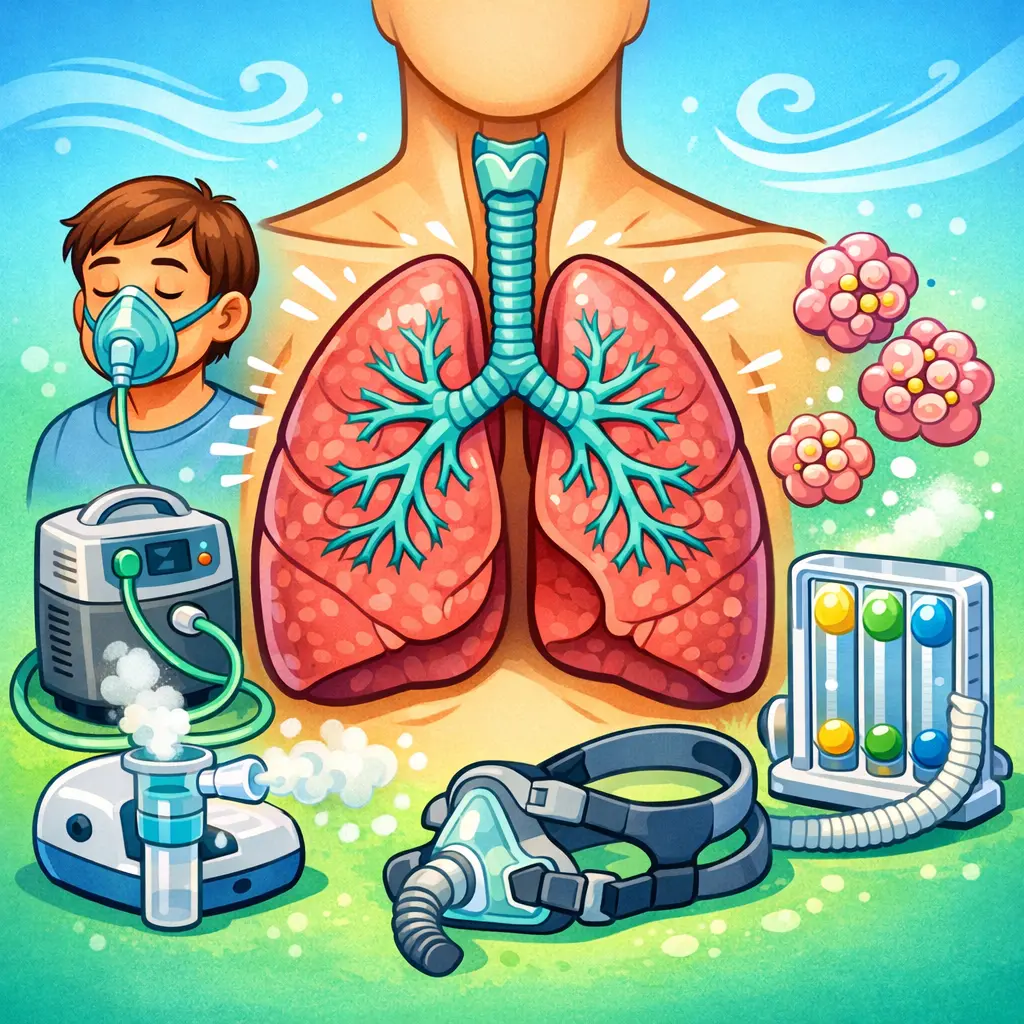
💡 Key Takeaways
- Identify key structures of the respiratory system and how airflow and gas exchange occur.
- Recognize common pulmonary conditions (e.g., asthma, COPD, pneumonia) and basic management approaches in respiratory therapy.
- Interpret basic lung function tests (spirometry) and what results indicate about obstruction or restriction.
- Describe core respiratory therapy techniques, including airway clearance methods, oxygen therapy, and aerosolized medication delivery.
❓ Frequently Asked Questions
What is pulmonology?
Pulmonology is the medical specialty that focuses on diseases of the lungs and airways, including diagnosis, treatment, and ongoing management of conditions like asthma, COPD, pneumonia, and sleep-related breathing disorders.
What does a respiratory therapist do?
A respiratory therapist assesses breathing problems, administers inhaled medications, supports breathing and airway management, and performs tests like spirometry to guide lung-disease treatment.
What is spirometry and what do FEV1 and FVC tell us?
Spirometry is a lung function test that measures air exhaled and the speed of exhalation. FEV1 is the volume exhaled in one second; FVC is the total exhaled volume. The FEV1/FVC ratio helps distinguish obstructive from restrictive lung patterns.
What is the difference between asthma and COPD?
Asthma is typically reversible airway inflammation with episodic symptoms, often starting in youth. COPD is a chronic, progressive airflow limitation that is not fully reversible, usually due to long-term irritant exposure like smoking.