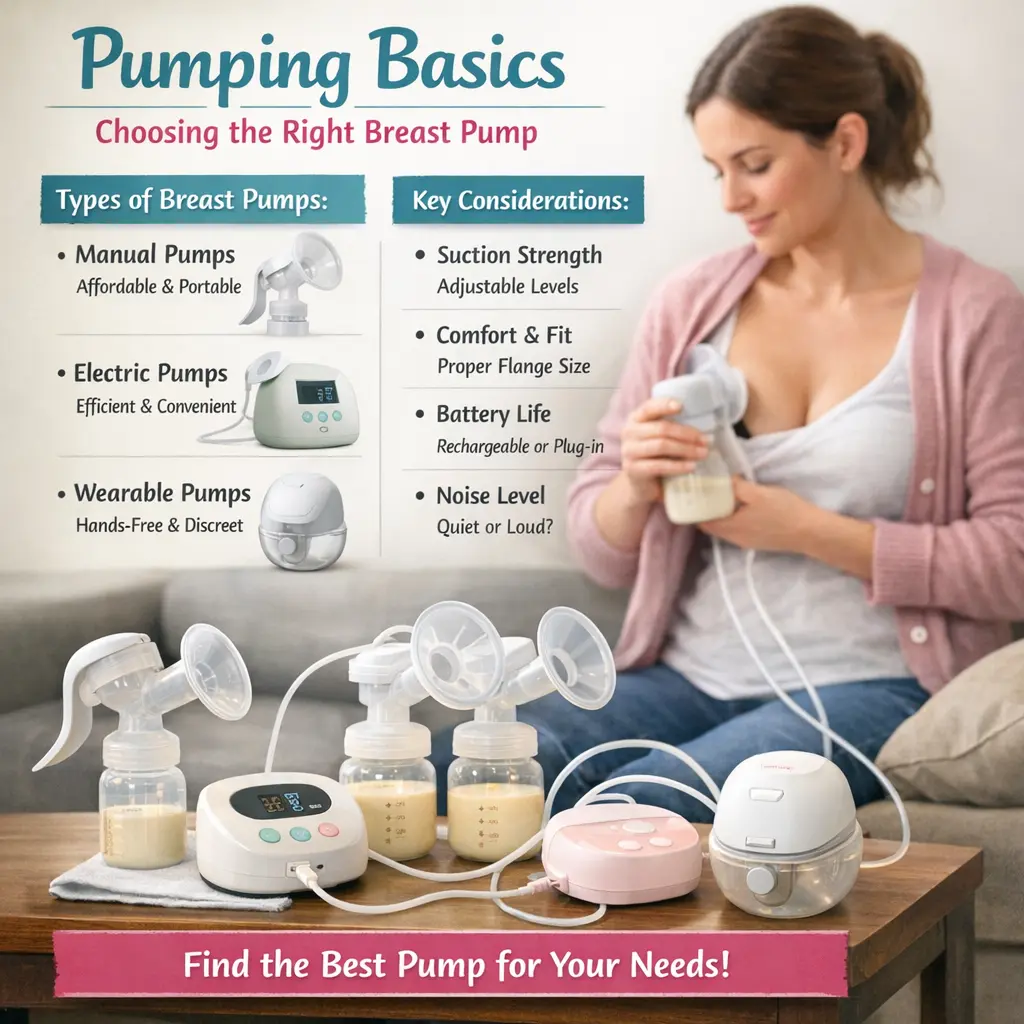
Pumping basics involve learning how to use a breast pump to express and store breast milk, ensuring comfort and efficiency. Choosing the right breast pump depends on your needs—manual pumps are cost-effective for occasional use, while electric pumps are ideal for frequent pumping. Consider factors like portability, suction strength, ease of cleaning, and budget. Proper pump selection and technique help maintain milk supply, support breastfeeding goals, and provide flexibility for new mothers during post-pregnancy care.
Pumping basics and choosing the right breast pump
Pumping basics involve learning how to use a breast pump to express and store breast milk, ensuring comfort and efficiency. Choosing the right breast pump depends on your needs—manual pumps are cost-effective for occasional use, while electric pumps are ideal for frequent pumping. Consider factors like portability, suction strength, ease of cleaning, and budget. Proper pump selection and technique help maintain milk supply, support breastfeeding goals, and provide flexibility for new mothers during post-pregnancy care.
💡 Key Takeaways
- Differentiate between manual, electric, and hospital-grade pumps and when to use each.
- Understand how flange size, suction strength, and cycle speed impact comfort and milk output.
- Learn how to pick a pump based on lifestyle, including frequency, portability, noise, and budget.
- Know basic pumping setup, cleaning, and milk storage guidelines for safety and hygiene.
❓ Frequently Asked Questions
What is the difference between manual and electric breast pumps?
Manual pumps are hand-operated and good for occasional use. Electric pumps use a motor and can be single or double; they’re faster and more convenient for frequent pumping. Choose based on how often you’ll pump and your budget.
How do I choose the right flange size (breast shield)?
The flange should fit around the base of the nipple without rubbing or pinching. An ill-fitting flange can reduce milk flow and cause discomfort. If unsure, try different sizes or seek a fitting from a lactation consultant.
How often and for how long should I pump?
Pumping frequency depends on your needs. Many moms pump 8–12 times a day when building supply. Sessions typically last 15–20 minutes, and you can finish when milk flow slows. Double pumping can save time.
How should I clean, store, and handle pumped milk and parts?
Rinse and wash pump parts with warm soapy water after each use, then air-dry. Sanitize periodically. Store expressed milk in clean containers, label with the date, and refrigerate or freeze according to local guidelines.