Quantum Computing and Information Science is an interdisciplinary field that combines principles of quantum mechanics with information theory and computer science. It explores how quantum systems can process, store, and transmit information in ways that surpass classical computers. This field includes the development of quantum algorithms, quantum cryptography, and quantum communication, aiming to solve complex problems more efficiently and securely than traditional computing technologies.
Quantum Computing and Information Science
Quantum Computing and Information Science is an interdisciplinary field that combines principles of quantum mechanics with information theory and computer science. It explores how quantum systems can process, store, and transmit information in ways that surpass classical computers. This field includes the development of quantum algorithms, quantum cryptography, and quantum communication, aiming to solve complex problems more efficiently and securely than traditional computing technologies.
💡 Key Takeaways
- Understand how qubits, superposition, and entanglement enable information processing beyond classical bits
- Learn how quantum information is stored, manipulated, and transmitted using quantum gates and measurements
- Recognize core ideas in quantum information science, including no-cloning, quantum teleportation, and quantum error correction
- Explore real-world applications and current challenges of quantum computing, such as cryptography, materials simulation, decoherence, and scalability
❓ Frequently Asked Questions
What is quantum computing in simple terms?
Quantum computing uses qubits and quantum phenomena to perform certain computations faster than classical computers for specific problems, by exploring many possibilities at once and leveraging quantum correlations.
What is a qubit and how is it different from a classical bit?
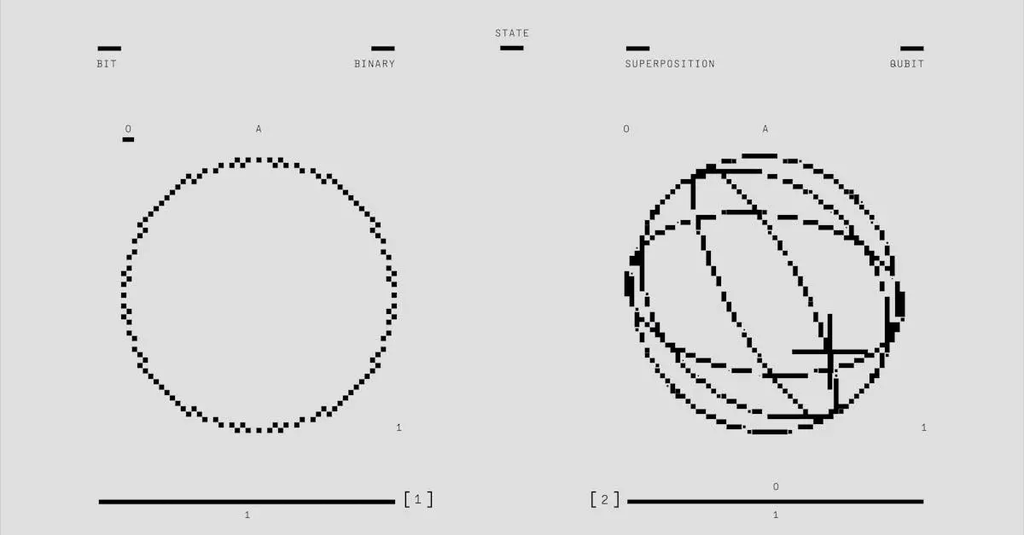
A qubit can be in a superposition of 0 and 1, described by a quantum state. When measured, it yields 0 or 1 with certain probabilities, unlike a classical bit that is strictly 0 or 1.
What are superposition and entanglement, and why do they matter for quantum computing?
Superposition lets a qubit represent multiple states at once, enabling parallel computations. Entanglement links qubits so the state of one instantly affects others, enabling powerful correlations used in many quantum algorithms.
Why is quantum error correction important for scalable quantum computers?
Quantum systems are fragile and easily disturbed by noise. Error correction protects quantum information, allowing reliable computations as systems scale up.