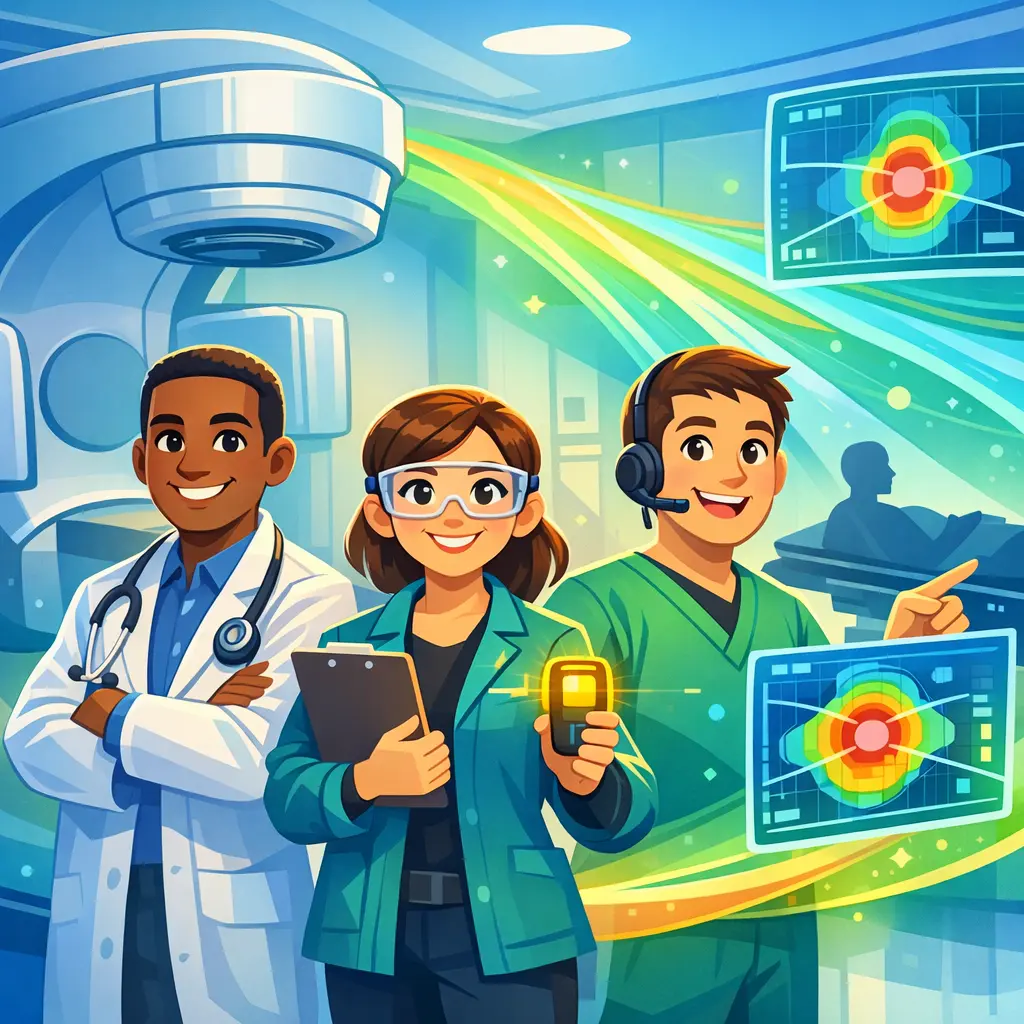
Radiation Oncology and Medical Physics careers focus on the use of radiation to diagnose and treat cancer and other diseases. Professionals in these fields work closely with physicians, nurses, and technologists to plan and deliver safe, effective radiation treatments. Medical physicists ensure the accuracy and safety of radiation equipment and procedures, while radiation oncologists develop patient treatment plans. These careers require advanced education and play a vital role in modern healthcare and cancer management.
Radiation Oncology & Medical Physics Careers
Radiation Oncology and Medical Physics careers focus on the use of radiation to diagnose and treat cancer and other diseases. Professionals in these fields work closely with physicians, nurses, and technologists to plan and deliver safe, effective radiation treatments. Medical physicists ensure the accuracy and safety of radiation equipment and procedures, while radiation oncologists develop patient treatment plans. These careers require advanced education and play a vital role in modern healthcare and cancer management.
💡 Key Takeaways
- Understand the roles of radiation oncologists and medical physicists and how they collaborate in patient care.
- Identify typical education paths, certifications, and career progression in radiation oncology and medical physics.
- Learn core concepts in treatment planning, dose calculation, and delivery technologies (e.g., IMRT, VMAT, SBRT).
- Recognize radiation safety, QA processes, and regulatory considerations essential to practice.
❓ Frequently Asked Questions
What does a radiation oncologist do?
A physician who uses targeted radiation therapy to treat cancer and select conditions, plans and delivers treatments, and collaborates with other clinicians.
What is the role of a medical physicist in radiation therapy?
Applies physics to medicine to ensure safe, accurate use of radiation—calibrates equipment, develops treatment plans, performs dosimetry, and carries out quality assurance.
What educational paths lead to these careers?
Radiation oncologist: medical degree (MD/DO) plus a radiation oncology residency and board certification. Medical physicist: bachelor's in physics/engineering, followed by a graduate degree in medical physics, clinical residency, and board certification.
Where do these professionals typically work, and what skills help success?
Hospitals, cancer centers, or academic medical centers. Key skills include strong math/physics, attention to detail, teamwork, communication, and problem-solving.