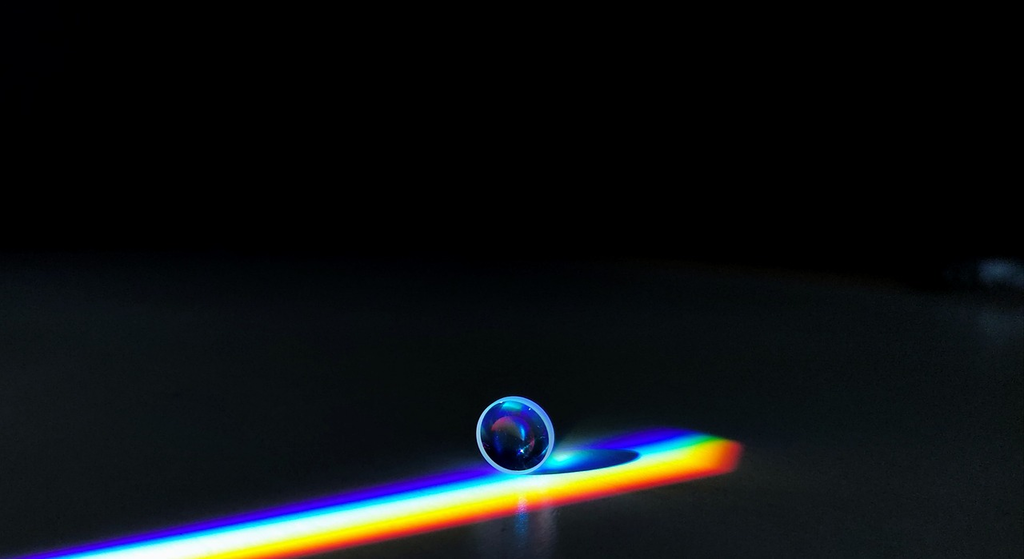
Rainbows and Optics explores the fascinating science behind how rainbows form in the sky. When sunlight passes through raindrops, it bends, reflects, and disperses, splitting into a spectrum of colors. This optical phenomenon creates the beautiful arc we see after rain. The study of optics helps us understand not only rainbows but also other sky signs like halos and stars, revealing the interplay between light, water, and atmospheric conditions.
Rainbows and Optics
Rainbows and Optics explores the fascinating science behind how rainbows form in the sky. When sunlight passes through raindrops, it bends, reflects, and disperses, splitting into a spectrum of colors. This optical phenomenon creates the beautiful arc we see after rain. The study of optics helps us understand not only rainbows but also other sky signs like halos and stars, revealing the interplay between light, water, and atmospheric conditions.

💡 Key Takeaways
- How rainbows form: light refracts in water droplets, reflects inside them, and disperses into a spectrum.
- Primary vs. secondary rainbows: different color orders and brightness levels.
- Prism-like dispersion: how white light splits into colors and how that relates to rainbows.
- Common misconceptions and real-world optics applications of dispersion and rainbow phenomena.
❓ Frequently Asked Questions
What causes a rainbow to form?
Sunlight enters raindrops, bends and splits into colors (dispersion), reflects inside the drop, and bends again as it exits, producing a spectrum.
Why are there primary and secondary rainbows?
The primary rainbow comes from one internal reflection inside each drop; the secondary rainbow comes from two internal reflections, making it fainter and with reversed colors.
What is dispersion, and how does it relate to rainbows?
Dispersion is the separation of light into different colors because each wavelength bends differently in water; red bends least, violet most, creating the color sequence of a rainbow.
At approximately what angle relative to the sun does a primary rainbow appear?
About 42 degrees from the antisolar point (the direction opposite the sun); this angle—slightly color-dependent—shapes the rainbow's arc.