Ramadan practices involve fasting from dawn to sunset, engaging in prayer, reading the Quran, and performing charitable acts. Iftar traditions center around breaking the fast at sunset with dates and water, followed by a communal meal featuring a variety of dishes. Families and friends gather to share food, strengthen bonds, and express gratitude. These customs foster spiritual reflection, self-discipline, and a strong sense of community throughout the holy month.
Ramadan Practices & Iftar Traditions
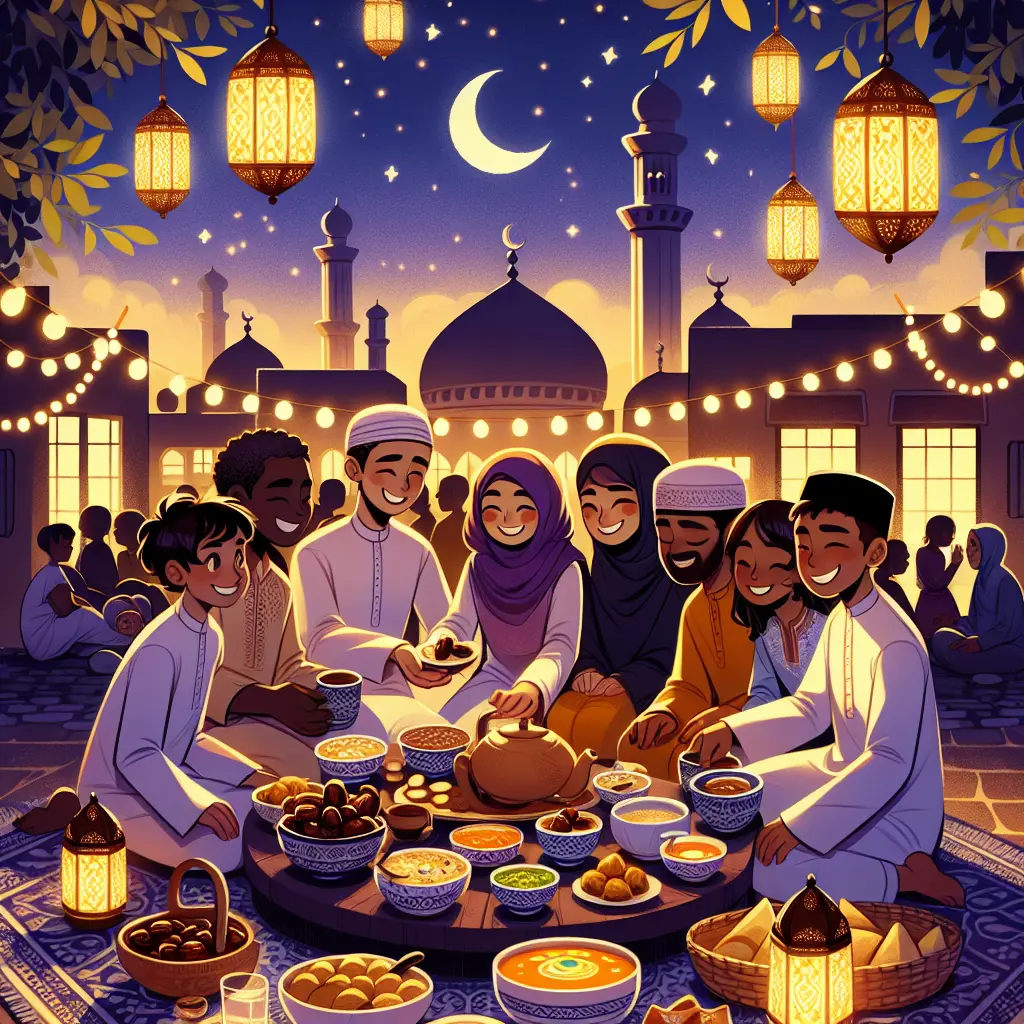
Ramadan practices involve fasting from dawn to sunset, engaging in prayer, reading the Quran, and performing charitable acts. Iftar traditions center around breaking the fast at sunset with dates and water, followed by a communal meal featuring a variety of dishes. Families and friends gather to share food, strengthen bonds, and express gratitude. These customs foster spiritual reflection, self-discipline, and a strong sense of community throughout the holy month.
💡 Key Takeaways
- Understand the purpose and timing of Ramadan fasting (dawn to sunset) and its spiritual significance.
- Identify core Ramadan practices: prayers, Quran recitation, and charitable acts.
- Describe Iftar traditions: breaking the fast with dates and water, followed by a communal meal.
- Explore cultural variations in Ramadan observance and related festive foods.
❓ Frequently Asked Questions
What is Ramadan and what do Muslims do during it?
Ramadan is the ninth month of the Islamic calendar. Muslims fast daily from dawn to sunset, increase worship, recite the Quran, and engage in charitable acts and self-discipline.
What are Suhoor and Iftar, and what happens at Iftar?
Suhoor is the pre-dawn meal before the fast begins. Iftar is breaking the fast at sunset, typically starting with dates and water, followed by a communal meal.
Who is exempt from fasting, and how is it handled?
Those who are ill, traveling, pregnant or breastfeeding, elderly, or children may be exempt. They can make up the fast later or provide fidya (charity) depending on their situation.
What is Eid al-Fitr and how is it celebrated after Ramadan?
Eid al-Fitr marks the end of Ramadan with communal prayers, charity (zakat al-fitr), festive meals, visiting family and friends, and new clothes.
What are common Ramadan practices besides fasting?
Increased prayer (often Tarawih), extra Quran reading, charitable acts, reflection, and community meals during Iftar.