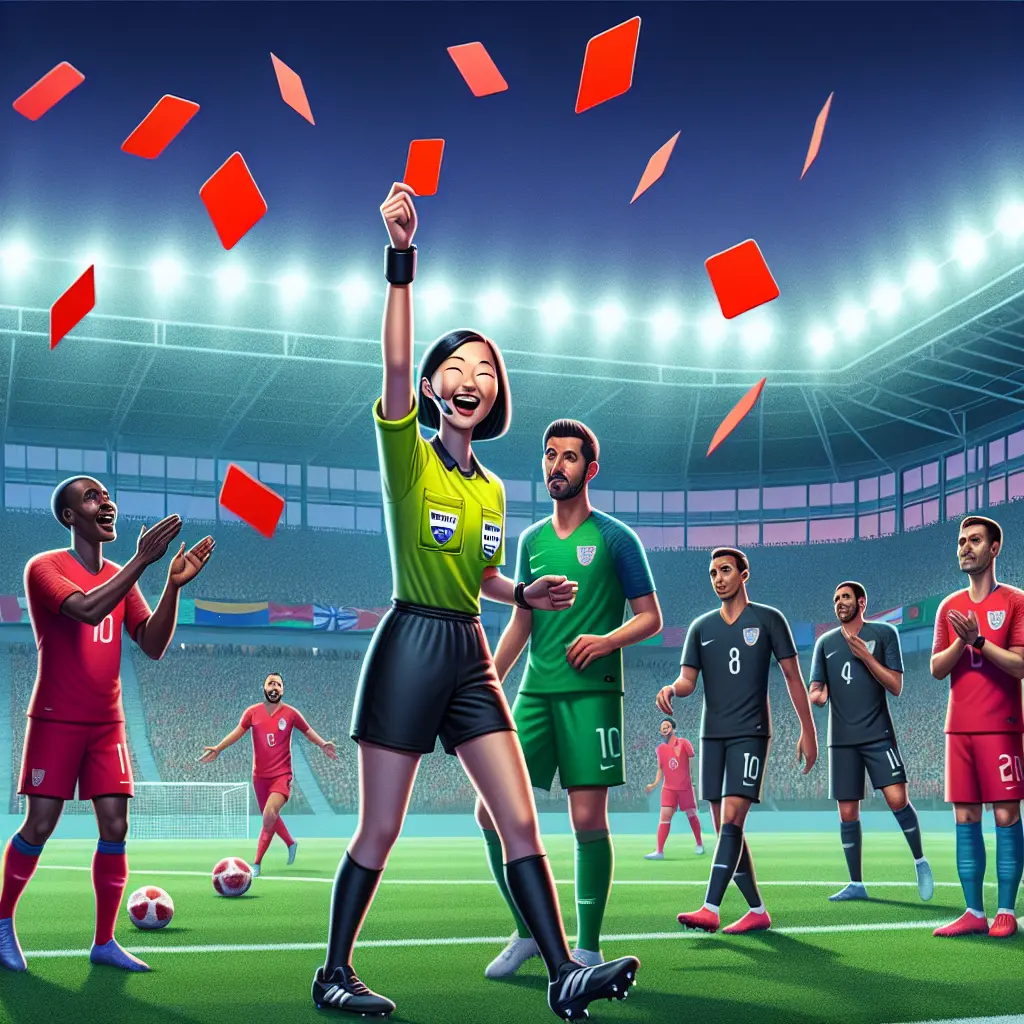
Red cards and discipline at the World Cup refer to the enforcement of rules and fair play during the tournament. Players who commit serious fouls or misconduct may receive red cards, resulting in immediate ejection from the game and suspension from subsequent matches. Strict discipline ensures the integrity of the competition, protects player safety, and maintains sportsmanship, making red cards a significant aspect of World Cup football.
Red cards and discipline at the World Cup
Red cards and discipline at the World Cup refer to the enforcement of rules and fair play during the tournament. Players who commit serious fouls or misconduct may receive red cards, resulting in immediate ejection from the game and suspension from subsequent matches. Strict discipline ensures the integrity of the competition, protects player safety, and maintains sportsmanship, making red cards a significant aspect of World Cup football.
💡 Key Takeaways
- Understand what triggers a red card in World Cup matches and what counts as a sending-off.
- Explain the immediate game impact of a red card (ejection and playing with 10 players).
- Describe the typical suspension consequences that follow a red card in the World Cup.
- Appreciate how referees and technology like VAR are used to enforce discipline and uphold fair play during the tournament.
❓ Frequently Asked Questions
What is a red card and what happens when it is shown at the World Cup?
A red card means a player is sent off for serious foul play or misconduct. The team plays with 10 players for the rest of the match, and the player is suspended from the next match (with potential longer bans for serious offences) as determined by FIFA rules.
How are red-card suspensions determined in the World Cup?
After a red card, the player must miss at least the next World Cup match. The exact ban length can be extended by FIFA’s Disciplinary Committee based on the seriousness of the offence.
What are yellow cards and how can they affect future World Cup matches?
Yellow cards are cautions. In the World Cup, receiving two yellow cards across different matches typically leads to a suspension for the next game.
What is the role of VAR in World Cup disciplinary decisions?
Video Assistant Referee (VAR) can review incidents to help identify fouls or misconduct. The final decision to issue a yellow or red card rests with the on‑field referee, who may use the VAR review to make or confirm the call.