Reflux and spit-up are common in infants, especially during feeding. Proper positioning—keeping the baby upright during and after feeds—can help reduce these issues. Pacing feeds by offering smaller amounts more slowly allows the baby to swallow and digest comfortably, minimizing overfeeding and discomfort. These strategies are important in child nutrition and can ease the transition during night weaning, promoting better sleep and digestive health for the baby.
Reflux and spit-up: positioning and pacing
Reflux and spit-up are common in infants, especially during feeding. Proper positioning—keeping the baby upright during and after feeds—can help reduce these issues. Pacing feeds by offering smaller amounts more slowly allows the baby to swallow and digest comfortably, minimizing overfeeding and discomfort. These strategies are important in child nutrition and can ease the transition during night weaning, promoting better sleep and digestive health for the baby.
💡 Key Takeaways
- Understand reflux vs spit-up in infants and what’s typical during growth.
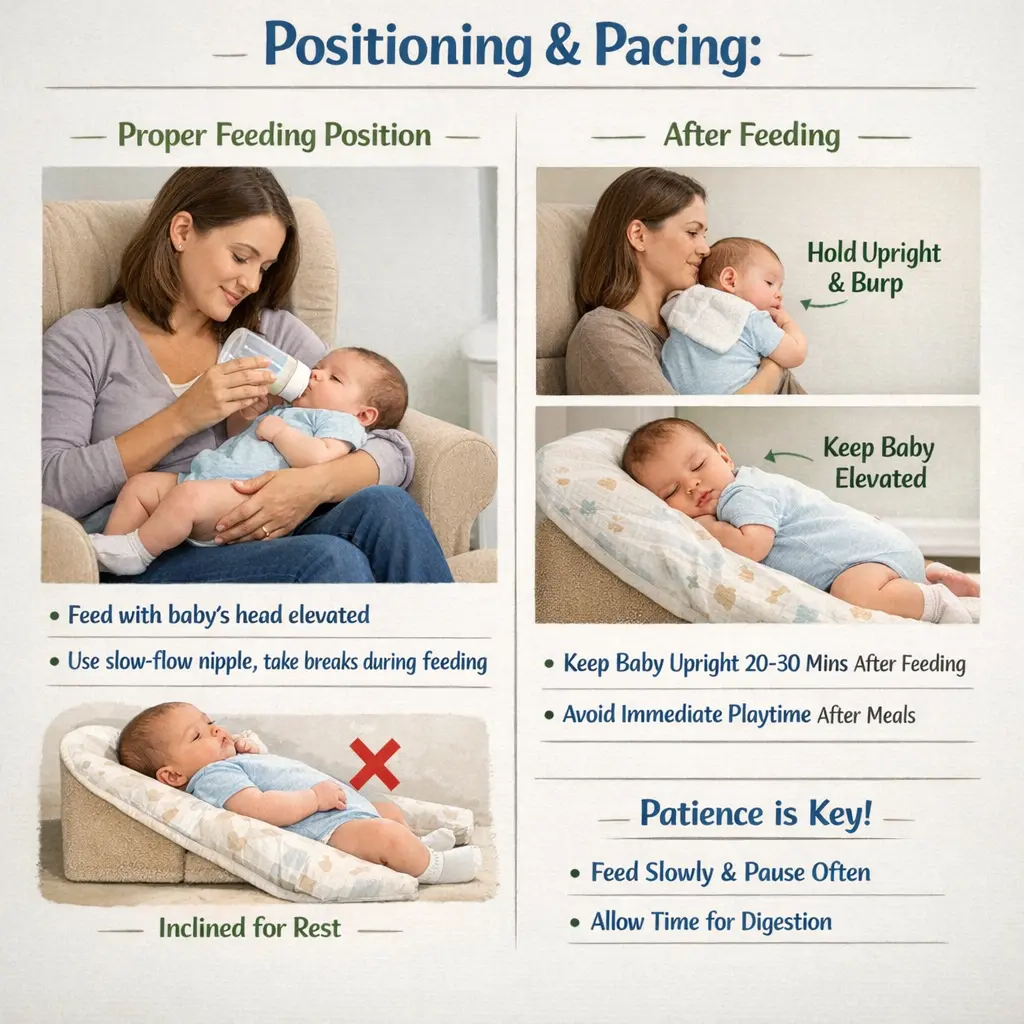
- Pace feeds with slower flow, shorter intervals, and regular burping to reduce spit-up.
- Use safe positioning during and after feeds (hold baby upright and avoid lying flat immediately after eating) to help control reflux.
- Know red flags and when to seek medical advice for persistent reflux or feeding concerns.
❓ Frequently Asked Questions
What is the difference between spit-up and reflux in babies?
Spit-up is small amounts of milk that come up easily during or after feeding and is usually painless. Reflux occurs when stomach contents move back up toward the throat and can cause discomfort; many babies outgrow reflux by around 12 months.
How can positioning help reduce spit-up?
Hold the baby upright during feeds and keep them upright for about 20–30 minutes after feeding. Avoid feeding or soothing in a fully flat or prone position.
What is feeding pacing and how does it help with reflux?
Pace feeding by giving small sips, pausing to swallow, and using a slow-flow nipple if bottle-feeding. This can reduce air swallowing and help minimize spit-up.
When should I talk to a healthcare provider about reflux or spit-up?
Seek advice if the baby isn’t gaining weight, has forceful vomiting, blood in spit-up, persistent coughing or wheezing, feeding difficulties, signs of dehydration, or reflux symptoms lasting beyond about 12–18 months.