The Reform Acts were a series of laws passed in 19th and early 20th century Britain that expanded the right to vote, or franchise, to broader segments of the population. Initially, voting was restricted to wealthy landowners, but the Acts gradually included middle-class men, working-class men, and eventually women. These reforms aimed to make the political system more representative and address demands for greater democracy and social equality.
Reform Acts and the extension of the franchise
The Reform Acts were a series of laws passed in 19th and early 20th century Britain that expanded the right to vote, or franchise, to broader segments of the population. Initially, voting was restricted to wealthy landowners, but the Acts gradually included middle-class men, working-class men, and eventually women. These reforms aimed to make the political system more representative and address demands for greater democracy and social equality.
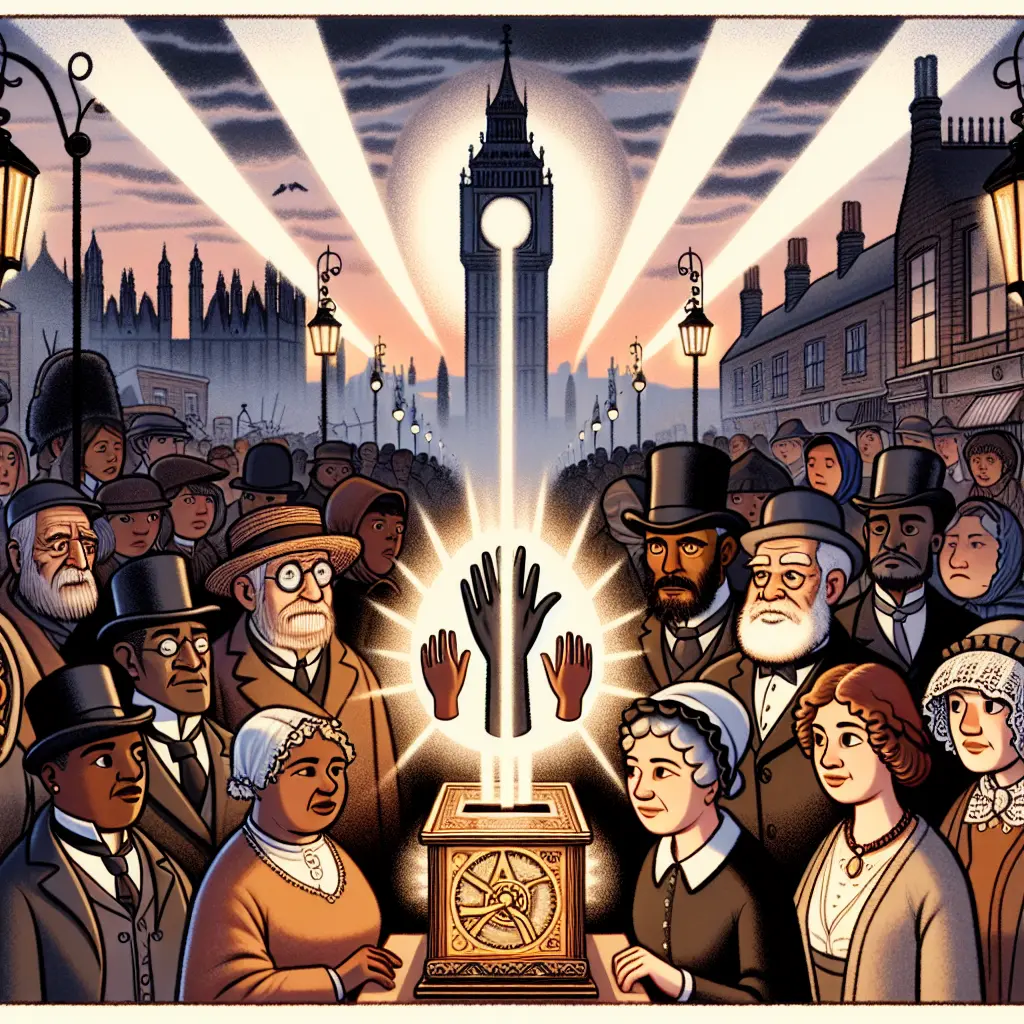
💡 Key Takeaways
- Trace how the Reform Acts broadened voting rights beyond wealthy landowners.
- Identify the key Acts and what changes they brought for voters (1832, 1867, 1884).
- Explore why reform happened: industrialization, urban growth, and calls for fairer representation.
- See how reform changed Parliament: more voters, redrawn constituencies, and shifting party power.
- Understand the move toward women's suffrage in the early 20th century (1918/1928) as the final stage of franchise expansion.
❓ Frequently Asked Questions
What did the 1832 Reform Act change about who could vote?
It broadened the electorate beyond wealthy landowners to include many middle-class men and urban voters, and it redrew constituencies to reduce 'rotten boroughs'.
How did the 1867 Reform Act alter the franchise?
It extended voting rights to many urban working-class men, greatly expanding the number of eligible voters.
What did the 1884–85 reforms accomplish?
The 1884 act extended the franchise to rural male voters on the same terms as urban voters, and the 1885 act redistributed seats to reflect population changes.
When did women gain the vote, and what happened in 1928?
Women gained the vote in 1918 (over 30 with property). The 1928 act granted equal voting rights to all women aged 21 and over, matching men.