Renal pathophysiology refers to the study of abnormal kidney function and the mechanisms underlying kidney diseases. It explores how disruptions in normal kidney processes—such as filtration, reabsorption, and secretion—lead to conditions like acute or chronic kidney failure, electrolyte imbalances, and hypertension. Understanding renal pathophysiology is essential for diagnosing, managing, and treating kidney-related disorders, as the kidneys play a vital role in maintaining the body’s fluid, electrolyte, and waste balance.
Renal Pathophysiology
Renal pathophysiology refers to the study of abnormal kidney function and the mechanisms underlying kidney diseases. It explores how disruptions in normal kidney processes—such as filtration, reabsorption, and secretion—lead to conditions like acute or chronic kidney failure, electrolyte imbalances, and hypertension. Understanding renal pathophysiology is essential for diagnosing, managing, and treating kidney-related disorders, as the kidneys play a vital role in maintaining the body’s fluid, electrolyte, and waste balance.
💡 Key Takeaways
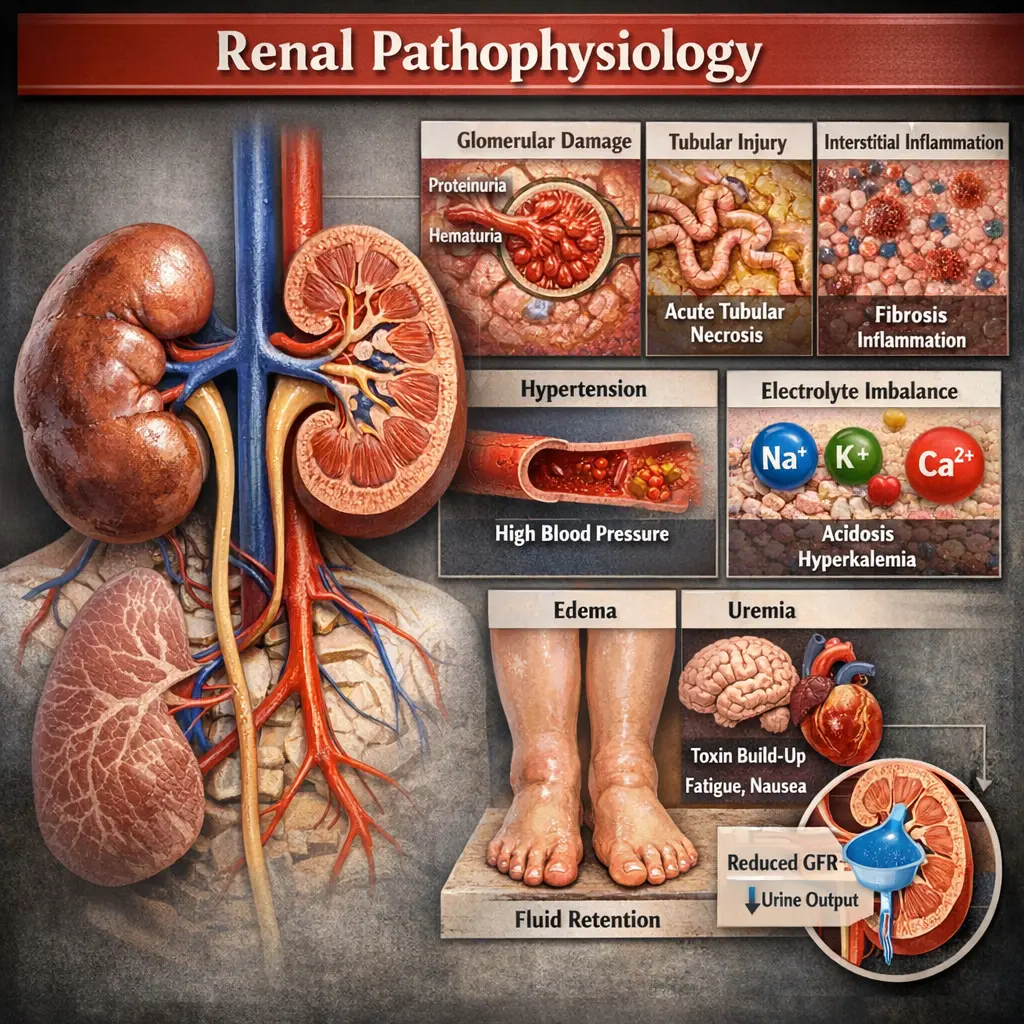
- Understand the normal structure and function of the nephron and how it maintains fluid, electrolyte, and acid-base balance.
- Explain the core processes of urine formation—glomerular filtration, tubular reabsorption, and secretion—and how these are regulated along the nephron.
- Identify key renal pathophysiology mechanisms such as glomerular injury, tubular-interstitial damage, and CKD progression, and how they impair kidney function.
- Describe how renal disease affects systemic physiology, including blood pressure control via the renin-angiotensin-aldosterone system, anemia from reduced erythropoietin, and disturbances in bone-mineral and acid-base balance.
❓ Frequently Asked Questions
What is glomerular filtration rate (GFR), and why is it important?
GFR is the amount of filtrate the kidneys produce each minute; it reflects overall filtration function. Normal ~90–120 mL/min; declines with kidney disease and helps stage CKD and guide dosing.
How do the kidneys regulate acid-base balance?
They reclaim bicarbonate, generate new bicarbonate, and excrete hydrogen ions as urine; this keeps blood pH near 7.35–7.45. Impaired function can cause metabolic acidosis.
What is the renin-angiotensin-aldosterone system (RAAS) and its role in the kidneys?
Low kidney perfusion triggers renin release, producing angiotensin II and aldosterone, which raise blood pressure and promote Na+ reabsorption; RAAS helps control filtration pressure but can contribute to hypertension when overactive.
How do nephrons manage electrolytes and water?
Proximal tubule, loop of Henle, distal tubule, and collecting duct reabsorb water and ions; hormones like aldosterone (Na+ reabsorption, K+ excretion) and ADH (water reabsorption) regulate balance; disturbances cause electrolyte disorders.
How do AKI and CKD differ in pathophysiology?
AKI is a rapid, often reversible drop in GFR due to injury, toxins, or obstruction; CKD is a gradual, chronic loss of nephrons with fibrosis, leading to progressive, often irreversible decline.