Request for Information (RFI) Fundamentals in tender and procurement refer to the initial stage where an organization seeks detailed information from potential suppliers or vendors. The RFI process helps buyers understand market capabilities, available solutions, and supplier qualifications before issuing formal requests such as RFPs or RFQs. It streamlines procurement by clarifying requirements, identifying potential risks, and fostering transparent communication, ultimately supporting informed decision-making for future procurement actions.
Request for Information (RFI) Fundamentals
Request for Information (RFI) Fundamentals in tender and procurement refer to the initial stage where an organization seeks detailed information from potential suppliers or vendors. The RFI process helps buyers understand market capabilities, available solutions, and supplier qualifications before issuing formal requests such as RFPs or RFQs. It streamlines procurement by clarifying requirements, identifying potential risks, and fostering transparent communication, ultimately supporting informed decision-making for future procurement actions.
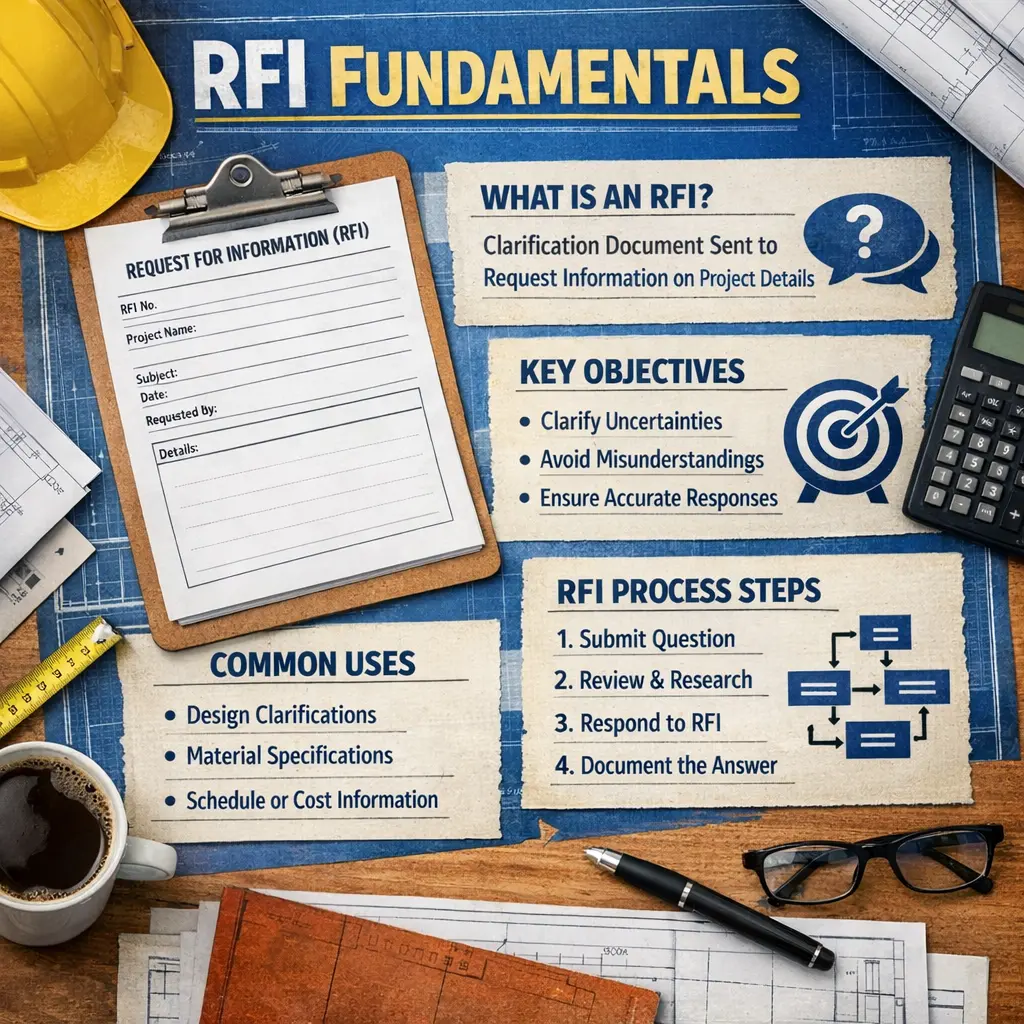
💡 Key Takeaways
- Understand the purpose of an RFI: to gather high-level information from potential suppliers before a formal procurement.
- Differentiate RFIs from RFQs/RFPs: RFIs collect information, while RFQs/RFPs request pricing or proposals.
- Identify essential RFI components: objective, scope, information requested, submission format, and deadlines.
- Use RFI responses to refine requirements and create a more targeted RFP or RFQ.
❓ Frequently Asked Questions
What is a Request for Information (RFI)?
An RFI is a preliminary information-gathering document used to collect high-level details about vendors' capabilities, products, or services. It helps inform scope and decisions and is not a bid or price request.
When should you use an RFI?
Use an RFI early in a project or procurement when requirements are unclear or unknown. It helps understand market options, identify potential vendors, and shape later RFP/RFQ processes.
What are the key components of an RFI?
Common components include background and objectives, high-level requirements, information requests (company profile, capabilities, case studies), submission instructions, timeline, and confidentiality notes.
How does an RFI differ from an RFP or RFQ?
An RFI asks for information and options without binding commitments. An RFP requests detailed proposals and solutions (often with evaluation criteria and pricing), and an RFQ asks for price quotes for defined goods/services.