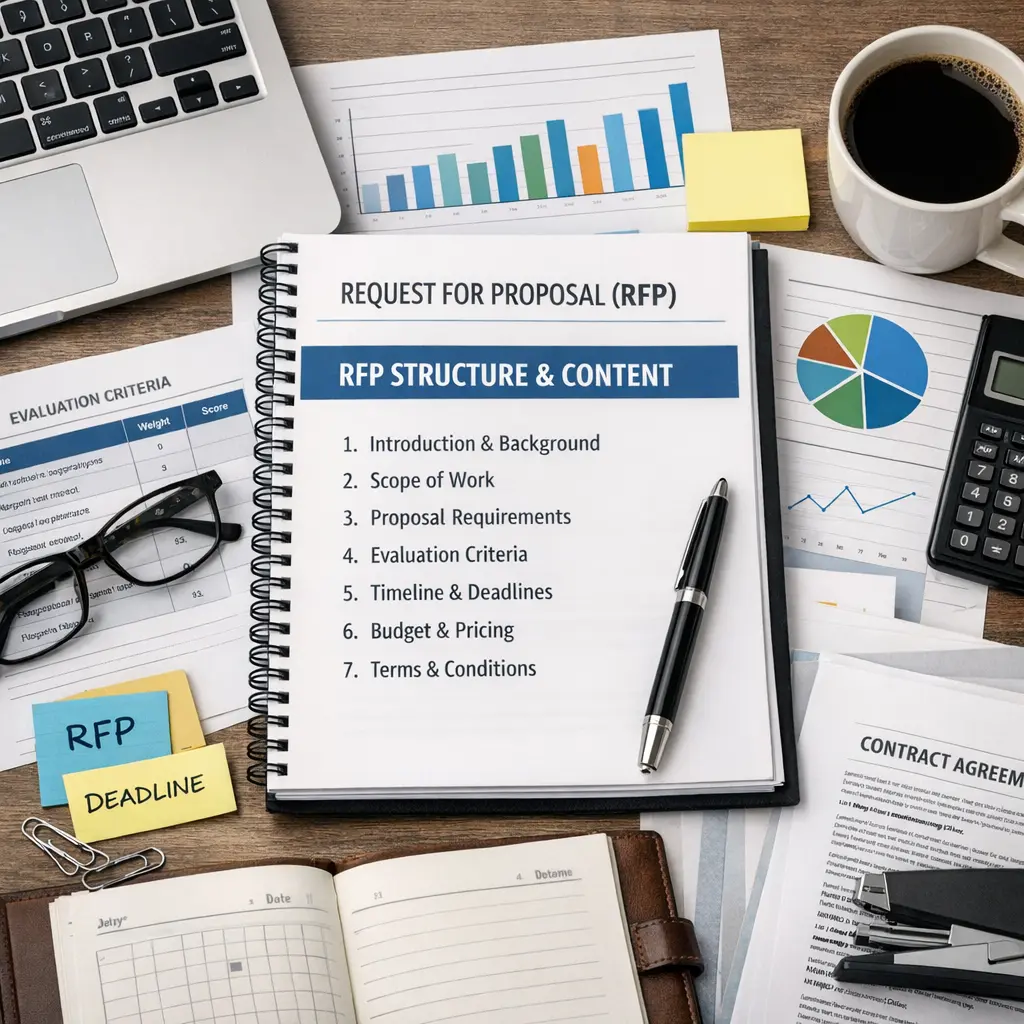
A Request for Proposal (RFP) structure in tender and procurement outlines the framework and details required for suppliers to submit competitive bids. It typically includes an introduction, project background, objectives, scope of work, technical and functional requirements, evaluation criteria, submission instructions, timelines, and contractual terms. The RFP ensures clarity, transparency, and comparability among proposals, enabling organizations to select the most suitable vendor based on defined needs and standardized evaluation processes.
Request for Proposal (RFP) Structure and Content
A Request for Proposal (RFP) structure in tender and procurement outlines the framework and details required for suppliers to submit competitive bids. It typically includes an introduction, project background, objectives, scope of work, technical and functional requirements, evaluation criteria, submission instructions, timelines, and contractual terms. The RFP ensures clarity, transparency, and comparability among proposals, enabling organizations to select the most suitable vendor based on defined needs and standardized evaluation processes.
💡 Key Takeaways
- Understand the purpose and typical use of an RFP in procurement.
- Recognize the standard RFP structure: background, scope, requirements, deliverables, timeline, and evaluation criteria.
- Learn how to articulate clear, measurable requirements and evaluation criteria.
- Grasp best practices for the RFP process: submission format, Q&A, and contract terms.
❓ Frequently Asked Questions
What is a Request for Proposal (RFP)?
An RFP is a formal document inviting vendors to submit proposals for a project, detailing requirements, scope, and how proposals will be evaluated.
What are the essential sections of an RFP?
Common sections include project overview, goals, scope of work, requirements, timelines, submission instructions, evaluation criteria, terms and conditions, and appendices.
How should an RFP define scope and deliverables?
Describe objectives, expected outcomes, milestones, specific deliverables, acceptance criteria, and any constraints or assumptions.
How are vendors typically evaluated in an RFP process?
Proposals are scored against predefined criteria such as technical approach, experience, cost, timeline, and references, often using a rubric.
What best practices improve RFP clarity and vendor responses?
Use plain language, define terms, provide a clear submission format and deadline, include a Q&A process, and share an evaluation rubric to guide vendors.