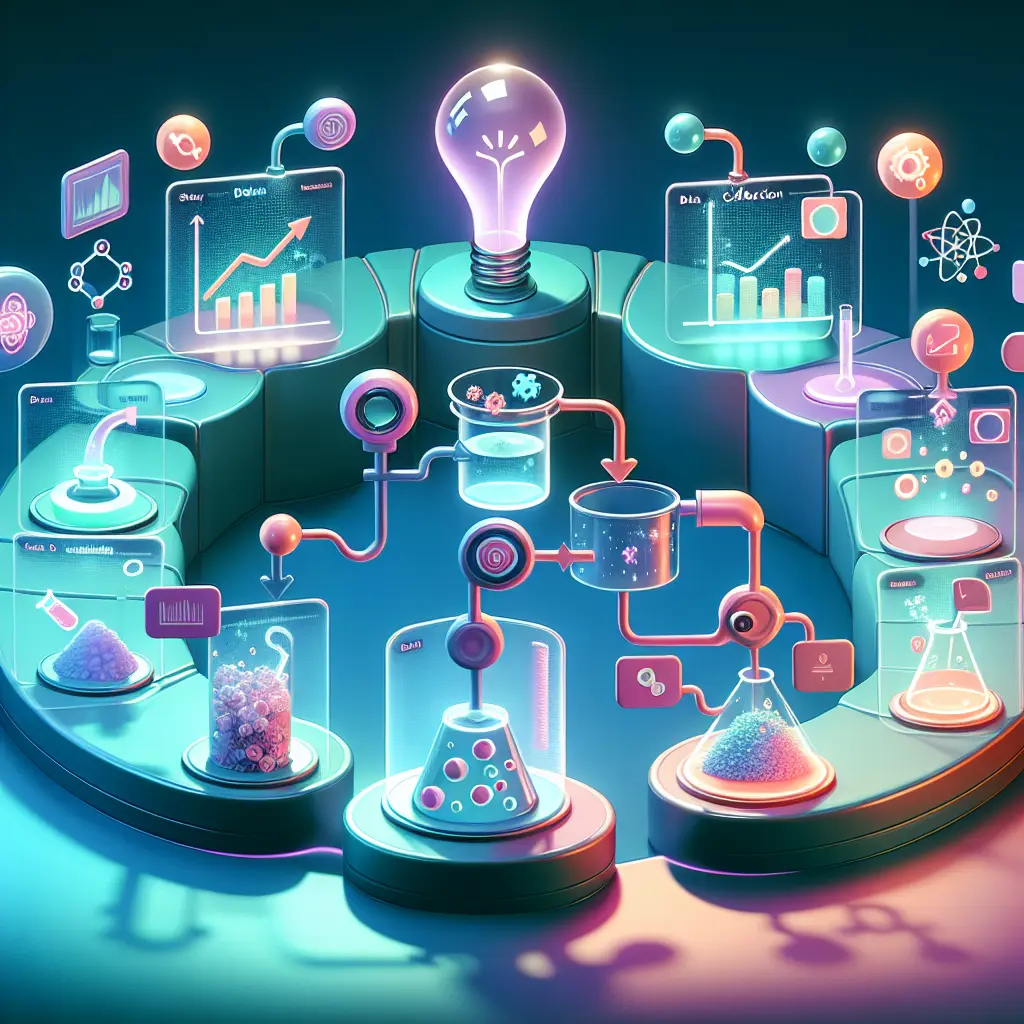
Research Methods & Reproducible Pipelines refer to systematic approaches used for conducting scientific investigations and ensuring that results can be consistently replicated. Research methods encompass the strategies, tools, and techniques used to gather and analyze data. Reproducible pipelines involve creating transparent, automated workflows that document every step of the research process, allowing others to verify findings and build upon the work with confidence, thus enhancing scientific integrity and reliability.
Research Methods & Reproducible Pipelines
Research Methods & Reproducible Pipelines refer to systematic approaches used for conducting scientific investigations and ensuring that results can be consistently replicated. Research methods encompass the strategies, tools, and techniques used to gather and analyze data. Reproducible pipelines involve creating transparent, automated workflows that document every step of the research process, allowing others to verify findings and build upon the work with confidence, thus enhancing scientific integrity and reliability.
💡 Key Takeaways
- Understand how research methods guide experiments and data analysis in CS and data science.
- Identify strategies, tools, and techniques for rigorous data collection, processing, and analysis.
- Learn what makes pipelines reproducible: version control, parameter tracking, documentation, and automated workflows.
- Explore validation and replication practices to ensure results can be reproduced across datasets and environments.
❓ Frequently Asked Questions
What are research methods in computer science and data science?
Research methods are the systematic strategies, techniques, and tools used to collect, analyze, and interpret data to answer scientific questions.
What is a reproducible pipeline and why is it important?
A reproducible pipeline is an automated, end-to-end workflow that can be executed with the same inputs to produce the same results. It ensures transparency, verifiability, and reuse of findings.
What are the core components of a reproducible data science workflow?
Data, code, software environment, and documentation that together enable others to re-run analyses from preprocessing to results with traceable steps.
Which practices and tools help ensure reproducibility?
Version control (Git), literate programming (notebooks, RMarkdown), containerization (Docker), workflow managers (Snakemake, Nextflow, Airflow), data provenance, and explicit parameterization and seeds.