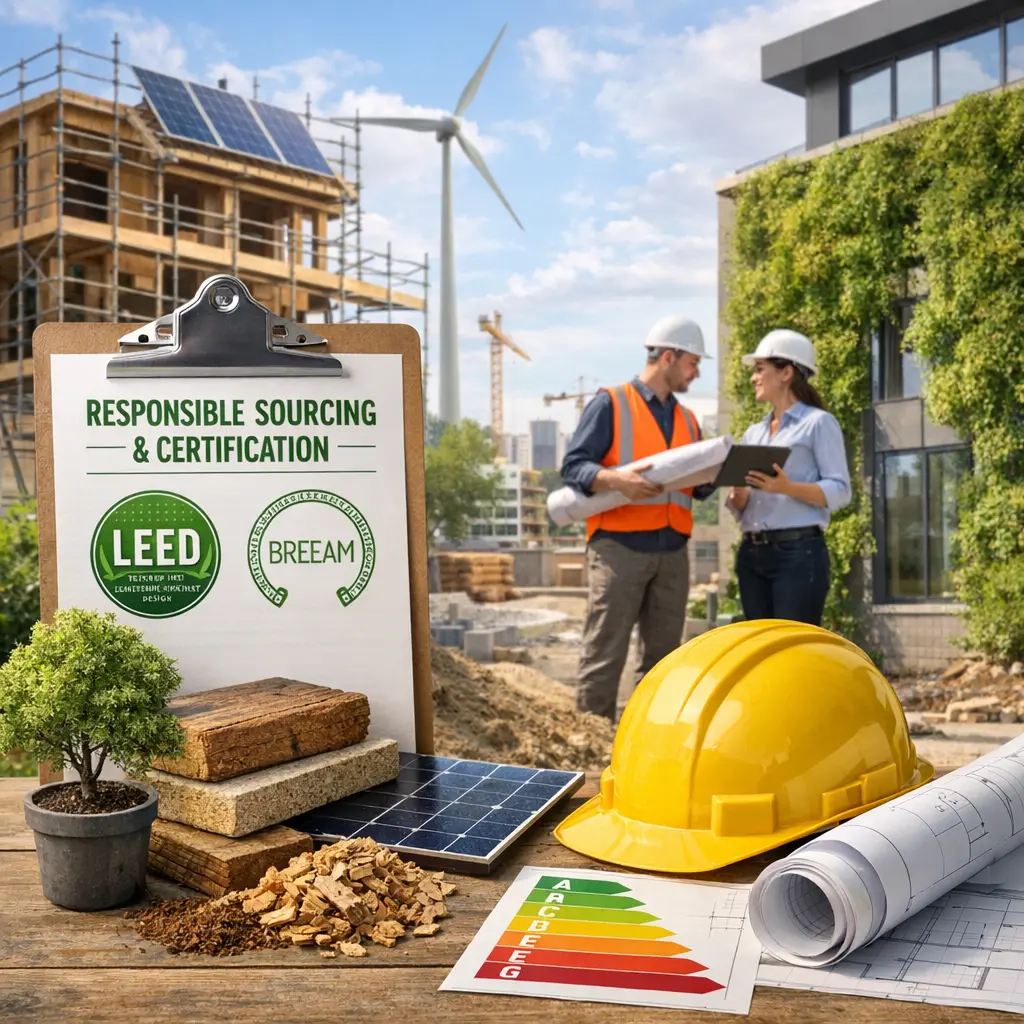
Responsible sourcing and certification, such as LEED and BREEAM, involve selecting building materials that are sustainably produced, ethically sourced, and have minimal environmental impact. These certifications set standards for material transparency, lifecycle analysis, and supply chain practices. By adhering to these guidelines, projects can reduce resource depletion, lower carbon emissions, and promote social responsibility throughout the construction process, ultimately contributing to healthier, more sustainable built environments.
Responsible Sourcing and Certification (LEED, BREEAM)
Responsible sourcing and certification, such as LEED and BREEAM, involve selecting building materials that are sustainably produced, ethically sourced, and have minimal environmental impact. These certifications set standards for material transparency, lifecycle analysis, and supply chain practices. By adhering to these guidelines, projects can reduce resource depletion, lower carbon emissions, and promote social responsibility throughout the construction process, ultimately contributing to healthier, more sustainable built environments.
💡 Key Takeaways
- Understand responsible sourcing and how LEED and BREEAM assess materials and supply chains.
- Identify common criteria used by LEED and BREEAM for responsible sourcing, such as EPDs, recycled content, and responsible forestry.
- Learn how LEED and BREEAM award credits and levels (LEED: Certified, Silver, Gold, Platinum; BREEAM: Pass, Good, Very Good, Excellent, Outstanding).
- Get practical steps to prepare for certification: gather product data, engage suppliers early, and organize documentation for verification.
❓ Frequently Asked Questions
What does responsible sourcing mean in LEED and BREEAM?
Responsible sourcing means selecting building materials from supply chains that minimize environmental and social impacts, support sustainable extraction, and provide verifiable information about product origin and impact.
How do LEED and BREEAM reward responsible sourcing?
LEED awards points for materials with recycled content, certified wood, and credible environmental declarations (EPD/HPD/Declare). BREEAM offers similar credits for supply chain transparency, environmental product declarations, and responsibly sourced materials.
What documents help prove responsible sourcing?
Key documents include Environmental Product Declarations (EPD), Health Product Declarations (HPD), Declare labels, and chain-of-custody certificates like FSC/PEFC, plus product category rules (PCRs) from manufacturers.
How can a project start implementing responsible sourcing for LEED/BREEAM?
Begin in the early design phase: set targets for recycled content and certified wood, require EPDs/HPDs/Declare from suppliers, pre-qualify vendors, gather documentation, and track credits throughout design and construction.