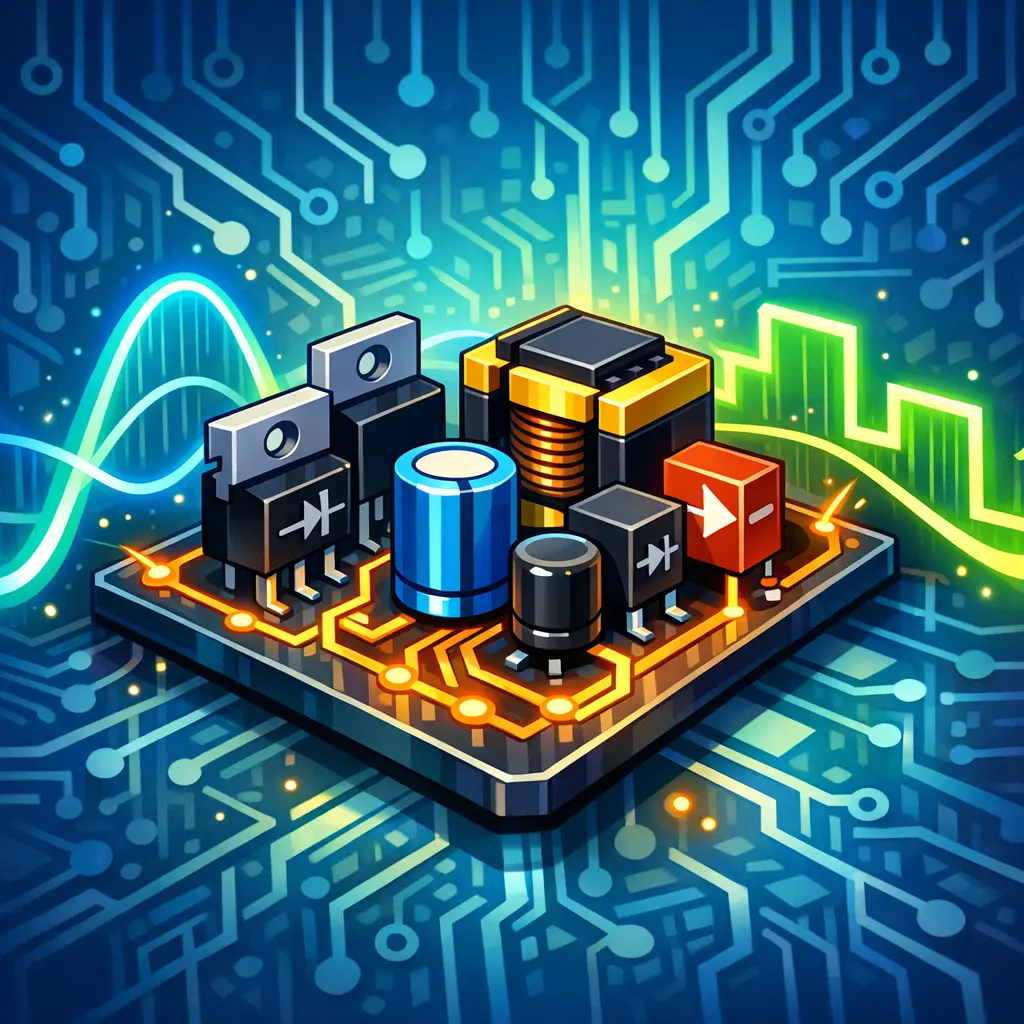
RF Front-End Components in telecoms refer to the essential hardware modules that process radio frequency signals before and after transmission by antennas. These include amplifiers, filters, mixers, switches, and power dividers, which collectively manage signal strength, select frequencies, reduce noise, and ensure efficient power transmission. They play a crucial role in enabling reliable wireless communication by optimizing signal quality, minimizing interference, and supporting high-speed data transfer in modern telecom systems.
RF Front-End Components
RF Front-End Components in telecoms refer to the essential hardware modules that process radio frequency signals before and after transmission by antennas. These include amplifiers, filters, mixers, switches, and power dividers, which collectively manage signal strength, select frequencies, reduce noise, and ensure efficient power transmission. They play a crucial role in enabling reliable wireless communication by optimizing signal quality, minimizing interference, and supporting high-speed data transfer in modern telecom systems.
💡 Key Takeaways
- Identify the main RF front-end components commonly used in wireless systems (filters, antennas, amplifiers, matching networks, switches, duplexers).
- Explain how impedance matching improves power transfer and minimizes reflections in the front end.
- Describe how filters and duplexers shape the spectrum and protect the receiver from out-of-band signals.
- Understand how front-end components affect key performance metrics like gain, noise figure, and linearity.
❓ Frequently Asked Questions
What is the RF front-end and what are its main functions?
The RF front-end is the part of a receiver/transmitter near the antenna. It conditions signals through impedance matching, filtering, amplification, switching, and sometimes frequency conversion before they enter the rest of the system.
What is an RF filter and why is it important in the front-end?
An RF filter passes the desired frequency band while rejecting unwanted signals. It improves selectivity and sensitivity, reducing interference in the received signal.
What is a low-noise amplifier (LNA) and why is it essential at the front-end?
An LNA provides the first gain with minimal added noise, boosting weak signals right after the antenna. It enhances overall receiver sensitivity; performance is characterized by noise figure and gain.
Why is impedance matching important in RF front-end design?
Impedance matching maximizes power transfer between components and minimizes reflections, ensuring the system presents a consistent impedance (often 50 ohms) to reduce losses.