RF Systems, Antennas & Microwave Engineering refers to a specialized field within engineering and technology focused on the design, development, and application of radio frequency (RF) systems, antennas, and microwave devices. Professionals in this area work on wireless communication, radar, satellite systems, and signal transmission. Careers in this field involve research, testing, and implementation of technologies that enable efficient data transfer and connectivity in various industries, including telecommunications, defense, and space exploration.
RF Systems, Antennas & Microwave Engineering
RF Systems, Antennas & Microwave Engineering refers to a specialized field within engineering and technology focused on the design, development, and application of radio frequency (RF) systems, antennas, and microwave devices. Professionals in this area work on wireless communication, radar, satellite systems, and signal transmission. Careers in this field involve research, testing, and implementation of technologies that enable efficient data transfer and connectivity in various industries, including telecommunications, defense, and space exploration.
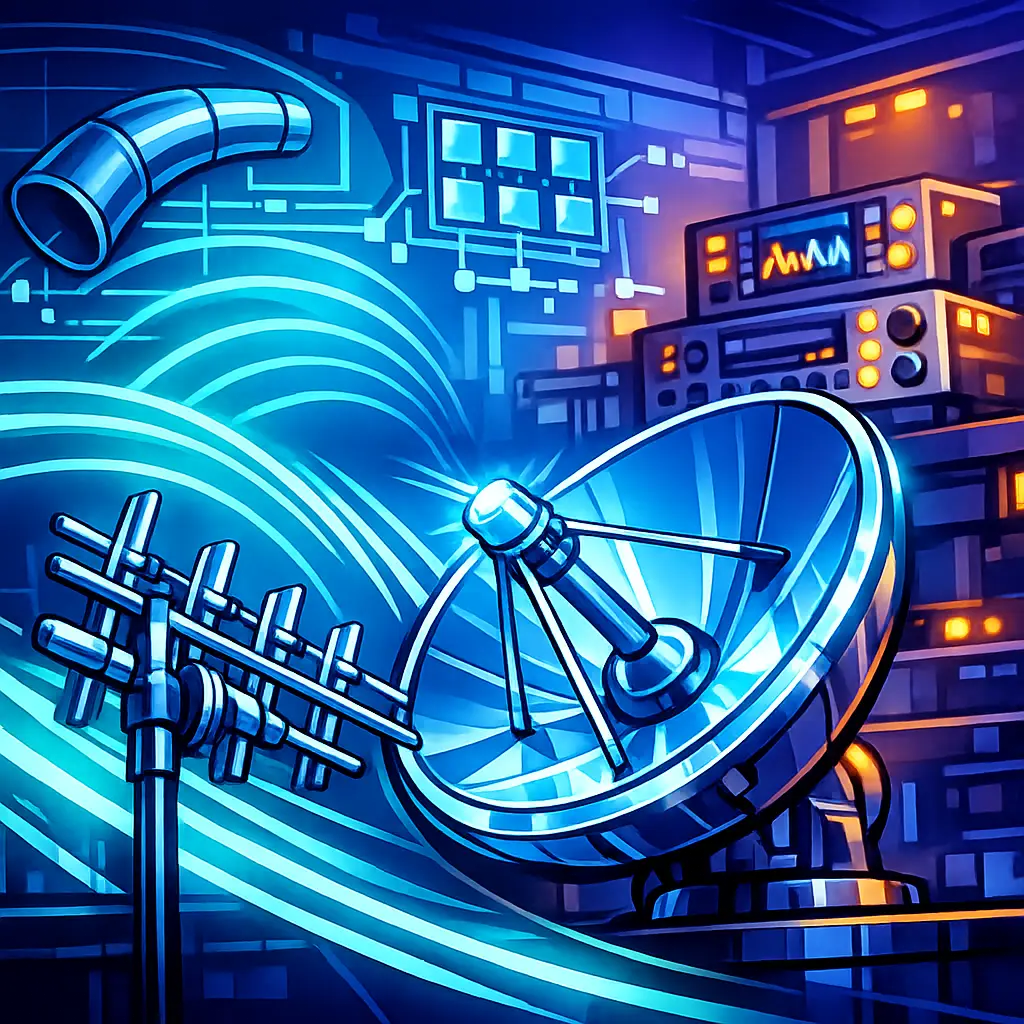
💡 Key Takeaways
- Identify the key components of RF systems (transmitter, receiver, filters, amplifiers, and antennas) and how they interact.
- Understand antenna basics—impedance matching, radiation patterns, gain, bandwidth, and polarization.
- Grasp microwave engineering fundamentals, including frequency bands, waveguides vs. coax, and S-parameters.
- Recognize common RF design trade-offs and measurement concepts such as VSWR, return loss, and the use of network analyzers.
❓ Frequently Asked Questions
What is an RF system and what are its main components?
An RF system generates, processes, transmits, and receives radio-frequency signals using sources, amplifiers, filters, transmission lines, and antennas.
What is an antenna and what are common types?
An antenna converts electrical RF energy into propagating EM waves (and vice versa). Common types include dipole, patch, horn, and Yagi, each with different gains and patterns.
Why is impedance matching important in RF circuits?
To maximize power transfer and minimize reflections by ensuring the source, line, and load present the same impedance across the operating band.
What are S-parameters and what do S11 and S21 indicate?
S-parameters describe how RF networks reflect and transmit signals. S11 is the input reflection coefficient (return loss), and S21 is the forward transmission coefficient (gain).