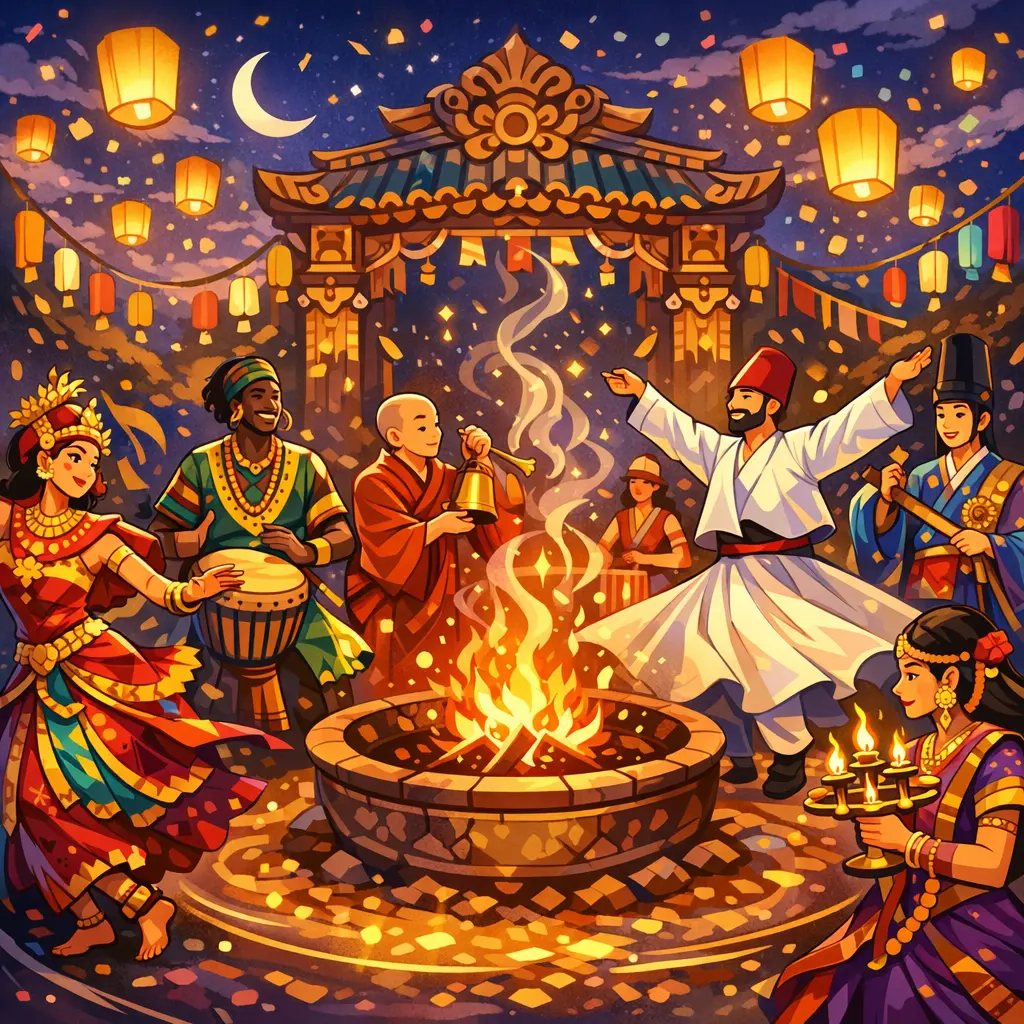
Rituals, festivals, and ceremonies are structured activities deeply embedded in culture, religion, and society. They mark significant life events, seasonal changes, or spiritual milestones, fostering community bonding and continuity of traditions. These practices often involve symbolic acts, music, dance, and communal gatherings, reflecting shared values and beliefs. Through participation, individuals express identity, reinforce social norms, and connect with both heritage and the divine, shaping collective memory and social cohesion.
Rituals, Festivals & Ceremonies+50
Rituals, festivals, and ceremonies are structured activities deeply embedded in culture, religion, and society. They mark significant life events, seasonal changes, or spiritual milestones, fostering community bonding and continuity of traditions. These practices often involve symbolic acts, music, dance, and communal gatherings, reflecting shared values and beliefs. Through participation, individuals express identity, reinforce social norms, and connect with both heritage and the divine, shaping collective memory and social cohesion.
💡 Key Takeaways
- Distinguish rituals, festivals, and ceremonies and their purposes.
- Identify common elements like symbols, rites of passage, and ceremonies across cultures.
- Explain how celebrations strengthen community bonds, identity, and cultural memory.
- Compare secular and religious celebrations and how they reflect time, season, and values.
❓ Frequently Asked Questions
What is a ritual?
A ritual is a set of prescribed actions performed in a specific order, often with symbolic meaning, used to express beliefs, mark transitions, or honor events.
What is a festival?
A festival is a public, often seasonal or annual celebration featuring performances, food, music, and activities that honor culture, religion, or a milestone.
What is a ceremony?
A ceremony is a formal event with established procedures and roles to mark a significant occasion, such as a wedding, graduation, or award.
How are rituals, festivals, and ceremonies related?
Rituals are symbolic actions; ceremonies are formal rites; festivals are communal celebrations—often including both rituals and ceremonies—to express shared identity and values.