Robotics platforms like ROS (Robot Operating System), Gazebo, and microcontrollers are essential tools in engineering and technology careers. ROS provides a flexible framework for writing robot software, enabling communication between different robot components. Gazebo is a powerful simulation environment for testing and developing robotics applications in realistic scenarios. Microcontrollers act as the hardware backbone, controlling sensors and actuators. Mastery of these platforms is crucial for designing, simulating, and implementing advanced robotic systems.
Robotics Platforms: ROS, Gazebo & Microcontrollers
Robotics platforms like ROS (Robot Operating System), Gazebo, and microcontrollers are essential tools in engineering and technology careers. ROS provides a flexible framework for writing robot software, enabling communication between different robot components. Gazebo is a powerful simulation environment for testing and developing robotics applications in realistic scenarios. Microcontrollers act as the hardware backbone, controlling sensors and actuators. Mastery of these platforms is crucial for designing, simulating, and implementing advanced robotic systems.
💡 Key Takeaways
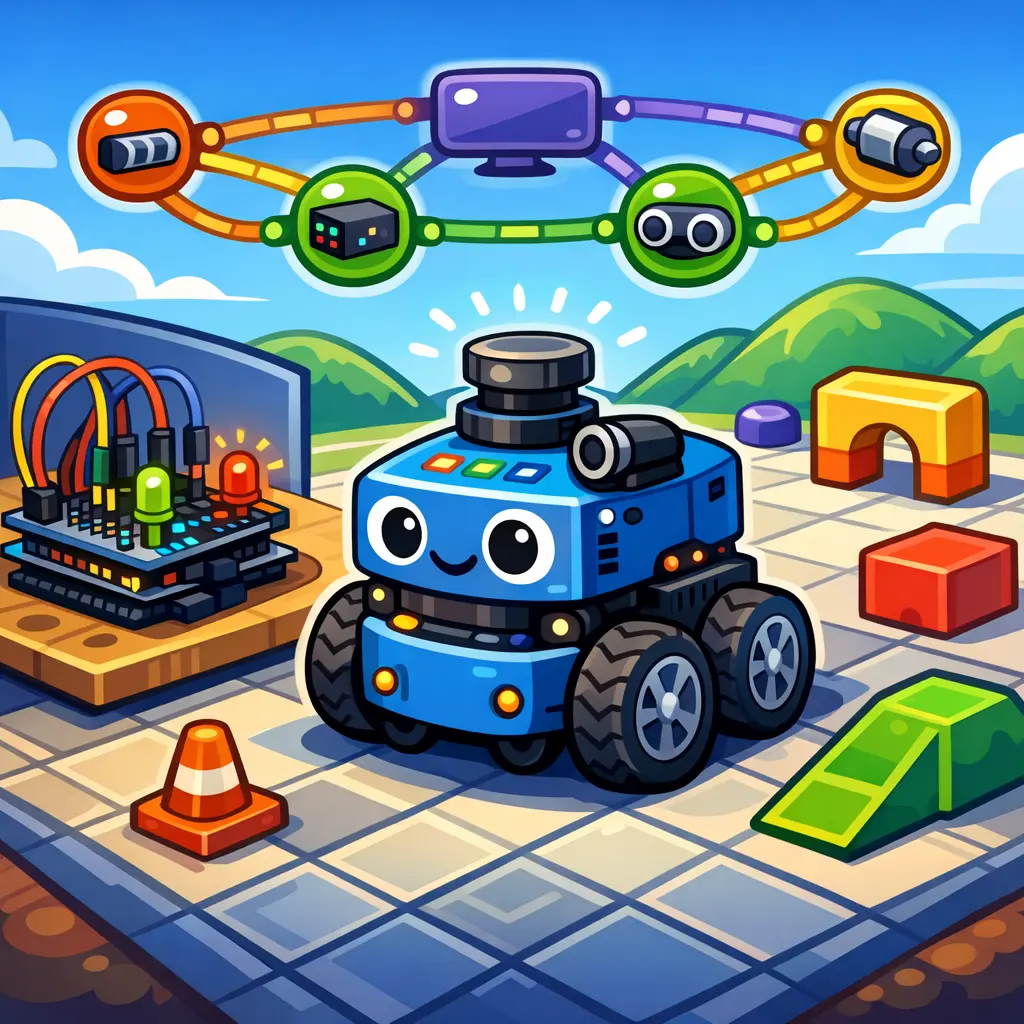
- Identify the roles of ROS, Gazebo, and microcontrollers in a robotics stack.
- Explain how Gazebo provides physics-based simulation and how ROS integrates with it.
- Learn how to connect microcontrollers to ROS (e.g., rosserial) and exchange messages.
- Compare common robotics workflows: modeling, simulation, and hardware testing.
❓ Frequently Asked Questions
What is ROS and what is it used for?
ROS (Robot Operating System) is a flexible framework for writing robot software. It provides tools, libraries, and conventions to build and integrate robot applications, coordinating components as nodes via topics, services, and actions.
What is Gazebo and how does it relate to ROS?
Gazebo is a physics-based robot simulator for building and testing robots in a virtual world. When used with ROS, simulated sensors and actuators publish/subscribe as ROS topics, enabling realistic, ROS-integrated simulations.
What are microcontrollers and how do they fit into robotics?
Microcontrollers are small, low-power processors that handle real-time hardware tasks (like motor control and sensor reading). They are often connected to a ROS system via bridges to run low-level code while ROS handles higher-level planning.
How do ROS and microcontrollers communicate?
Communication is typically via bridges such as rosserial (ROS 1) or micro-ROS (ROS 2), which expose topics/services over a serial link so the microcontroller can exchange data with the ROS ecosystem.