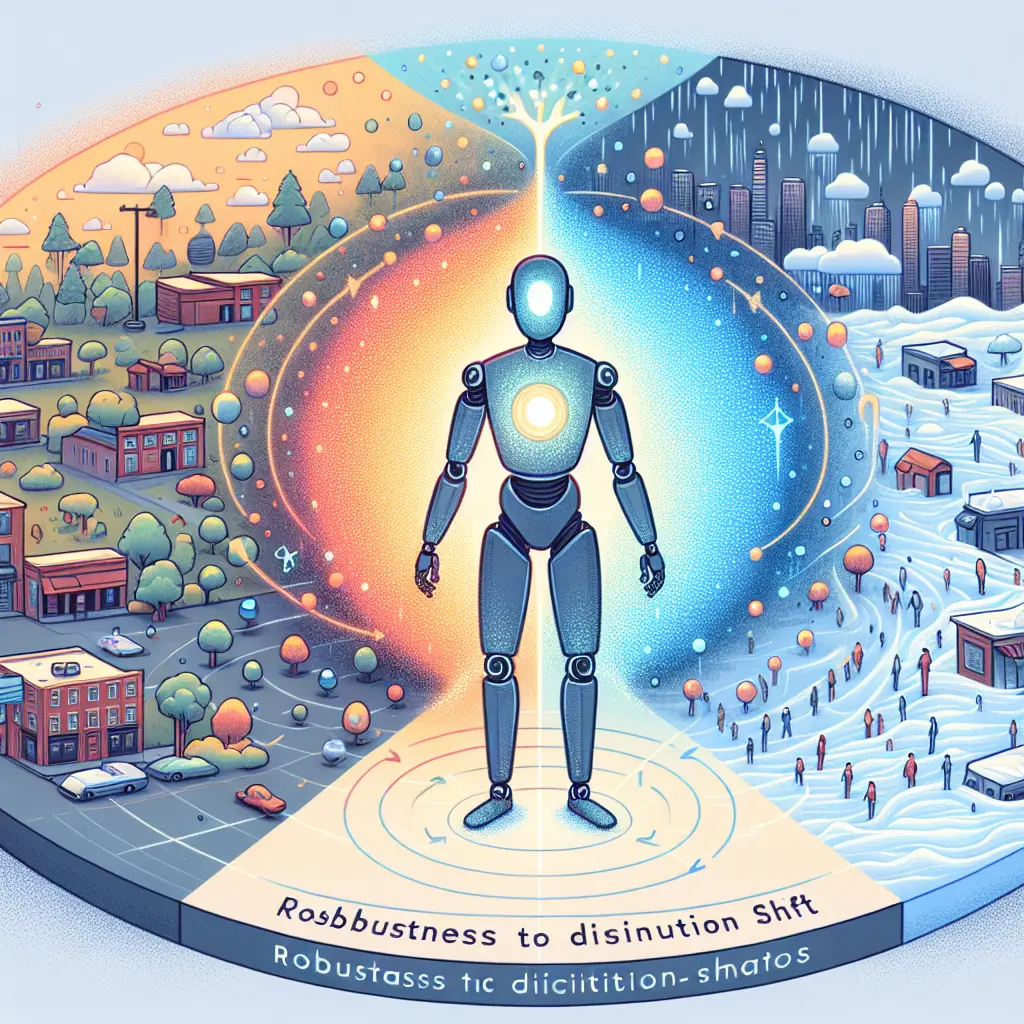
Robustness to distribution shift refers to a model's ability to maintain reliable performance when exposed to new data that differs from the data it was trained on. This concept is crucial in real-world applications, where the underlying data distribution may change over time or across environments. A robust model can generalize well, adapting to unexpected variations without significant degradation in accuracy or effectiveness, ensuring consistent and trustworthy outcomes.
Robustness to distribution shift
Robustness to distribution shift refers to a model's ability to maintain reliable performance when exposed to new data that differs from the data it was trained on. This concept is crucial in real-world applications, where the underlying data distribution may change over time or across environments. A robust model can generalize well, adapting to unexpected variations without significant degradation in accuracy or effectiveness, ensuring consistent and trustworthy outcomes.
💡 Key Takeaways
- Define distribution shift and why a model's performance can degrade when the input data changes from training to deployment.
- Identify common sources of distribution shift, such as covariate shift, concept drift, domain differences, and data collection biases.
- Learn strategies to improve robustness, including robust training, data augmentation, domain adaptation, and out-of-distribution detection.
- Understand how to monitor, evaluate, and govern AI systems for drift across environments, including ongoing validation, data lineage, and risk assessment.
❓ Frequently Asked Questions
What is distribution shift in AI?
A change in the data distribution between training and deployment, which can cause the model's performance to degrade.
Why is robustness to distribution shift important?
It helps AI systems stay reliable across new environments, over time, or with unseen data, reducing the risk of failures.
What are common sources of distribution shift?
New user behavior, changes in data collection, sensor or environment differences, or domain shifts between training and deployment data.
What techniques help improve robustness to distribution shift?
Data augmentation, domain adaptation, robust training, ensemble methods, and out-of-distribution detection.