Market makers in US stock markets are firms or individuals that continuously buy and sell securities, providing liquidity and facilitating smooth trading. They quote both buy (bid) and sell (ask) prices, profiting from the spread between them. By ensuring there are always buyers and sellers, market makers help reduce price volatility, narrow bid-ask spreads, and enable efficient execution of trades, contributing to overall market stability and efficiency.
Role of Market Makers
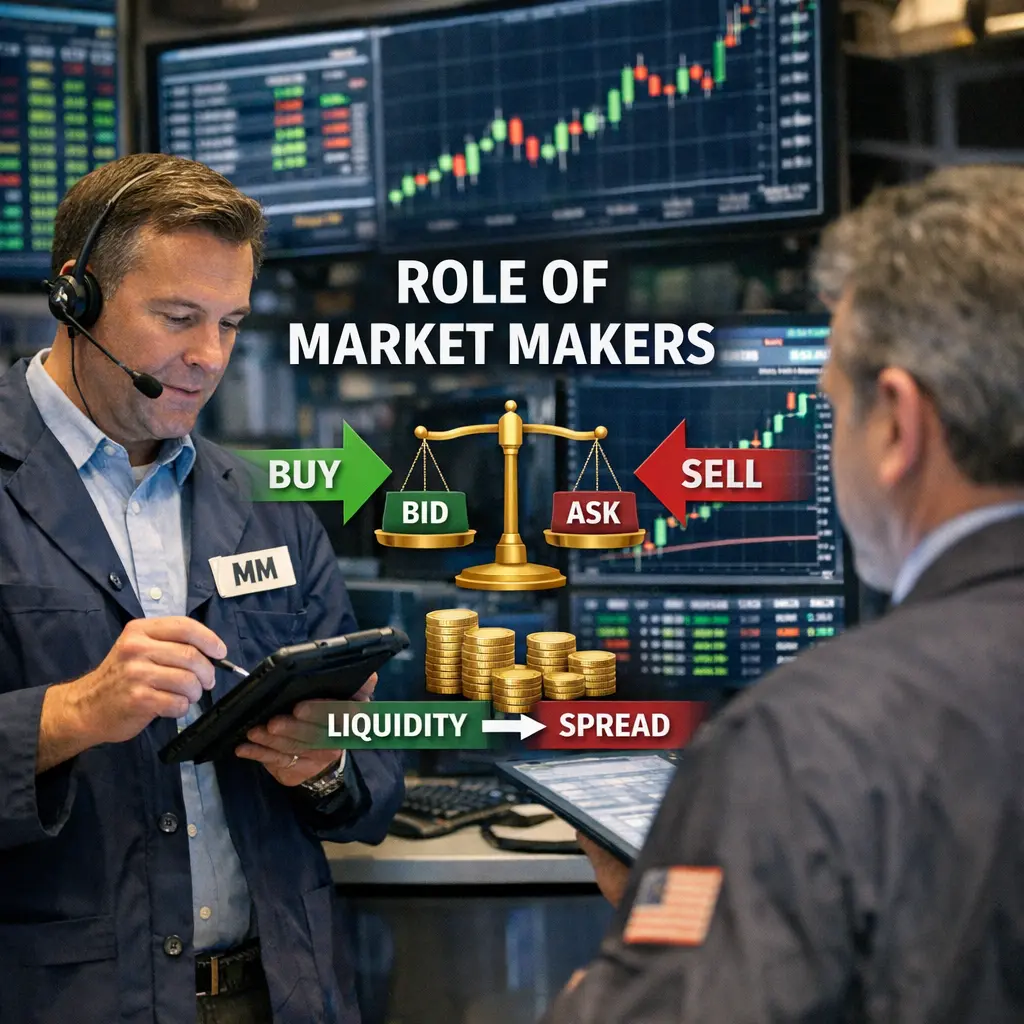
Market makers in US stock markets are firms or individuals that continuously buy and sell securities, providing liquidity and facilitating smooth trading. They quote both buy (bid) and sell (ask) prices, profiting from the spread between them. By ensuring there are always buyers and sellers, market makers help reduce price volatility, narrow bid-ask spreads, and enable efficient execution of trades, contributing to overall market stability and efficiency.
💡 Key Takeaways
- Market makers provide liquidity by continuously quoting bid and ask prices.
- They profit from the bid-ask spread and occasional price movements.
- They manage inventory risk through hedging and balancing positions.
- They facilitate trades and reduce market impact to improve liquidity and efficiency.
- They operate under capital and regulatory requirements that shape their activities.
❓ Frequently Asked Questions
What is a market maker?
A market maker is a firm or trader that commits to posting both buy (bid) and sell (ask) quotes for a security, instrument, or asset to provide liquidity and enable smoother trading.
How do market makers determine their bid and ask prices?
They set quotes based on factors like current price, volatility, supply and demand, and their own inventory and risk limits, adjusting to encourage trades while managing risk.
Why are market makers important for liquidity and price discovery?
They ensure there are always ready buyers and sellers, reduce trade execution uncertainty, and help markets reflect fair prices through ongoing quote activity and order matching.
How do market makers earn money and what risks do they face?
They profit from the bid-ask spread and may receive liquidity rebates. Risks include inventory risk, adverse price moves, and competition from other liquidity providers.