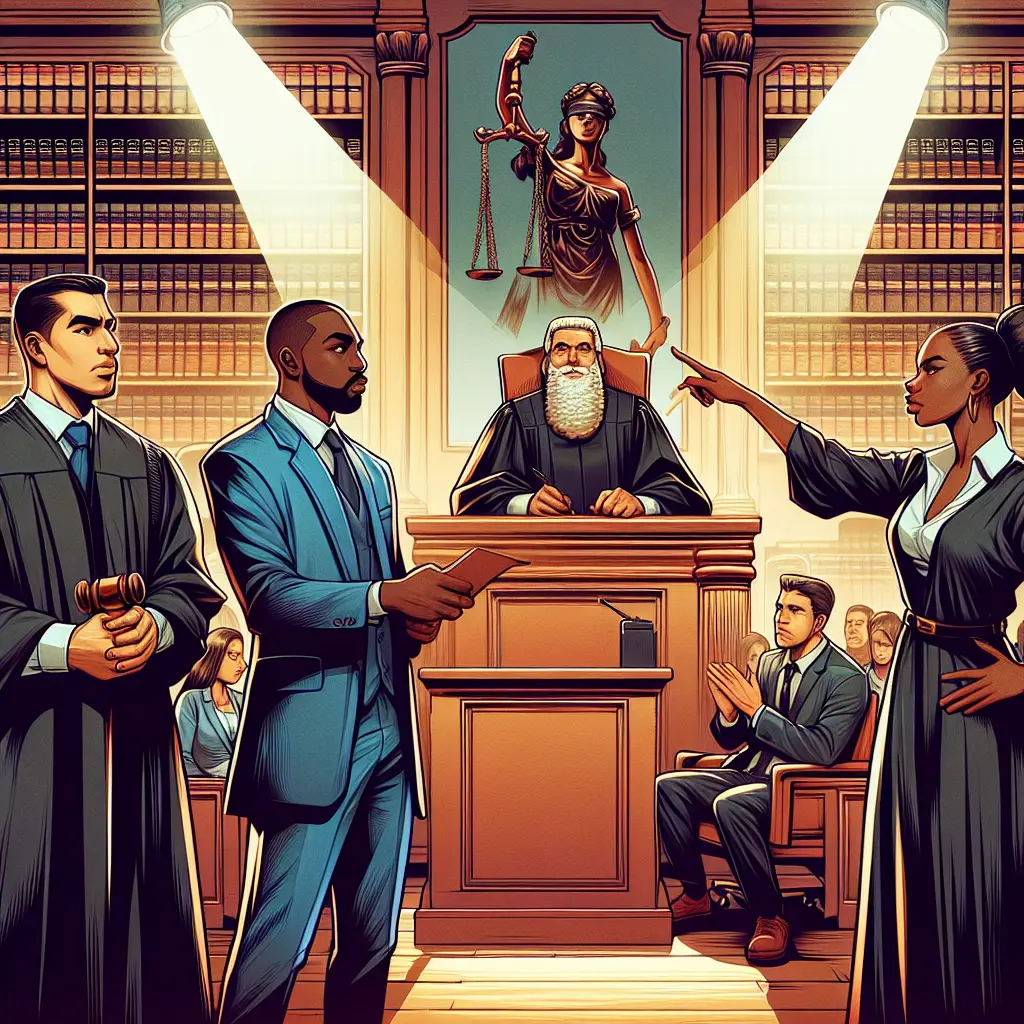
In the courtroom, the judge oversees proceedings, ensures laws are followed, and issues rulings or sentences. The prosecutor represents the government, presenting evidence to prove the defendant’s guilt. The defense advocates for the accused, challenging the prosecution’s case and protecting the defendant’s rights. The jury, a group of impartial citizens, listens to the evidence and arguments, then deliberates to reach a verdict of guilt or innocence based on the facts presented.
Roles in the courtroom: judge, prosecutor, defense, jury+50
In the courtroom, the judge oversees proceedings, ensures laws are followed, and issues rulings or sentences. The prosecutor represents the government, presenting evidence to prove the defendant’s guilt. The defense advocates for the accused, challenging the prosecution’s case and protecting the defendant’s rights. The jury, a group of impartial citizens, listens to the evidence and arguments, then deliberates to reach a verdict of guilt or innocence based on the facts presented.
💡 Key Takeaways
- Identify the distinct roles of judge, prosecutor, defense, and jury in the courtroom.
- Understand how a judge guides proceedings, enforces laws, and issues rulings or sentences.
- Learn the prosecutor's job: representing the government and presenting evidence to prove guilt beyond a reasonable doubt.
- Learn the defense attorney's role: advocating for the accused, challenging the prosecution's case, and protecting legal rights.
- Understand the jury's role: listening to the evidence, deliberating with peers, and delivering a verdict.
❓ Frequently Asked Questions
What is the role of the judge in a courtroom?
The judge oversees proceedings, ensures rules are followed, rules on admissibility of evidence, and issues rulings or sentences.
What does the prosecutor do?
The prosecutor represents the government, presents evidence, and argues to prove the defendant’s guilt beyond a reasonable doubt.
What is the defense's role?
The defense represents the accused, challenges the prosecution’s case, and protects the defendant's rights and interests.
What is the jury's role?
The jury listens to the evidence and, based on the judge's instructions, decides whether the defendant is guilty or not guilty.