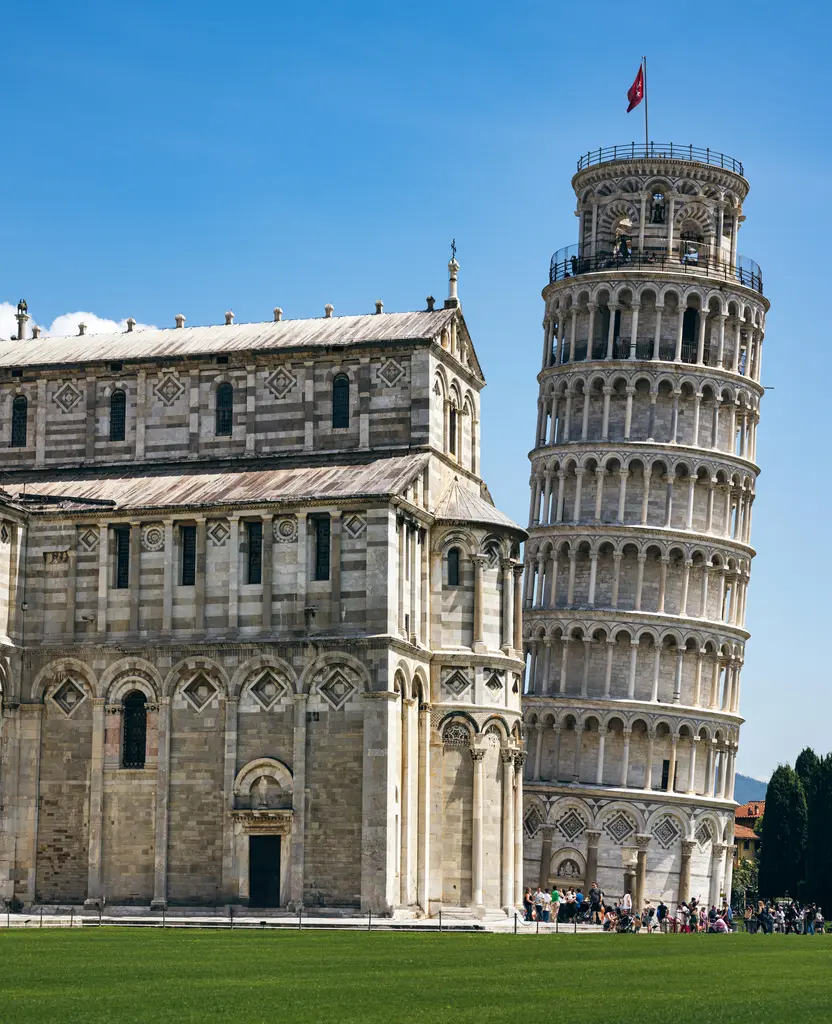
Romanesque architecture, flourishing in Europe from the 10th to 12th centuries, is characterized by semi-circular arches, thick stone walls, sturdy pillars, large towers, and decorative arcading. This style, heavily influenced by Roman and Byzantine architecture, is often seen in churches, monasteries, and castles. Interiors typically feature barrel or groin vaults, while exteriors are marked by symmetrical plans and sculptural decorations, reflecting both religious significance and the need for fortification.
Romanesque Architecture
Romanesque architecture, flourishing in Europe from the 10th to 12th centuries, is characterized by semi-circular arches, thick stone walls, sturdy pillars, large towers, and decorative arcading. This style, heavily influenced by Roman and Byzantine architecture, is often seen in churches, monasteries, and castles. Interiors typically feature barrel or groin vaults, while exteriors are marked by symmetrical plans and sculptural decorations, reflecting both religious significance and the need for fortification.
💡 Key Takeaways
- Identify the core features of Romanesque architecture, including round arches, thick walls, sturdy piers, and small windows.
- Explain typical Romanesque church layouts and common vault types (barrel and groin vaults).
- Describe how heavy masonry and limited openings affected interior light and acoustics.
- Recognize common decorative elements (sculpted capitals, tympana, arcading) and their symbolic meanings.
- Place Romanesque architecture in its historical context and compare it with Gothic developments.
❓ Frequently Asked Questions
What is Romanesque architecture?
A medieval European style (roughly 9th–12th centuries) characterized by thick stone walls, semi-circular arches, heavy piers, and small windows.
When did Romanesque architecture flourish and where was it common?
Primarily in Western Europe during the 10th–12th centuries, spreading from monasteries to cathedrals and towns.
What are the signature features of Romanesque buildings?
Round arches, barrel and groin vaults, thick load-bearing walls, small high windows, sturdy towers, and decorative arcading.
How can you tell Romanesque from Gothic?
Romanesque uses rounded arches and heavy walls with small windows; Gothic uses pointed arches, rib vaults, flying buttresses, and large windows for more light.
Name a notable example of Romanesque architecture.
Speyer Cathedral in Germany is a prime example; other well-known ones include Saint-Sernin in Toulouse and Sainte-Foy in Conques.