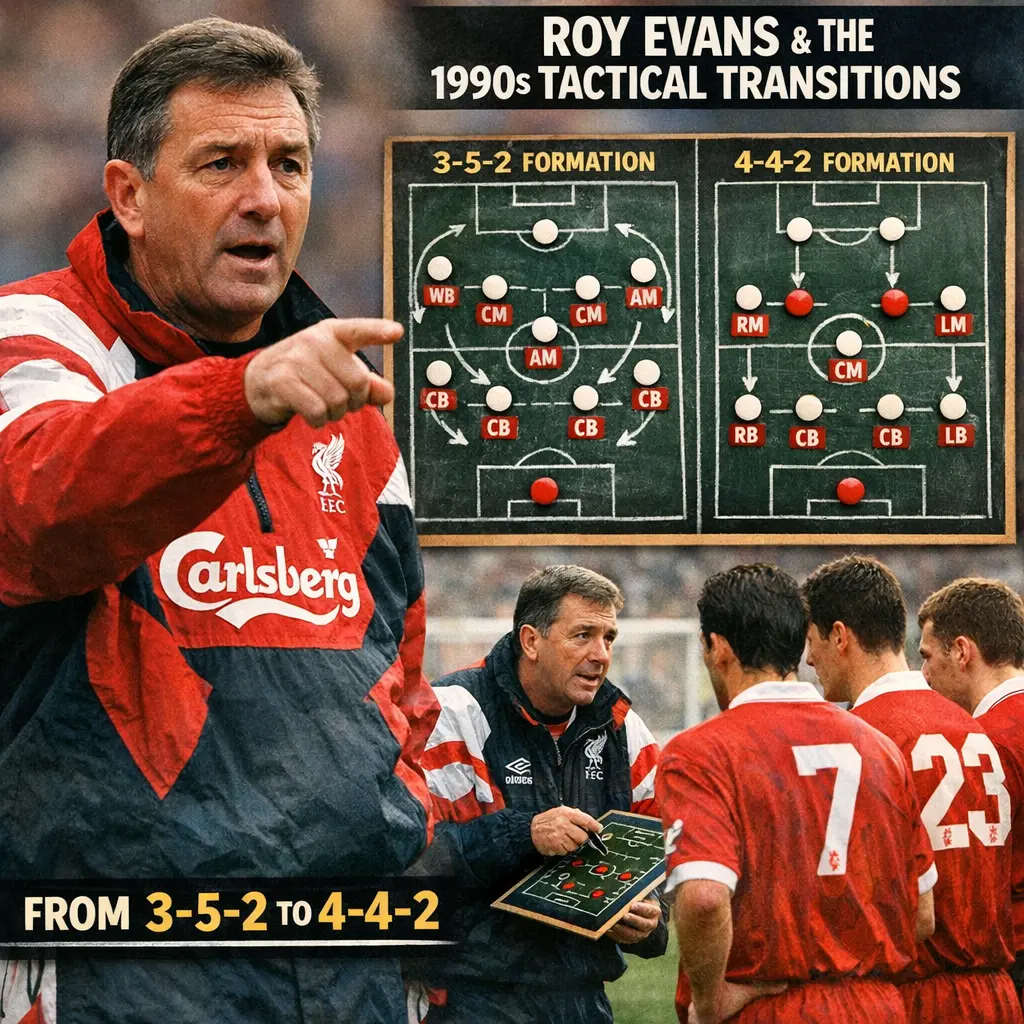
Roy Evans, managing Liverpool F.C. in the 1990s, oversaw a significant tactical transition from the rigid, direct football of previous eras to a more fluid, attacking style. Emphasizing technical skill, quick passing, and wing play, Evans introduced a 3-5-2 formation and nurtured young talents. Despite entertaining football and near successes, his tenure is remembered for failing to fully convert promise into major trophies, highlighting the challenges of evolving tactics during a competitive Premier League era.
Roy Evans and the 1990s Tactical Transitions
Roy Evans, managing Liverpool F.C. in the 1990s, oversaw a significant tactical transition from the rigid, direct football of previous eras to a more fluid, attacking style. Emphasizing technical skill, quick passing, and wing play, Evans introduced a 3-5-2 formation and nurtured young talents. Despite entertaining football and near successes, his tenure is remembered for failing to fully convert promise into major trophies, highlighting the challenges of evolving tactics during a competitive Premier League era.
💡 Key Takeaways
- Understand the major tactical shifts in 1990s football and how teams transitioned from defense to attack.
- Examine Roy Evans' approach to formations and roles during the era and how he handled on-pitch transitions.
- Discover how training, fitness, and squad dynamics shaped transitional play in the 1990s.
- Compare Roy Evans' transitional tactics with those of his contemporaries to spot similarities and differences.
❓ Frequently Asked Questions
Who is Roy Evans?
Roy Evans is a football manager and coach known for his work in English football during the 1990s, a period marked by rapid tactical evolution.
What does '1990s tactical transitions' mean in football?
It refers to shifts from rigid, traditional systems to more flexible, attack-minded approaches, with changes in formations, pressing, and player roles to match the faster pace of the era.
What are common tactical shifts in the 1990s?
Teams experimented with pace, dynamic midfield roles, higher pressing, quicker transitions from defense to attack, and a greater emphasis on fitness and squad versatility.
How does Roy Evans relate to these transitions?
As a manager/coach in the 1990s, Evans operated within this evolving tactical landscape, adopting and adapting strategies to fit his players and club while contributing to the era's modern football approaches.