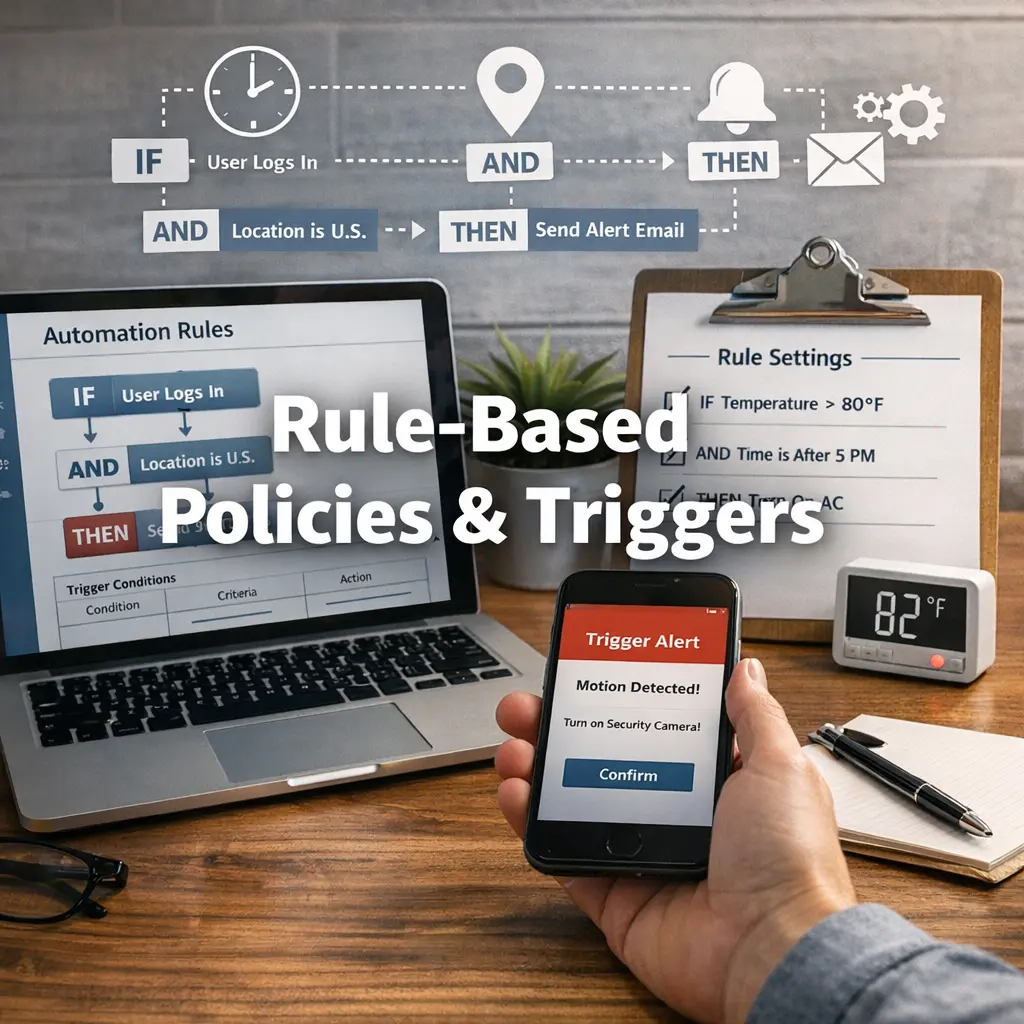
Rule-based policies and triggers in agent architecture refer to predefined sets of instructions that guide an agent’s behavior. Policies consist of explicit rules mapping specific conditions to corresponding actions, ensuring predictable responses. Triggers activate these rules when certain environmental or system events occur. This approach allows agents to systematically process inputs, make decisions, and respond automatically, enabling structured, reliable, and explainable agent operations within dynamic environments.
Rule-Based Policies & Triggers
Rule-based policies and triggers in agent architecture refer to predefined sets of instructions that guide an agent’s behavior. Policies consist of explicit rules mapping specific conditions to corresponding actions, ensuring predictable responses. Triggers activate these rules when certain environmental or system events occur. This approach allows agents to systematically process inputs, make decisions, and respond automatically, enabling structured, reliable, and explainable agent operations within dynamic environments.
💡 Key Takeaways
- Define what rule-based policies are and how triggers activate actions.
- Identify the building blocks of a rule-based system: conditions, rules, actions, and triggers.
- Learn best practices for designing maintainable rules (clear criteria, versioning, testing).
- Explore common use cases for rule-based policies in automation, governance, and decision-making with simple examples.
❓ Frequently Asked Questions
What are rule-based policies and triggers?
Rule-based policies define actions using explicit if-then rules, while triggers are events or state changes that activate those rules.
How do triggers work in rule-based systems?
Triggers monitor for conditions (time, events, or data changes). When a condition is met, the system executes the associated action, such as sending a notification or enforcing an rule.
When should I use rule-based policies instead of machine learning?
Use rule-based policies when decisions must be transparent, auditable, repeatable, and compliant, especially in stable environments; rely on ML when patterns are complex or uncertain and transparency is less critical.
What are best practices for designing rule-based policies?
Start with clear goals, write simple, non-overlapping rules, document each rule, test with edge cases, implement a default action, and regularly review and update rules based on outcomes.