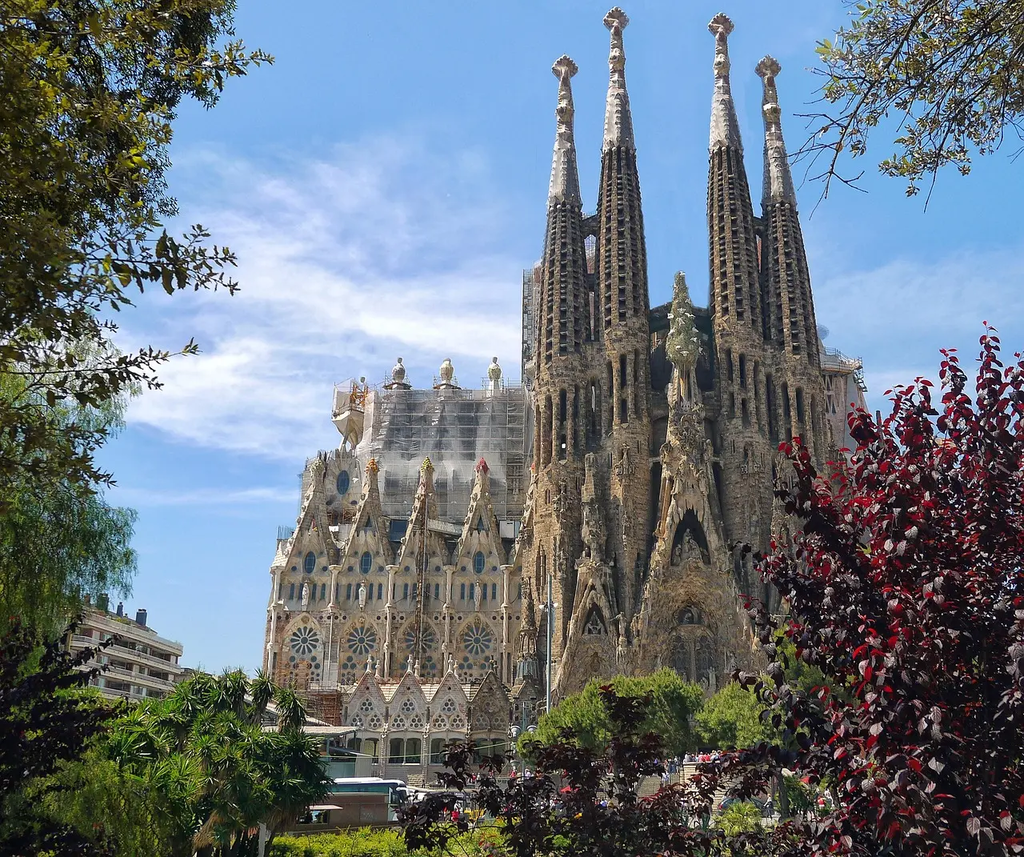
The Sagrada Familia is a renowned basilica in Barcelona, Spain, designed by architect Antoni Gaudí. Famous for its intricate facades and soaring towers, it combines Gothic and Art Nouveau styles. Construction began in 1882 and remains ongoing, making it one of the longest-running architectural projects in the world. Recognized as a UNESCO World Heritage Site, the Sagrada Familia is a symbol of Barcelona and a marvel of modernist architecture, attracting millions of visitors annually.
Sagrada Familia
The Sagrada Familia is a renowned basilica in Barcelona, Spain, designed by architect Antoni Gaudí. Famous for its intricate facades and soaring towers, it combines Gothic and Art Nouveau styles. Construction began in 1882 and remains ongoing, making it one of the longest-running architectural projects in the world. Recognized as a UNESCO World Heritage Site, the Sagrada Familia is a symbol of Barcelona and a marvel of modernist architecture, attracting millions of visitors annually.
💡 Key Takeaways
- Identify Sagrada Família as a landmark basilica in Barcelona and a UNESCO World Heritage Site.
- Understand how Antoni Gaudí blended Gothic and Art Nouveau styles with natural, tree-like columns.
- Recognize the three main façades—Nativity, Passion, and Glory—and key interior features like colorful stained glass.
- Learn about the ongoing construction, its funding by donations, and the timeline from its start in 1882 to present.
❓ Frequently Asked Questions
What is Sagrada Família?
A Catholic basilica in Barcelona, Spain, designed by Antoni Gaudí, renowned for its imaginative Modernisme architecture and dramatic towers.
Who designed the Sagrada Família and what style is it?
Antoni Gaudí designed it; it blends Gothic elements with Catalan Modernisme and features organic, tree-like columns.
Why has construction continued for so long?
Construction began in 1882 and continues today, funded largely by donations and visitor tickets, with an evolving design that keeps the project ongoing.
What are the signature facades or features?
The Nativity, Passion, and Glory facades, along with tall towers and intricate sculptures and stained-glass interiors.