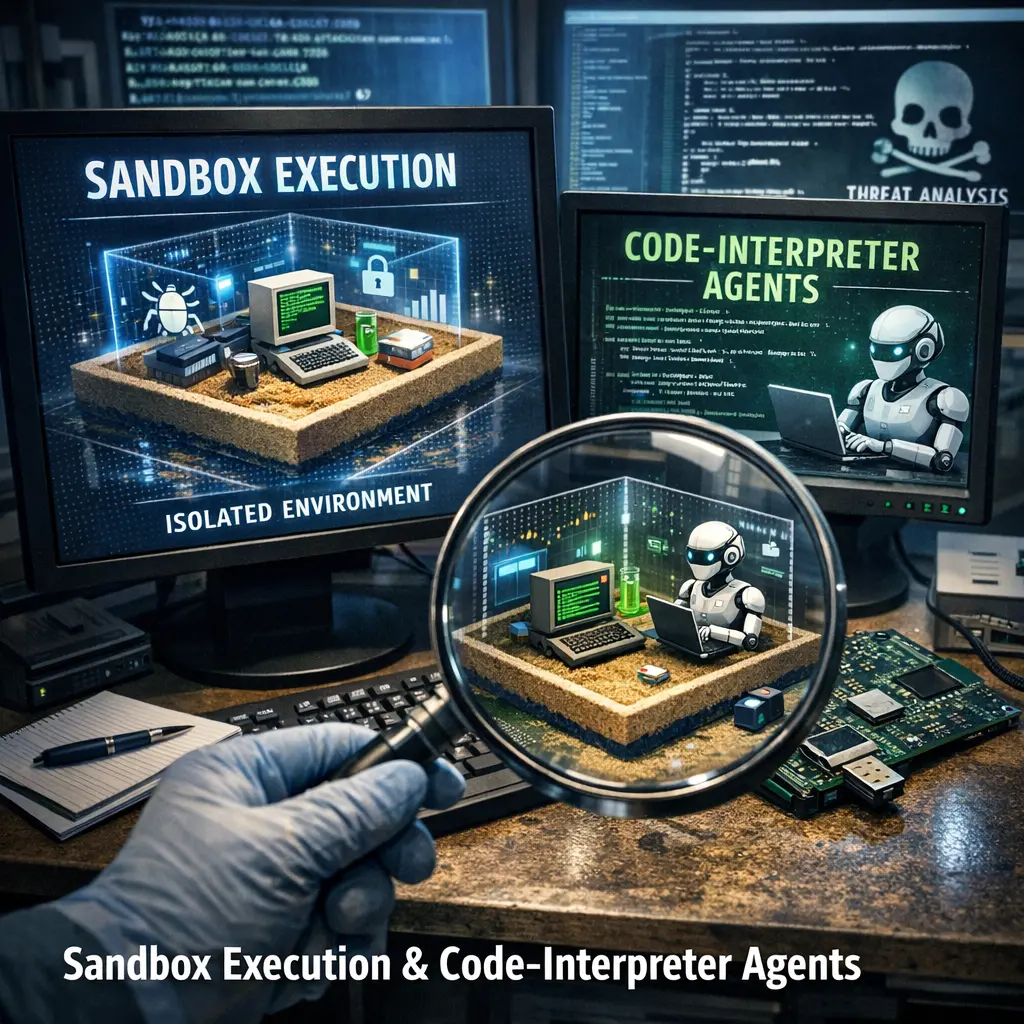
Sandbox Execution & Code-Interpreter Agents (Agent Architecture) refers to a system design where autonomous agents are capable of interpreting and executing code within a controlled, isolated environment known as a sandbox. This architecture ensures security by preventing harmful operations from affecting the broader system, while enabling agents to dynamically process, analyze, and generate code. Such agents are often used in AI, automated testing, and secure code evaluation tasks.
Sandbox Execution & Code-Interpreter Agents
Sandbox Execution & Code-Interpreter Agents (Agent Architecture) refers to a system design where autonomous agents are capable of interpreting and executing code within a controlled, isolated environment known as a sandbox. This architecture ensures security by preventing harmful operations from affecting the broader system, while enabling agents to dynamically process, analyze, and generate code. Such agents are often used in AI, automated testing, and secure code evaluation tasks.
💡 Key Takeaways
- Understand sandboxed execution and its role in safe code running
- See how code-interpreter agents parse, execute, and reason about code
- Compare sandboxed versus unrestricted execution for security and determinism
- Explore common architectures and best practices for code-interpreter agents
❓ Frequently Asked Questions
What is sandbox execution in computing?
Sandbox execution runs code in a restricted, isolated environment with limited access to system resources (files, network, CPU time) to prevent harm to the host system.
What is a code-interpreter agent?
A code-interpreter agent is a software component that can understand requests, generate code, and execute it within a runtime interpreter, returning results and explanations.
Why use sandboxed code execution?
Sandboxing protects the host from untrusted or faulty code, contains potential damage, and enforces resource limits for safe, predictable behavior.
What are common limitations of sandboxed execution?
Sandboxes may restrict network access, filesystem I/O, and certain system calls; they can incur performance overhead and might not support all libraries or languages.