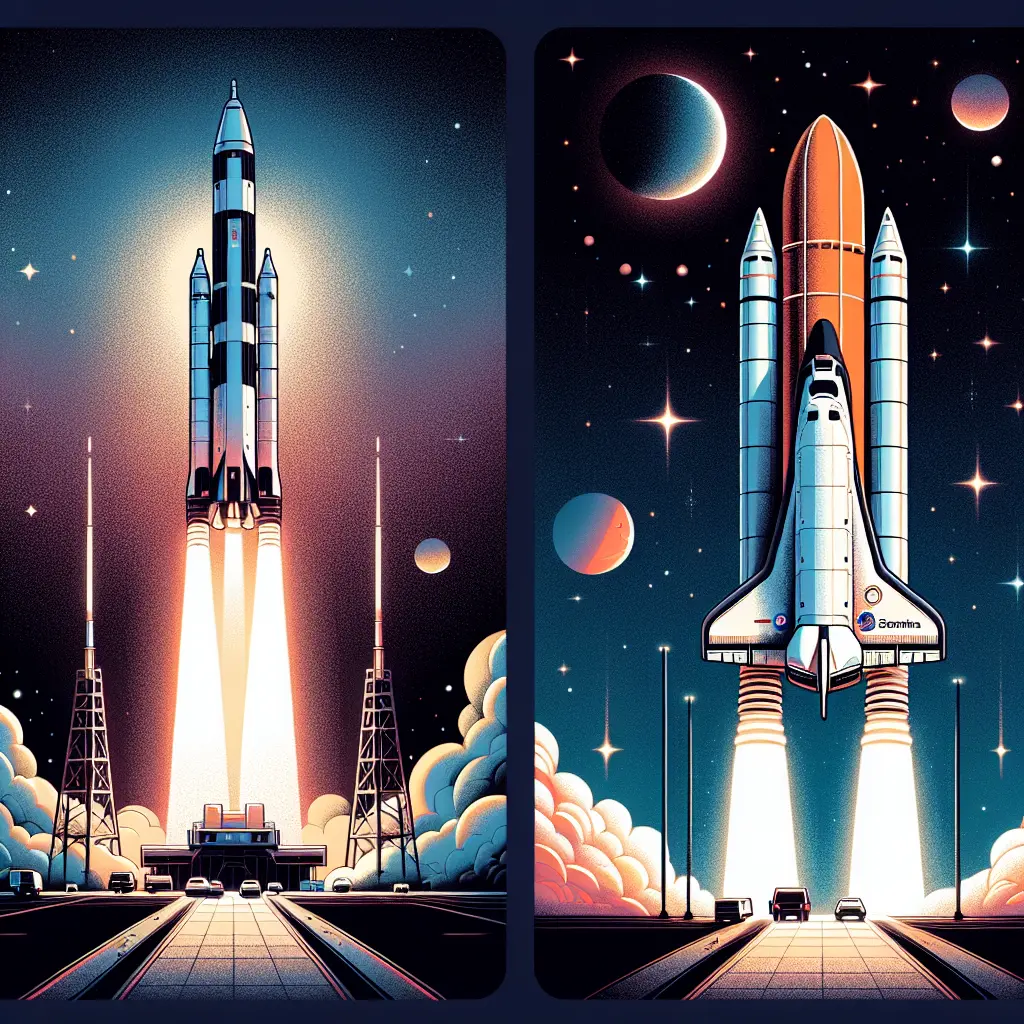
The Saturn V and Space Shuttle were both groundbreaking NASA launch vehicles, but differed significantly. Saturn V, used for Apollo missions, was a massive expendable rocket, capable of sending astronauts to the Moon. In contrast, the Space Shuttle was a partially reusable spacecraft designed for Earth orbit missions, capable of carrying both crew and cargo. While Saturn V prioritized heavy payloads and deep space, the Shuttle emphasized versatility and reusability for frequent missions.
Saturn V vs. Space Shuttle: Comparative Overview
The Saturn V and Space Shuttle were both groundbreaking NASA launch vehicles, but differed significantly. Saturn V, used for Apollo missions, was a massive expendable rocket, capable of sending astronauts to the Moon. In contrast, the Space Shuttle was a partially reusable spacecraft designed for Earth orbit missions, capable of carrying both crew and cargo. While Saturn V prioritized heavy payloads and deep space, the Shuttle emphasized versatility and reusability for frequent missions.
💡 Key Takeaways
- Understand the fundamental difference: Saturn V as a heavy expendable rocket for Moon missions vs Space Shuttle as a partially reusable orbital vehicle for routine access to Low Earth Orbit.
- Learn how Saturn V's three-stage, F-1 engine-powered design enabled lunar launches, contrasted with the Shuttle's combination of solid rocket boosters, external tank, and orbiter engines for missions in LEO.
- Compare typical mission profiles and payloads: Apollo lunar landings and deep-space capability versus Shuttle-era tasks like satellite deployment, Hubble servicing, and space-station assembly.
- Consider the trade-offs of expendable vs reusable designs, including cost, safety, refurbishment, and mission flexibility.
❓ Frequently Asked Questions
What is Saturn V and what was its primary purpose?
Saturn V was a large NASA expendable rocket developed for the Apollo program; its main role was to carry astronauts and lunar-bound spacecraft from Earth to the Moon.
What is the Space Shuttle and how did its design differ from Saturn V?
The Space Shuttle was a partially reusable spacecraft consisting of an orbiter, two solid rocket boosters, and an external fuel tank; unlike Saturn V, it was designed for multiple missions to low Earth orbit rather than a single lunar flight.
How did reuse and propulsion differ between Saturn V and Space Shuttle?
Saturn V was fully expendable—each flight used a new rocket. The Shuttle allowed reuse: the orbiter and the solid rocket boosters could be recovered and refurbished, while the external tank was discarded.
What kinds of missions did each vehicle enable, and why did NASA shift?
Saturn V enabled crewed lunar landings and early space infrastructure missions (like Skylab). The Space Shuttle was designed for routine payload delivery, satellite servicing, and ISS construction, reflecting a shift toward more frequent, versatile orbital operations.