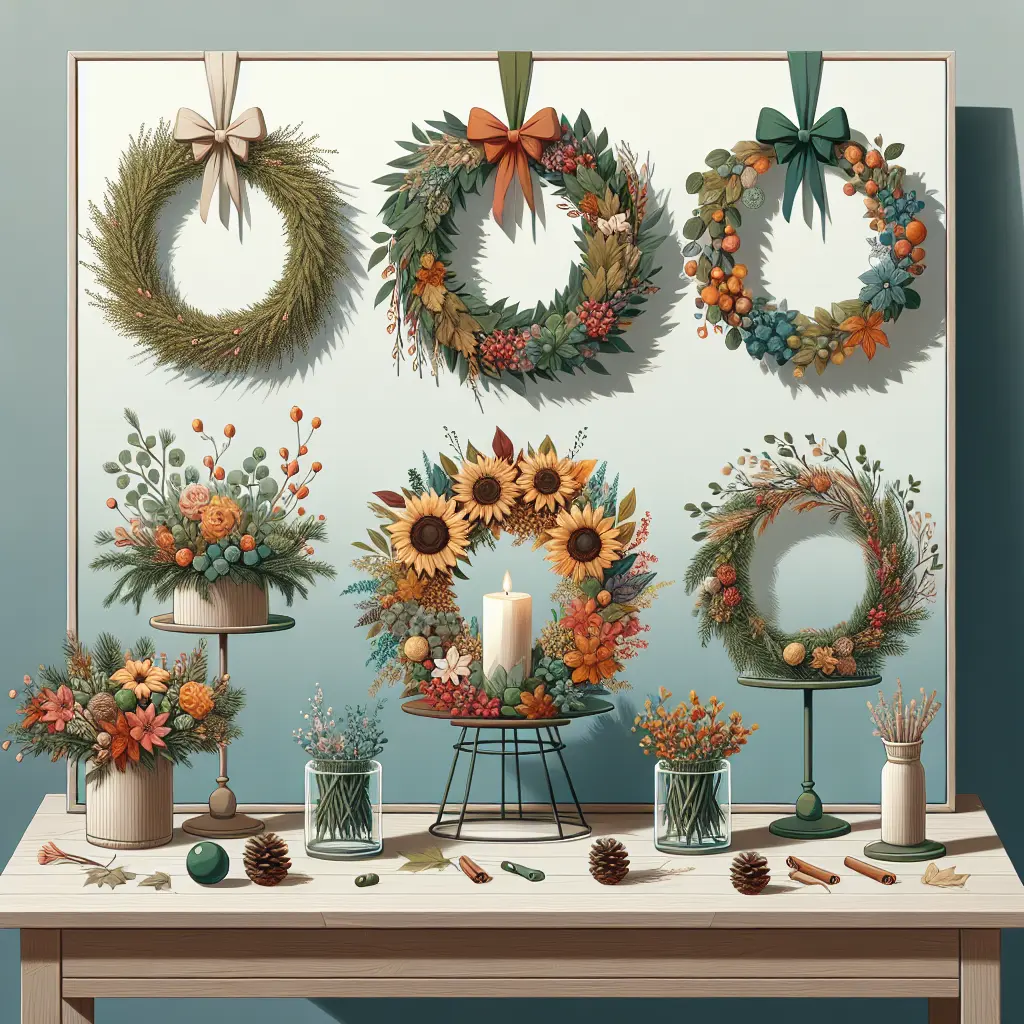
Seasonal wreaths and centerpieces are decorative arrangements designed to reflect the colors, themes, and natural elements of a particular season. Wreaths are typically circular and hung on doors or walls, while centerpieces adorn tables. Both use materials like flowers, foliage, fruits, or ornaments to celebrate occasions such as spring, autumn, or holidays. They enhance home décor, create a festive atmosphere, and bring the beauty of each season indoors.
Seasonal Wreaths & Centerpieces
Seasonal wreaths and centerpieces are decorative arrangements designed to reflect the colors, themes, and natural elements of a particular season. Wreaths are typically circular and hung on doors or walls, while centerpieces adorn tables. Both use materials like flowers, foliage, fruits, or ornaments to celebrate occasions such as spring, autumn, or holidays. They enhance home décor, create a festive atmosphere, and bring the beauty of each season indoors.
💡 Key Takeaways
- Identify seasonal color palettes and natural materials to reflect spring, summer, autumn, and winter in wreaths and centerpieces.
- Differentiate wreaths (door/wall displays) from centerpieces (table decor) and understand when to use each, including typical placement and sizing.
- Select and pair materials (flowers, foliage, fruits, ornaments) with durability and maintenance considerations for different seasons.
- Apply core design principles (balance, focal point, texture, layering) to create cohesive and visually appealing seasonal arrangements.
❓ Frequently Asked Questions
What is the difference between a seasonal wreath and a centerpiece?
A wreath is a circular decoration hung on doors or walls, while a centerpiece sits on a table to anchor the setting. Both reflect a season's colors and natural elements.
What materials are commonly used in seasonal wreaths and centerpieces?
Common materials include flowers, foliage, fruits, berries, pinecones, and seasonal ornaments.
How can you reflect a specific season in these decorations?
Choose colors, textures, and natural elements associated with the season (e.g., pastels for spring, greens and florals for summer, warm tones and gourds for autumn, or cool hues and evergreens for winter) and adjust height and fullness.
Where are these decorations typically displayed and for what occasions?
Wreaths are usually hung on doors or walls for entryways and celebrations; centerpieces are placed on tables to anchor events, holidays, or seasonal gatherings.