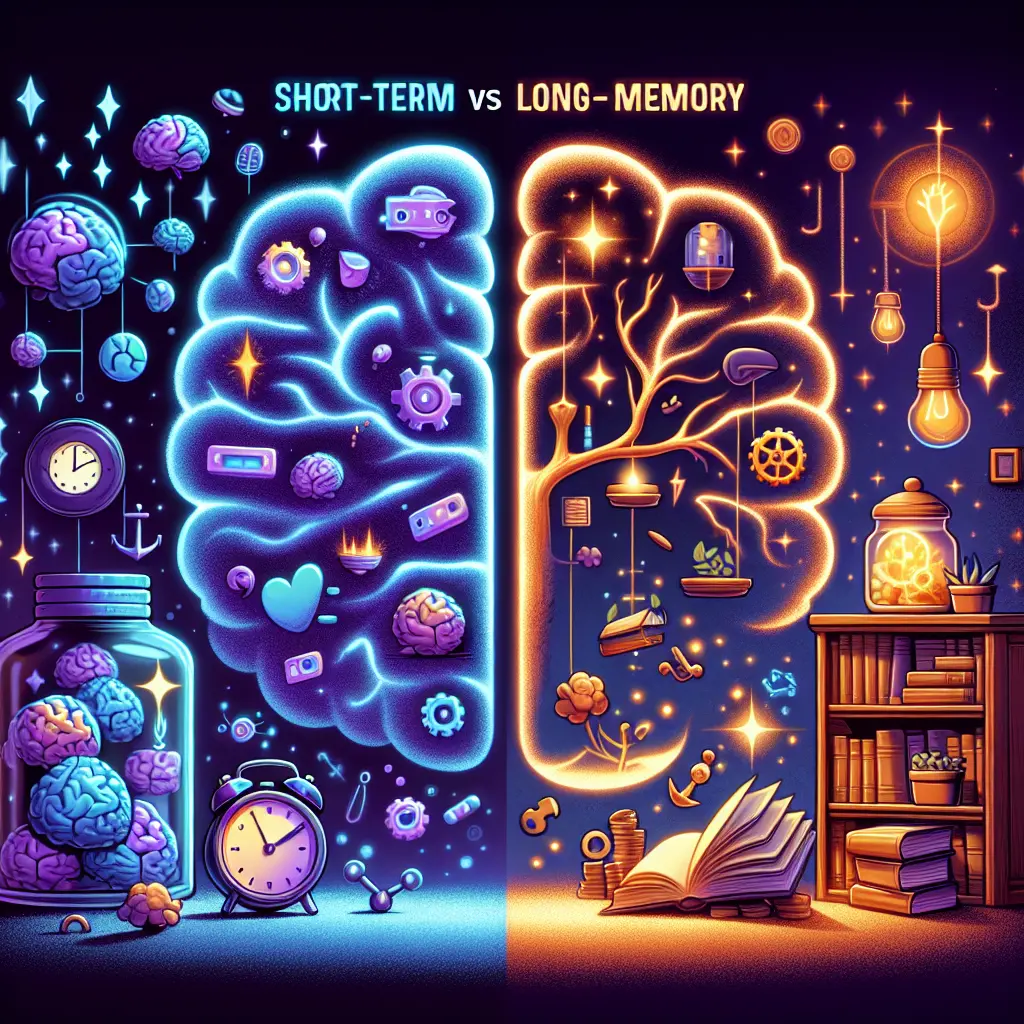
Short-term memory temporarily holds small amounts of information for immediate use, typically lasting seconds to minutes, such as remembering a phone number long enough to dial it. In contrast, long-term memory stores information for extended periods, from hours to a lifetime, allowing us to retain knowledge, experiences, and skills. While short-term memory has limited capacity, long-term memory can store vast amounts of information, supporting learning and personal development.
Short-Term vs Long-Term Memory
Short-term memory temporarily holds small amounts of information for immediate use, typically lasting seconds to minutes, such as remembering a phone number long enough to dial it. In contrast, long-term memory stores information for extended periods, from hours to a lifetime, allowing us to retain knowledge, experiences, and skills. While short-term memory has limited capacity, long-term memory can store vast amounts of information, supporting learning and personal development.
💡 Key Takeaways
- Short-term memory temporarily holds small amounts of information for immediate use, typically lasting seconds to minutes.
- Long-term memory stores information for extended periods, from hours to a lifetime, enabling sustained retention.
- Information moves from short-term to long-term memory through encoding, rehearsal, and consolidation, and can be retrieved later when needed.
- Practical strategies like spaced practice, retrieval practice, and adequate sleep help strengthen memory retention over the long term.
❓ Frequently Asked Questions
What is short-term memory?
Short-term memory temporarily holds small amounts of information for immediate use, typically lasting seconds to minutes (e.g., a phone number you need to dial).
What is long-term memory?
Long-term memory stores information for extended periods—from hours to a lifetime—allowing us to retain knowledge, skills, and experiences.
How do short-term and long-term memory differ?
Short-term memory has limited capacity and brief duration, while long-term memory has vast capacity and longer retention. Information is often transferred to long-term memory via rehearsal and encoding.
What are quick strategies to improve memory for a quiz?
Use chunking to group items, apply rehearsal or spaced practice, employ mnemonics, and ensure good sleep and focus.