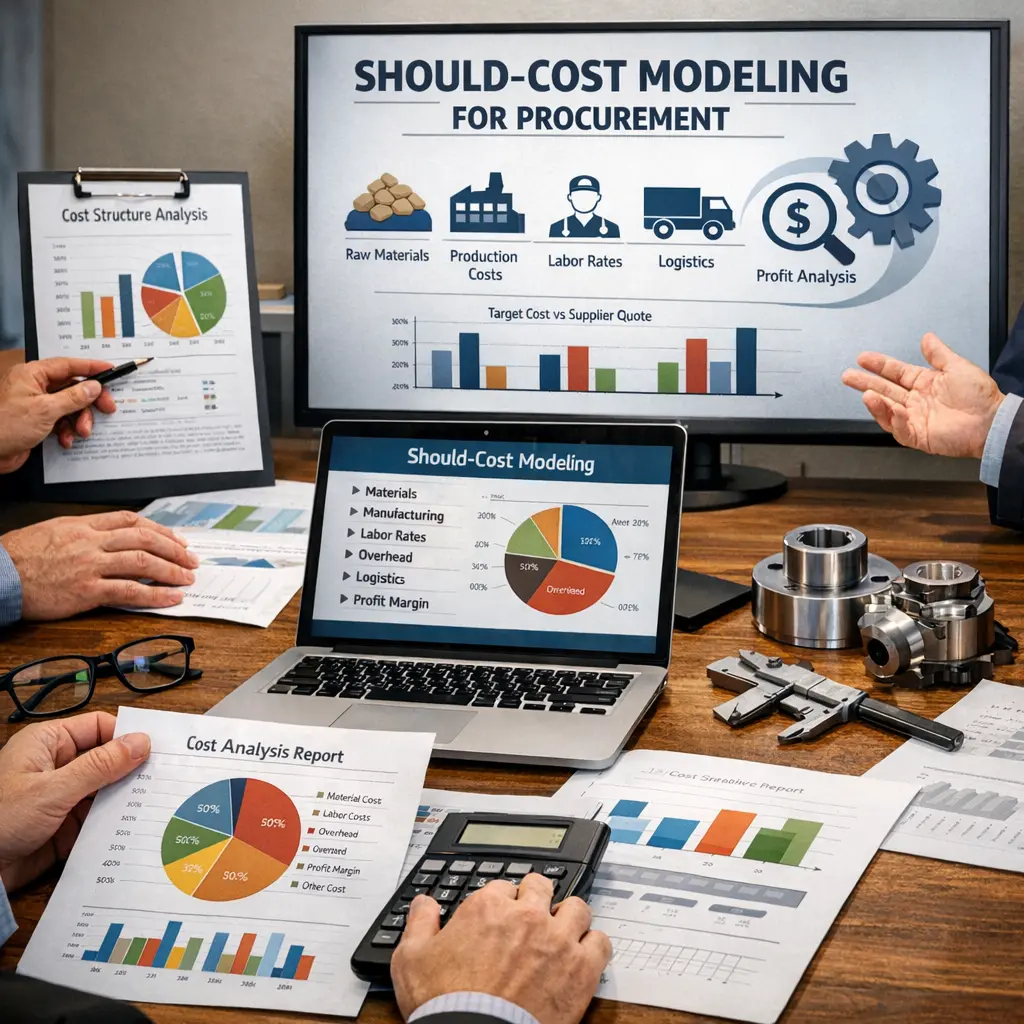
Should-Cost Modeling for Procurement is a financial management technique used to estimate the fair or expected cost of goods and services. By analyzing material, labor, overhead, profit margins, and market conditions, procurement teams develop a detailed cost breakdown. This approach helps organizations negotiate better prices, identify cost-saving opportunities, and ensure suppliers offer competitive rates, ultimately improving budgeting, transparency, and value in purchasing decisions.
Should-Cost Modeling for Procurement
Should-Cost Modeling for Procurement is a financial management technique used to estimate the fair or expected cost of goods and services. By analyzing material, labor, overhead, profit margins, and market conditions, procurement teams develop a detailed cost breakdown. This approach helps organizations negotiate better prices, identify cost-saving opportunities, and ensure suppliers offer competitive rates, ultimately improving budgeting, transparency, and value in purchasing decisions.
💡 Key Takeaways
- Explain what should-cost modeling is and why it's used in procurement.
- Identify key cost drivers in a should-cost model (materials, labor, overhead, logistics, and supplier margins).
- Outline a practical, step-by-step approach to building a should-cost model (data gathering, driver estimation, and model validation).
- Learn to apply the model outputs to negotiations, supplier benchmarking, and procurement decisions.
- Recognize common pitfalls and best practices to ensure accurate, defendable should-cost models.
❓ Frequently Asked Questions
What is should-cost modeling for procurement?
A cost estimation method that defines what a product or service should cost based on current design, materials, processes, and market conditions, independent of any supplier quote.
When should procurement teams use should-cost modeling?
Early in sourcing to benchmark quotes, identify cost drivers, validate supplier proposals, and support negotiation with data-driven targets.
What data and inputs are needed?
Design specifications, bill of materials, labor rates, overhead, material and component costs, tooling and setup costs, logistics, duties, and expected yield or scrap.
How is a should-cost model built and used?
Break down total cost into driver-level elements, input reliable data, compute a target cost, compare with supplier quotes, and run sensitivity analysis to see impact of changes.
What are common pitfalls or limitations?
Data gaps or outdated information, overly simplified assumptions, ignoring total cost of ownership, and misalignment with actual supplier processes or design changes.