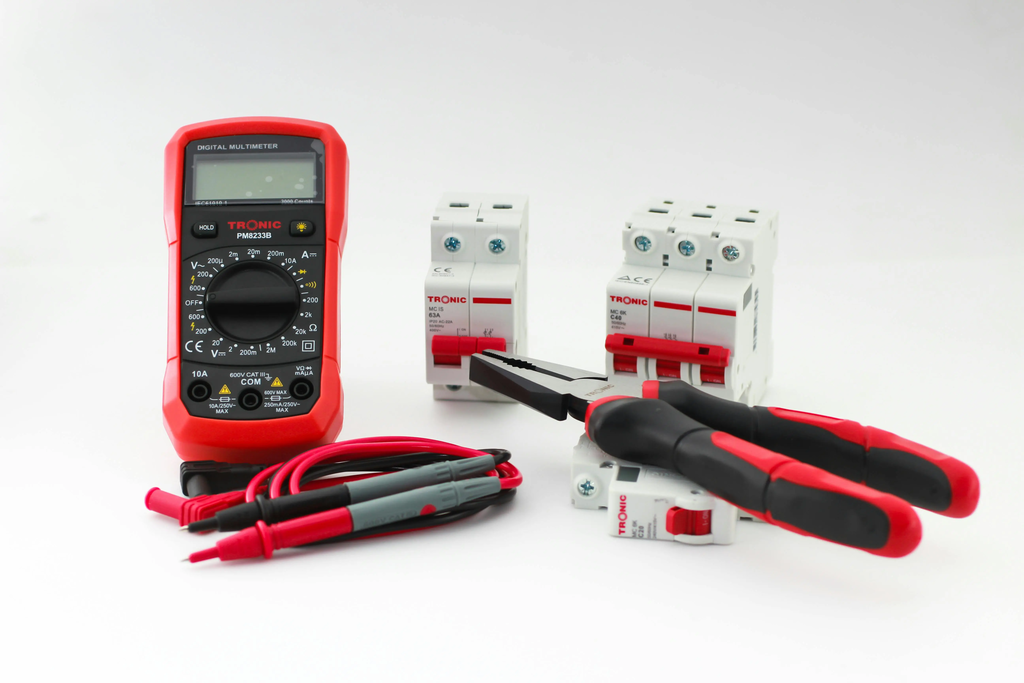
SI Units provide a standardized system for measuring physical quantities in electricity and circuits, such as amperes (A) for current, volts (V) for voltage, and ohms (Ω) for resistance. Proper notation ensures clarity and consistency in expressing these values. Significant figures reflect the precision of measurements and calculations, indicating which digits are meaningful and reliable. Using correct SI units, notation, and significant figures is essential for accuracy and effective communication in basic electricity and circuit analysis.
SI Units, Notation & Significant Figures
SI Units provide a standardized system for measuring physical quantities in electricity and circuits, such as amperes (A) for current, volts (V) for voltage, and ohms (Ω) for resistance. Proper notation ensures clarity and consistency in expressing these values. Significant figures reflect the precision of measurements and calculations, indicating which digits are meaningful and reliable. Using correct SI units, notation, and significant figures is essential for accuracy and effective communication in basic electricity and circuit analysis.

💡 Key Takeaways
- Identify and correctly use the seven SI base units (meter, kilogram, second, ampere, kelvin, mole, candela) in measurements.
- Convert numbers between SI prefixes (milli-, centi-, kilo-, micro-, nano-, etc.) and perform unit conversions accurately.
- Understand and apply scientific notation to express very large or very small measurements.
- Apply rules for significant figures to measurements and calculations to report results with appropriate precision.
❓ Frequently Asked Questions
What are the SI base units?
The seven SI base units are meter (m) for length, kilogram (kg) for mass, second (s) for time, ampere (A) for electric current, kelvin (K) for temperature, mole (mol) for amount of substance, and candela (cd) for luminous intensity.
How do SI prefixes work, and how should you write them with units?
SI prefixes multiply a unit by powers of ten (e.g., milli = 10^-3, kilo = 10^3). Write the prefix directly before the unit with no space (e.g., 5 cm, 2.0 kg). Unit symbols are not pluralized (5 m, not 5 meters).
What are significant figures, and what are the basic rules for determining them?
Significant figures are the digits that carry meaningful precision: all nonzero digits, zeros between nonzero digits, and trailing zeros in the decimal portion. Leading zeros are not significant. For multiplication/division, round to the least number of sig figs; for addition/subtraction, round to the least precise decimal place.
What is scientific notation, and how do you express a measurement with units using it?
Scientific notation writes numbers as a × 10^n with 1 ≤ a < 10. Attach the unit after the notation, e.g., 3.20 × 10^5 m or 4.50 × 10^-3 s. The coefficient reflects the measurement's significant figures.