Sign languages play a vital role in enhancing accessibility and fostering inclusion within diverse cultures, religions, and societies. By enabling effective communication for the Deaf and hard-of-hearing communities, sign languages break down barriers, promote equal participation, and respect linguistic diversity. Their recognition and integration into public life support social equity, challenge stereotypes, and affirm the rights of all individuals to access information, services, and cultural or religious practices.
Sign Languages, Accessibility & Inclusion
Sign languages play a vital role in enhancing accessibility and fostering inclusion within diverse cultures, religions, and societies. By enabling effective communication for the Deaf and hard-of-hearing communities, sign languages break down barriers, promote equal participation, and respect linguistic diversity. Their recognition and integration into public life support social equity, challenge stereotypes, and affirm the rights of all individuals to access information, services, and cultural or religious practices.
💡 Key Takeaways
- Sign languages are complete languages with distinct grammar and culture.
- Accessibility is essential for Deaf and hard-of-hearing people in education, work, and public life.
- Use inclusion tools: sign language interpreters, captions, transcripts, and visual communication.
- Adopt inclusive practices in classrooms, workplaces, and public services through ongoing awareness and training.
❓ Frequently Asked Questions
What is sign language and who uses it?
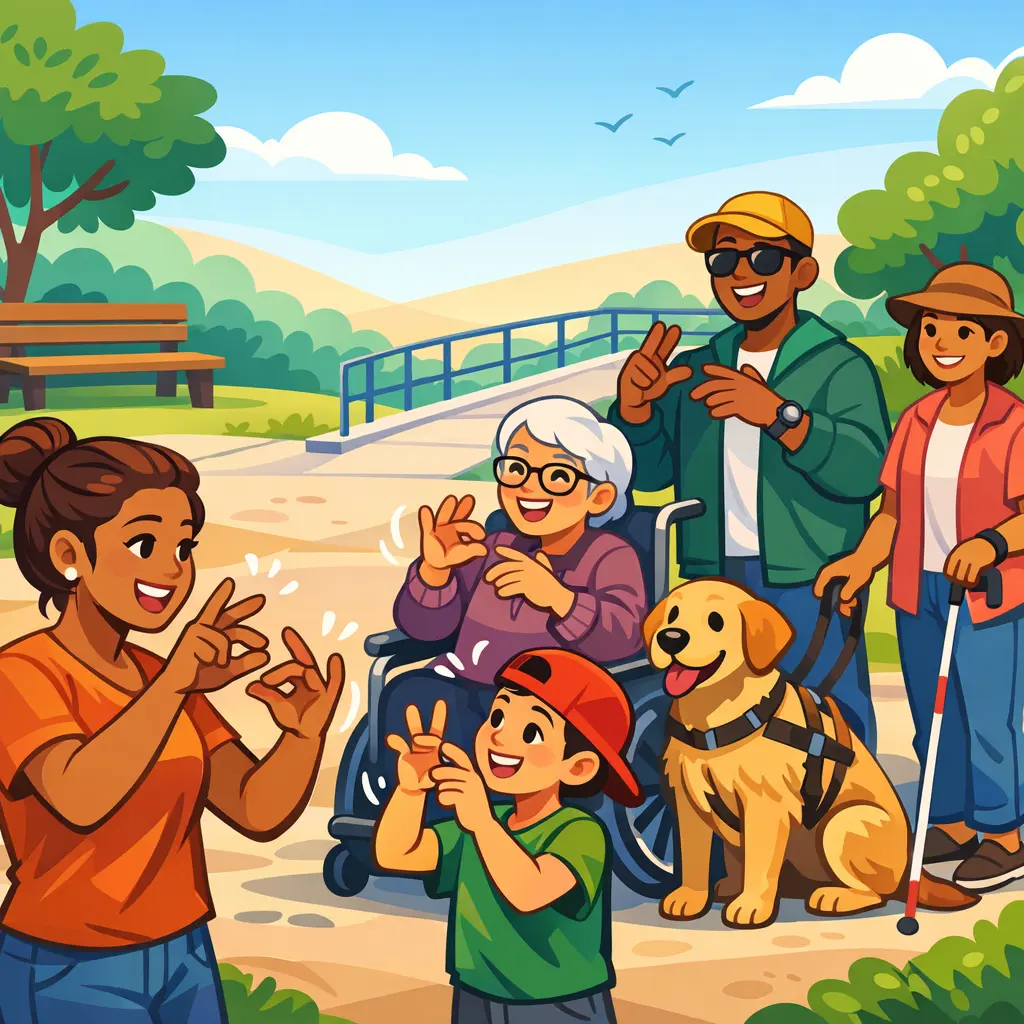
Sign languages are full natural languages that use hand shapes, facial expressions, and body movement. They are used by Deaf and hard-of-hearing communities and vary by country (e.g., ASL, BSL).
What does accessibility mean for sign language users?
Accessibility means making information and services usable for Deaf and hard‑of‑hearing people, through options like sign language interpretation, captions, and clear visual communication.
What does inclusion mean in this context?
Inclusion ensures Deaf and hard-of-hearing people have equal access, participation, and representation in education, work, media, and public life.
What practical steps can improve understanding in quizzes or courses?
Provide sign language interpretation or captions, offer transcripts or summaries, use clear visuals and plain language, and allow time for interpretation or questions in sign language.