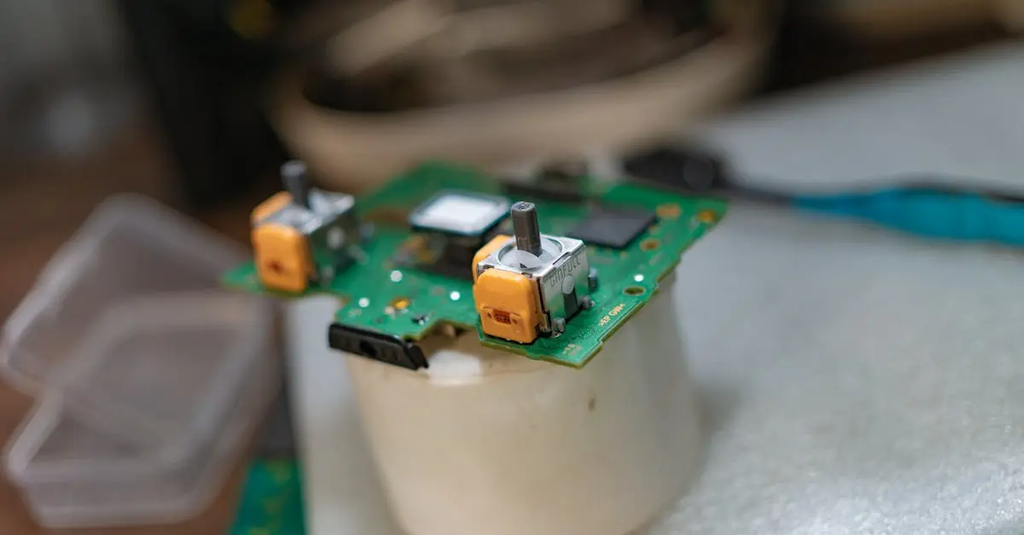
Signal integrity refers to the quality and reliability of electrical signals as they travel through circuits. Crosstalk occurs when a signal in one circuit unintentionally affects another nearby circuit, causing interference. Ringing is the oscillation or repeated fluctuations in a signal, often caused by impedance mismatches or abrupt changes in circuit layout. Both crosstalk and ringing can degrade signal quality, leading to errors in electronic devices and components.
Signal integrity: crosstalk and ringing
Signal integrity refers to the quality and reliability of electrical signals as they travel through circuits. Crosstalk occurs when a signal in one circuit unintentionally affects another nearby circuit, causing interference. Ringing is the oscillation or repeated fluctuations in a signal, often caused by impedance mismatches or abrupt changes in circuit layout. Both crosstalk and ringing can degrade signal quality, leading to errors in electronic devices and components.
💡 Key Takeaways
- Understand signal integrity and how crosstalk and ringing distort signals
- Identify crosstalk sources (capacitive and inductive coupling) and how to reduce them in PCB routing
- Explain ringing as reflections from impedance mismatches in transmission lines
- Apply mitigation techniques such as controlled impedance, trace spacing, termination, shielding, and differential signaling
- Learn basic measurement concepts to diagnose these issues using an oscilloscope and simple tests like TDR
❓ Frequently Asked Questions
What is signal integrity?
Signal integrity is the ability of a circuit to transmit a signal with minimal distortion, timing errors, and noise so that the receiver interprets the data correctly.
What is crosstalk in signaling?
Crosstalk is unwanted coupling of a signal from one conductor into another, causing interference that can distort levels or timings, especially between adjacent traces or cables.
What is ringing and why does it occur?
Ringing is a series of oscillations after a signal transition, caused by impedance mismatches and reflections along a transmission path.
How can you reduce crosstalk and ringing in a PCB design?
To reduce crosstalk: increase trace spacing, use shielding or guard traces, route as differential pairs, and control impedance. To reduce ringing: ensure proper impedance matching, add termination or damping elements, and minimize abrupt geometry changes.