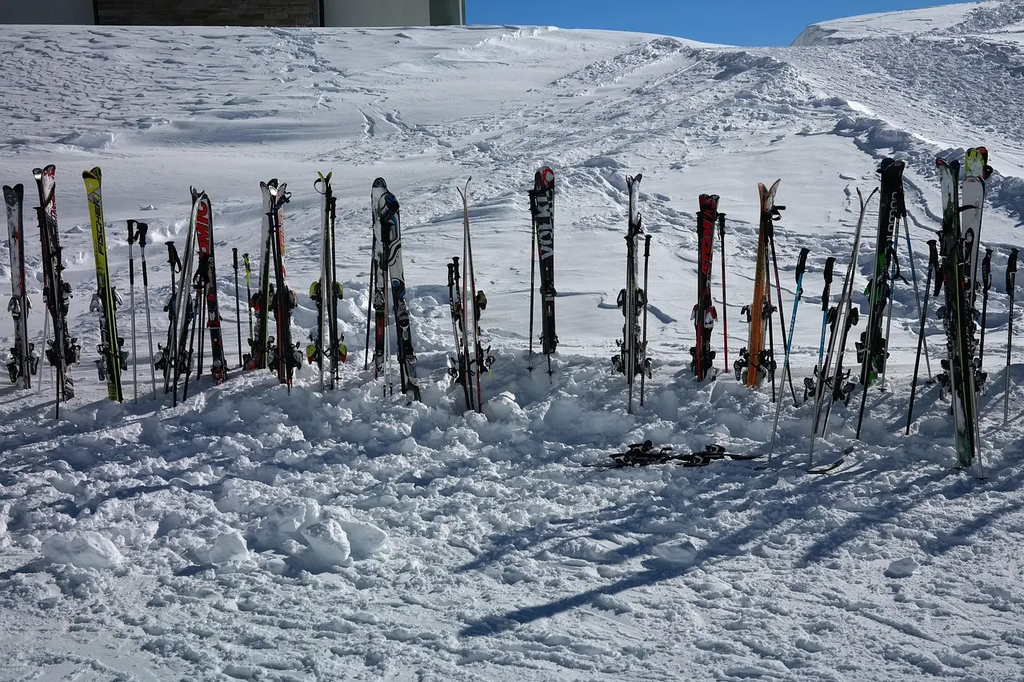
Ski poles are essential equipment used in skiing, a popular winter sport. These lightweight poles, typically made of aluminum or carbon fiber, help skiers maintain balance, rhythm, and direction while gliding on snow. Held in each hand, ski poles assist with propulsion on flat terrain and provide stability during turns and stops. Their presence is a clear indicator of the sport of skiing, distinguishing it from other snow-based activities.
Ski Poles
Ski poles are essential equipment used in skiing, a popular winter sport. These lightweight poles, typically made of aluminum or carbon fiber, help skiers maintain balance, rhythm, and direction while gliding on snow. Held in each hand, ski poles assist with propulsion on flat terrain and provide stability during turns and stops. Their presence is a clear indicator of the sport of skiing, distinguishing it from other snow-based activities.
💡 Key Takeaways
- Identify the main parts of a ski pole (grip, strap, shaft, basket, and tip) and their functions.
- Learn how to choose the right pole length for your height and skiing style (alpine, freestyle, or Nordic).
- Master the correct grip and strap technique to improve balance and reduce injury.
- Know basic maintenance tips, including selecting baskets for different snow conditions and caring for poles.
❓ Frequently Asked Questions
What is the primary purpose of ski poles?
To aid balance, timing, and propulsion by providing grip points for plant and push-offs, helping with turns and rhythm on varied terrain.
How do you determine the correct ski pole length?
With your hand in the grip and the tip on the snow, your elbow should form about a 90-degree angle. The pole should reach roughly under your armpit when standing upright.
What materials are ski poles typically made from?
Common materials are aluminum (affordable and strong) and carbon fiber (lighter and stiffer); some poles use lightweight composites.
How should you wear and adjust the strap on a ski pole?
Thread your hand through the strap from bottom to top, then tighten so the pole stays with your hand without squeezing too tightly; keep your wrist relaxed.
What is the difference between alpine ski poles and cross-country poles?
Alpine poles are generally shorter with larger baskets for snow stability on slopes; cross-country poles are longer with smaller baskets and lighter straps for continuous propulsion.