SLA/SLOs, Alerts & On-Call Playbooks (Agent Architecture) refers to the structured approach in managing system reliability and incident response. SLAs (Service Level Agreements) and SLOs (Service Level Objectives) define performance targets. Alerts notify teams when these targets are at risk, while on-call playbooks provide step-by-step procedures for agents to follow during incidents. Together, they ensure consistent service quality and efficient resolution within agent-based system architectures.
SLA/SLOs, Alerts & On-Call Playbooks
SLA/SLOs, Alerts & On-Call Playbooks (Agent Architecture) refers to the structured approach in managing system reliability and incident response. SLAs (Service Level Agreements) and SLOs (Service Level Objectives) define performance targets. Alerts notify teams when these targets are at risk, while on-call playbooks provide step-by-step procedures for agents to follow during incidents. Together, they ensure consistent service quality and efficient resolution within agent-based system architectures.
💡 Key Takeaways
- Distinguish SLA, SLO, and SLI and understand how they relate to uptime, reliability, and customer expectations.
- Learn to design effective alerts with clear thresholds, proper routing, and reduced alert fatigue.
- Build practical on-call playbooks covering detection, triage, remediation, and escalation steps.
- Use error budgets and post-incident reviews to improve service reliability and align with customer impact.
❓ Frequently Asked Questions
What is an SLA and how does it differ from an SLO?
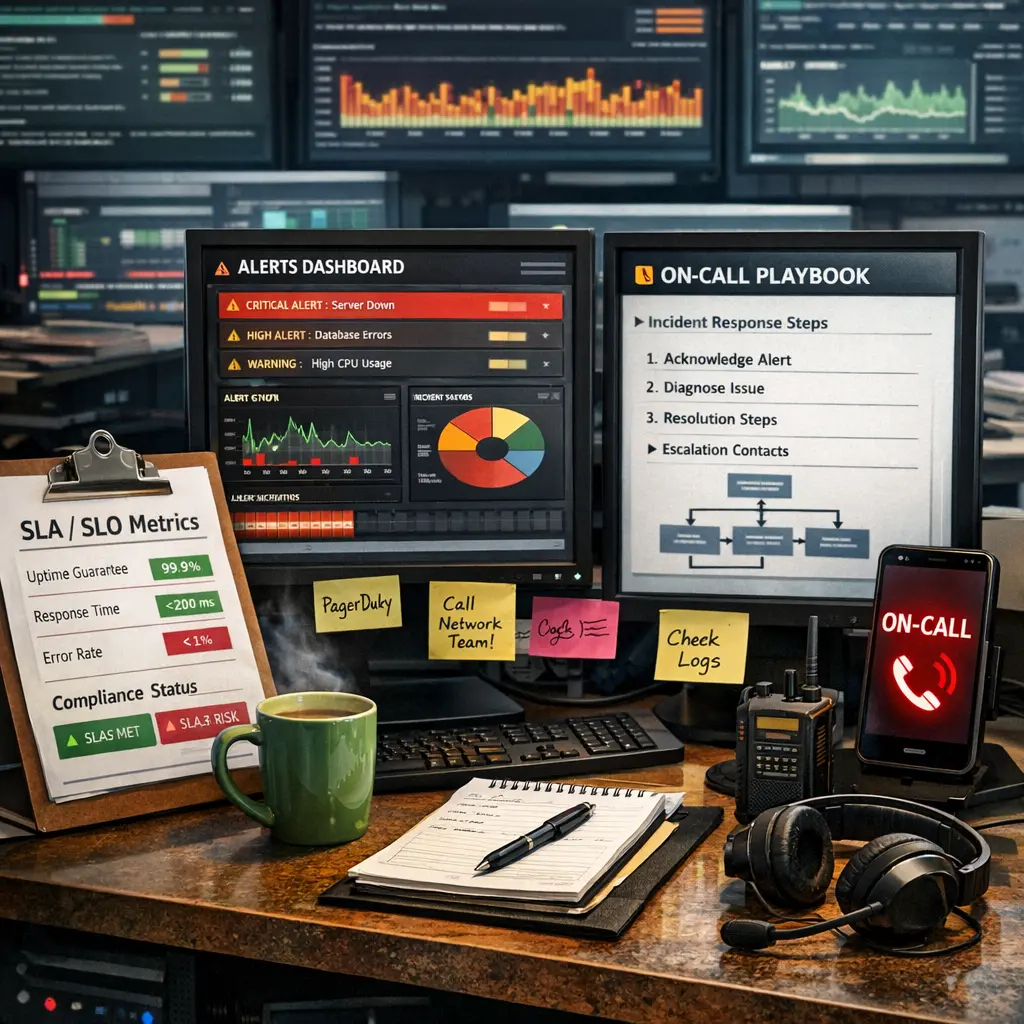
An SLA is a formal contract with customers detailing required service levels and remedies if not met (e.g., service credits). An SLO is a specific, measurable target within the SLA (such as 99.9% uptime or ≤ 200 ms latency) used to guide monitoring and alerts.
What is an SLI and how does it relate to SLOs?
An SLI is a measurable metric (e.g., uptime, latency, error rate). An SLO is the target for that metric (e.g., 99.9% uptime). SLI data determines whether SLOs are met.
How do alerts help meet SLA/SLO targets?
Alerts notify the on-call team when metrics approach or breach SLO thresholds, enabling rapid response to prevent SLA breaches and maintain reliability.
What should be included in an effective on-call playbook?
Contact/escation paths, severity definitions, step-by-step incident runbooks, communication guidelines, roles/responsibilities, and post-incident review procedures.
What is an error budget and why is it important?
An error budget is the allowable amount of unreliability within a period. It helps balance reliability with speed of changes: burn more budget for features when healthy, or slow down when the budget is low.